
 |
Green ammonia could become the first carbon-molecule-free marine fuel with a credible commercial business case, according to a study published jointly by Swiss engine designer WinGD and green hydrogen producer Envision Energy.
The report argues that green ammonia is already capable of narrowing the operational cost gap with conventional fuels under moderate carbon pricing — and could outperform them economically across a vessel’s lifetime as green fuel costs fall and regulatory pressure intensifies.
The ammonia case
Ammonia produces no CO₂ at the point of combustion and eliminates sulphur and particulate emissions. Unlike a number of alternative fuels still contending with supply chain immaturity, ammonia is already a globally traded commodity with established storage and distribution infrastructure at ports worldwide.
Challenges remain, particularly around crew training, bunkering procedures and safety standards, though the operational frameworks needed to support wider adoption are described as already being developed. The first commercial ammonia-powered vessels are entering service this year, which WinGD says will provide the industry with real-world operational experience and data.
Scale and pricing
Green ammonia currently remains more expensive than conventional marine fuels, but WinGD and Envision Energy contend that large renewable-powered production projects are beginning to close the gap.
Envision Energy’s green hydrogen and ammonia facility in the Gobi Desert — powered by wind and solar generation — is projected to produce 320,000 tonnes annually, before scaling to 1.5 million tonnes by 2028. According to the company’s projections, green ammonia prices could fall from around $710 per tonne towards parity with grey ammonia, which currently stands at approximately $400 per tonne.
Regulatory backdrop
The report notes that green ammonia falls on the favourable side of existing and emerging regulatory regimes, in contrast to very low-sulphur fuel oil (VLSFO) and other conventional fuels. Within the European Union, the FuelEU Maritime regulation steadily increases the financial exposure of high-emitting vessels. Additional regional carbon-pricing mechanisms are also said to be under consideration beyond Europe, while the IMO’s proposed net-zero framework remains unresolved.
Operating cost projections
According to analysis by WinGD and Envision, a typical ammonia-fuelled bulk carrier operating on ammonia priced at $710 per tonne could cost around $6m less than an equivalent VLSFO-fuelled vessel over the first eight-year phase of the IMO framework. For a container vessel, that figure is put at approximately $7m.
The longer-term projections are more pronounced. Looking towards the IMO’s 2050 net-zero target, WinGD’s analysis indicates that ammonia-powered container ships could reduce operating expenditure by more than $50m over their operational life, while ammonia-fuelled bulk carriers could reduce operating expenditure by approximately $28m compared with VLSFO-fuelled equivalents. The report notes that these calculations exclude any future reward mechanism for zero- or near-zero-emission fuels, which would, according to WinGD, further strengthen the commercial case.
Further efficiencies
WinGD also points to potential further efficiency gains through the use of green fuels in auxiliary engines, alongside technologies such as power take-off systems supplying onboard electrical demand, which it says could reduce lifecycle carbon costs.
“As production scales, carbon pricing expands and shipowners look beyond short-term fuel costs towards lifetime compliance exposure, green ammonia is already moving from a theoretical future fuel to a commercially credible one,” Fabio Cococcetta, Product Manager – Engines at WinGD noted.
The full WinGD–Envision Energy Renewable Fuel Economics Report is available to download from WinGD’s website.
|
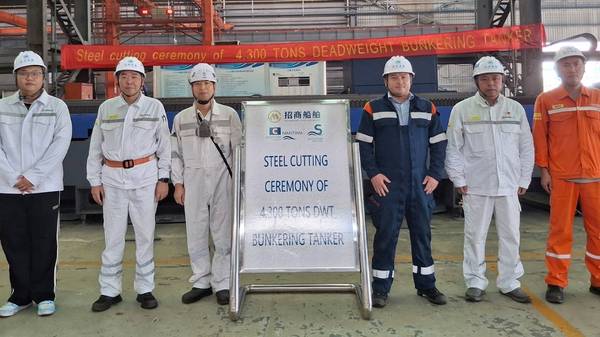
Maritima holds steel-cutting ceremony for Cap Morgiou, first of two Petroineos bunker vessels
Construction starts on bunker vessel able to carry conventional and low-carbon marine fuels, with delivery expected in early 2028. |
|
|
|
||
|
Singapore launches series of measures at SIBCON 2026
MPA announces LNG storage licences, digital bunkering grants and electric harbour craft incentives at 24th conference. |
|
|
|
||
|
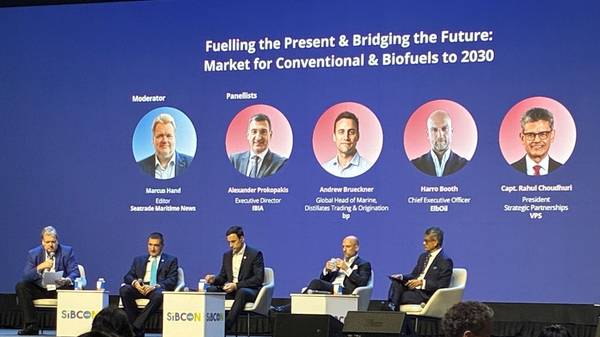
VPS outlines marine fuel standards and quality data at SIBCON 2026
VPS's Rahul Choudhuri addresses Singapore's evolving fuel standards and the quality of conventional fuels and biofuels. |
|
|
|
||
|
Singapore launches ammonia bunkering code and new standards for fuel sampling and polymer testing
MPA and Enterprise Singapore introduce one standard and two technical references at SIBCON. |
|
|
|
||
|
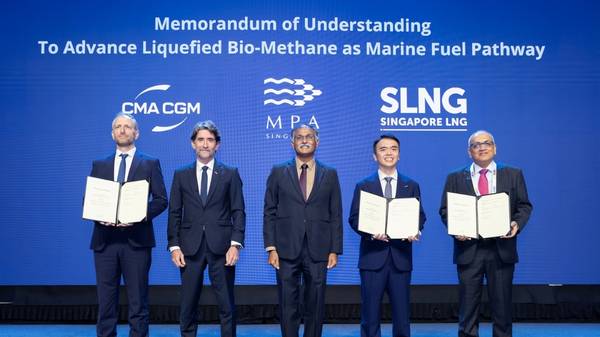
MPA, CMA CGM and SLNG sign MoU to explore liquefied biomethane as a marine fuel in Singapore
Three-way agreement will examine certification, supply and bunkering of LBM using Singapore's existing LNG infrastructure. |
|
|
|
||
|
ROC wins order for PSVs featuring replaceable containerised battery system
Nantong Rainbow Offshore secures 1+1 contract for 4,000 DWT platform supply vessels. |
|
|
|
||
|
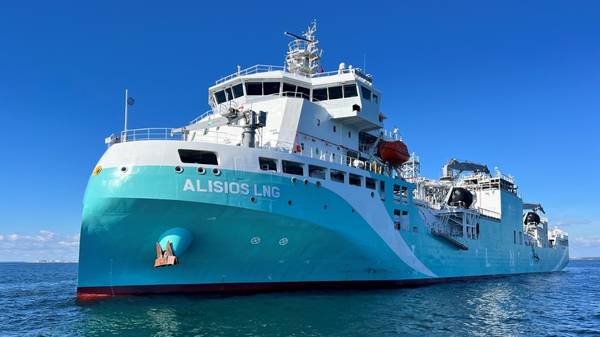
Axpo completes first LNG bunkering in Valencia, with over half bio-LNG
Ship-to-ship transfer to a container vessel makes Valencia the company's fourth Spanish port for LNG bunkering. |
|
|
|
||
|
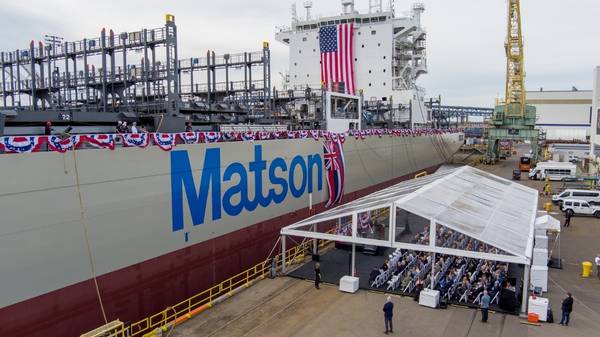
Matson christens Makua, first of three LNG-ready Aloha Class container ships
Dual-fuel vessel, due for delivery in early 2027, is the first of three ships worth around $1bn. |
|
|
|
||
|
CMB.Tech seeks Singapore-based ammonia operations manager for Asia Pacific
New hire will oversee ammonia chartering and bunkering and liaise with Far East partners. |
|
|
|
||
|
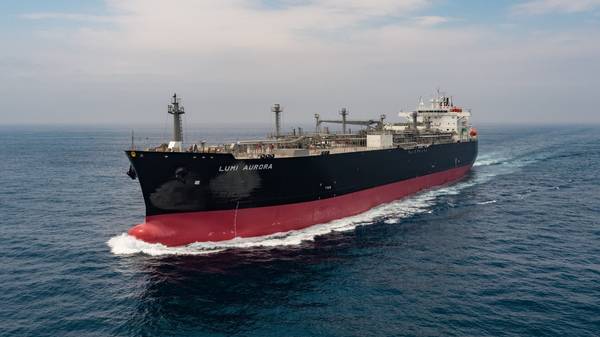
IINO Lines deploys first Ice Class IB VLGC on long-term charter to Borouge International
LPG-fuelled Lumi Aurora will carry North American gas to Borouge International's Porvoo plant in Finland. |
|
|
|
||
| Study finds methanol dual-fuel retrofit of Kamsarmax bulk carrier would take about 75 days [News & Insights] |
| WinGD signs global service agreement for TMS Cardiff Gas LNG carrier newbuilds [News & Insights] |
| Nuclear-powered LNG carriers cost more upfront but cut lifetime fuel bills, ABS-backed study finds [News & Insights] |
| Electric and hybrid ferries could cut Sea of Marmara emissions by 63%, IMO study finds [News & Insights] |
| Batumi Sea Port officials study decarbonisation practices in Hamburg [News & Insights] |
