Vitol and Grindrod have announced their decision to wind down Cockett, a company in which they hold equal shares. The move comes after extensive deliberation regarding the "non-core nature" of Cockett's business to both shareholders. The decision, while significant, is said to be aimed at ensuring an orderly and solvent closure of operations.
Cockett, jointly owned by Vitol and Grindrod since 2012, is reported to be in a stable financial position, capable of fulfilling all existing contractual obligations to suppliers and customers throughout the wind-down process. However, as of the announcement, Cockett will cease entering into any new business dealings. The shareholders have emphasised their commitment to a solvent wind-down, anticipating that all relevant suppliers will receive full payment within the next 60 days, in accordance with their supply contracts. Similarly, payments from customers are expected to be settled within the same timeframe.
The wind-down will be managed by Cockett's current leadership, including CEO Cem Saral and CFO Arnaud Payot. Vitol says it will provide support during this transition, leveraging its extensive relationships within the energy sector to aid in the orderly settlement of accounts. A dedicated team will remain to oversee the management of payables and receivables, ensuring a seamless conclusion to operations.
The shareholders expressed their gratitude towards Cockett's employees, acknowledging their professionalism and dedication over the years. It is noted that all staff will receive "considered and responsible compensation" as part of the wind-down process. Furthermore, Vitol and Grindrod thanked Cockett's suppliers and customers for their long-standing support over the past 45 years of trading.
This announcement marks a notable shift for both Vitol and Grindrod, who will redirect their focus towards core business strategies while concluding their involvement with Cockett.
Grindrod bunker profit small compared to core operations
For Grindrod, revenue and profit from marine fuels was not categorized as a core operation in its financial accounts. And even though marine fuel revenue of ZAR 16,043m (US$ 877.8m) in 2023 and ZAR 20,105m ($1,100m) in 2024 was significantly greater than revenue from core operations of ZAR 7,490m ($409.8m) and ZAR 7,371m ($403.3m) in 2023 and 2024, respectively, profit from bunkering activities was actually tiny in comparison.
Grindrod's profit before interest, taxation and non-trading items from marine fuels was only ZAR 46.941m ($2.568m) in 2023 and ZAR 32.170m ($1.760m) in 2024, whilst over the same period, profit from core operations (categorized separately from marine fuels) was ZAR 1,749m ($95.7m) and ZAR 1,296m ($70.9m) in 2023 and 2024, respectively.
Vitol Bunkers
With the divestment of Cockett, which was primarily a bunker trading business, Vitol will be left to focus on its bunker supply operation, Vitol Bunkers.
The company arranges deliveries in Australia, Belgium, China, Maldives, Netherlands, Singapore, South Africa, Turkey, UAE and United States.

|
Japan Engine completes land-based testing of landmark hydrogen-fuelled engine for large vessels
Hydrogen co-firing rate of at least 95% achieved during factory testing. |
|
|
|
||

|
Ethanol edges into shipping’s fuel mix as methanol crossover eases adoption barriers
Rising interest from cargo owners, shared technology with methanol and Brazilian production growth push ethanol beyond regional niche status. |
|
|
|
||
|
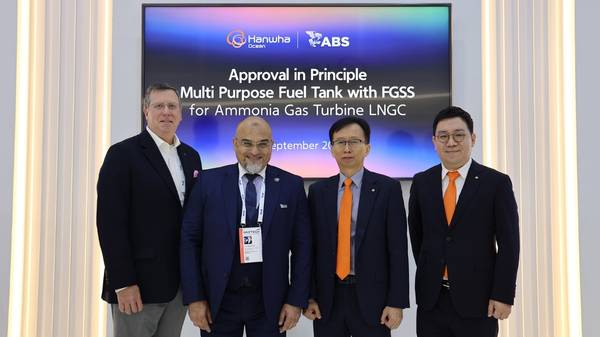
ABS grants Hanwha Ocean approval for dual-fuel tank enabling LNG-to-ammonia switch
In-principle approval awarded for fuel tank and supply system enabling LNG carriers to convert to ammonia without replacement. |
|
|
|
||
|
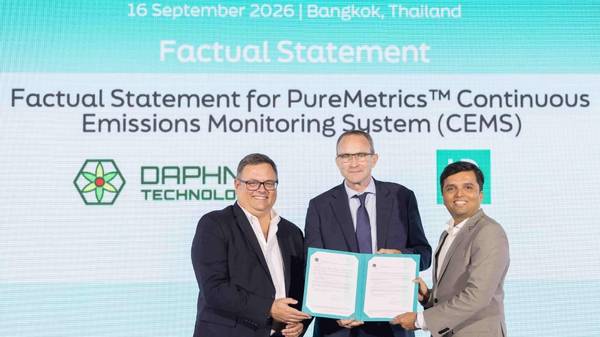
Lloyd's Register confirms suitability of Daphne Technology's emissions monitoring system
Factual Statement validates the PureMetrics design for monitoring greenhouse gas emissions from marine engines. |
|
|
|
||

|
IMO issues shipboard biofuel blend checklist developed by IBIA
Checklist for FAME-based biofuels formally incorporated into IMO document, supporting crews handling biofuel blends for the first time. |
|
|
|
||
|
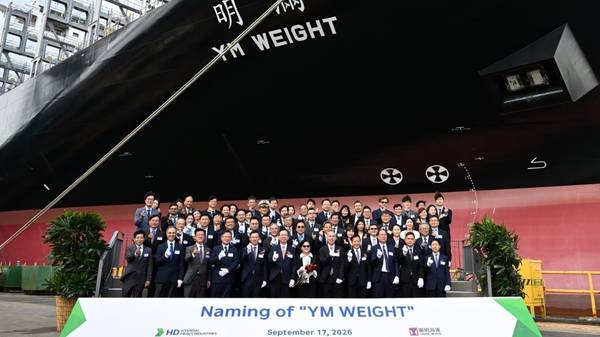
Yang Ming names fourth LNG dual-fuel container vessel YM Weight
Newbuild features high-pressure dual-fuel main engines capable of running on either LNG or low-sulphur fuel oil. |
|
|
|
||
|
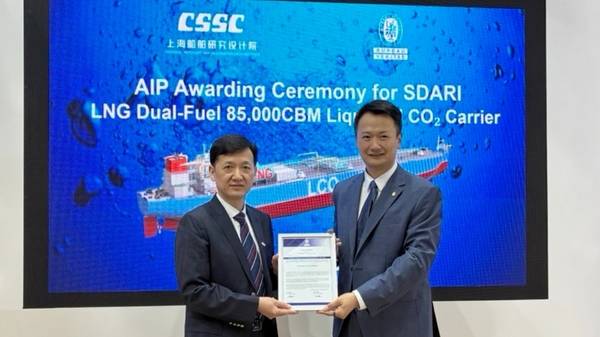
Bureau Veritas grants AiP to SDARI’s LNG dual-fuel liquefied CO₂ carrier design
Classification society approves 85,000-cbm vessel concept designed to support the growing carbon capture and storage sector. |
|
|
|
||

|
JuWonOil looking to strengthen with two Houston hires
Texas-based firm is recruiting a marine lubricants sales executive and a marine fuels and distillates trader. |
|
|
|
||
|
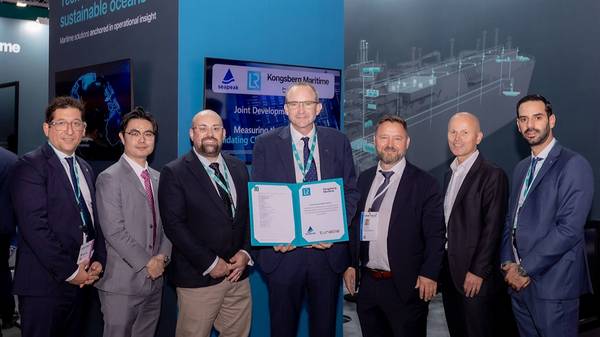
Four firms partner to trial continuous emissions monitoring on LNG carrier
LR, Seapeak, Kongsberg Maritime and Tunable will test onboard CO₂ monitoring against engine data and default emissions factors. |
|
|
|
||
|
Bunker Holding reshuffles commercial leadership across brand portfolio
Appointments announced across KPI OceanConnect, Glander International Bunkering and its digital sales operations. |
|
|
|
||
| Stolt-Nielsen to fully control Avenir LNG with acquisition [News & Insights] |
| Vitol Bunkers launches HSFO supply in Pakistan after four-year hiatus [News & Insights] |
| Vitol launches Pakistan bunker operations with first large-scale IMO-compliant fuel production [News & Insights] |
| Avenir LNG begins construction of second 20,000 cbm bunkering vessel in China [News & Insights] |