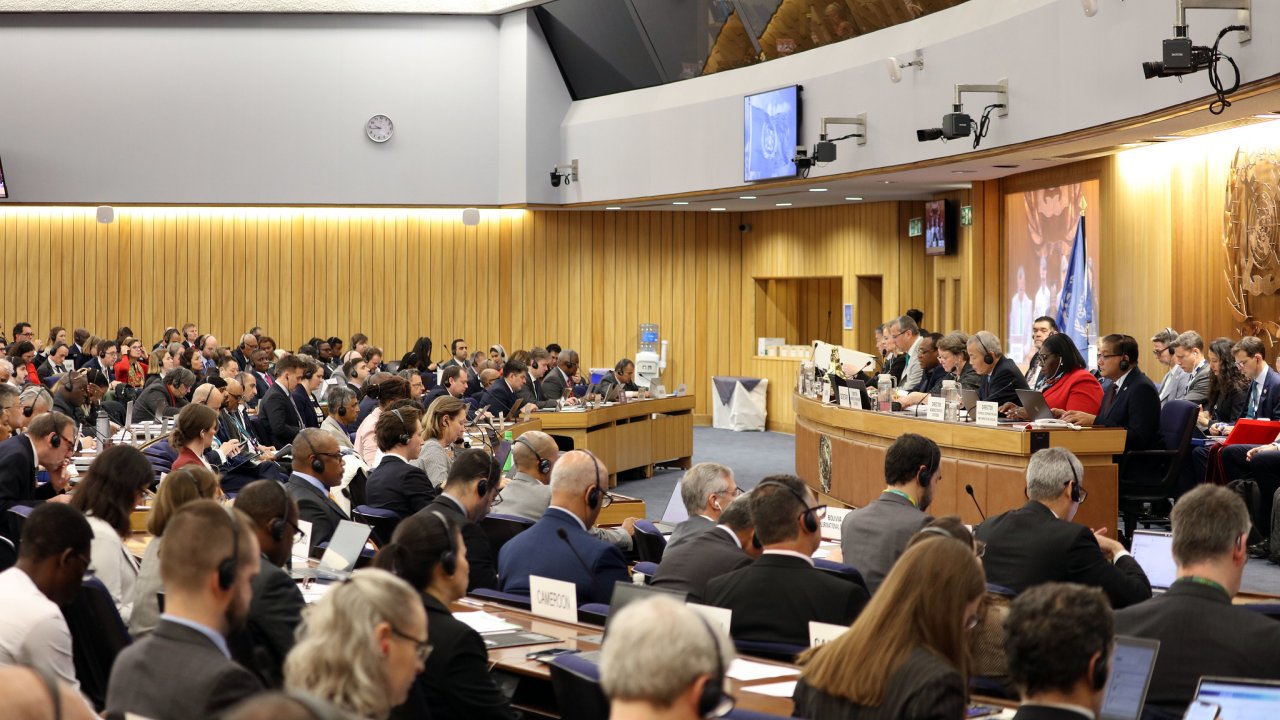
The International Maritime Organization (IMO) formally approved a proposal for a new global pricing mechanism for ships based on greenhouse gas fuel intensity (GFI) thresholds at the 83rd session of the Marine Environment Protection Committee (MEPC), held on April 7-11.
Named the IMO Net-zero Framework, it is the first in the world to combine mandatory emissions limits and greenhouse gas (GHG) pricing across an entire industry sector.
If formally adopted at an extraordinary MEPC session in October 2025, the measures could enter into force in 2027, 16 months after adoption (in line with MARPOL articles).
Requirement to reduce greenhouse gas fuel intensity (GFI)
Under the draft regulations, ships over 5,000 gt will be required to reduce, over time, their annual greenhouse gas fuel intensity (GFI), measured as the amount of well-to-wake GHG emissions produced per unit of energy consumed, expressed in grams of CO₂ equivalent per megajoule (gCO₂e/MJ) of fuel energy.
| GHG Fuel Intensity (gCO₂e/MJ) = |
|
This metric, which also includes wind propulsion, solar power and electricity delivered to the ship, reflects how efficiently a vessel uses its energy relative to the emissions it produces.
Two tiers of GFI reduction requirements
There will be two tiers of GFI reduction requirements that ships will be required to meet each year: a minimum 'Base Target' and a stricter 'Direct Compliance Target'. These yearly reduction targets are against the 93.3 gCO₂e/MJ baseline GFI figure established by the IMO, which represents the global fleet-average GFI in the baseline year, 2008.
| IMO GFI reduction targets (%) | ||
|---|---|---|
| Year | Base (%) | Direct Compliance (%) |
| 2028 | 4 | 17 |
| 2029 | 6 | 19 |
| 2030 | 8 | 21 |
| 2031 | 12.4 | 25.4 |
| 2032 | 16.8 | 29.8 |
| 2033 | 21.2 | 34.2 |
| 2034 | 25.6 | 38.6 |
| 2035 | 30 | 43 |
| 2040 | 65 | |
| IMO GFI targets (gCO₂e/MJ) — from 93.3 gCO₂e/MJ baseline | ||
|---|---|---|
| Year | Base | Direct Compliance |
| 2028 | 89.57 | 77.44 |
| 2029 | 87.70 | 75.57 |
| 2030 | 85.84 | 73.71 |
| 2031 | 81.73 | 69.60 |
| 2032 | 77.63 | 65.50 |
| 2033 | 73.52 | 61.39 |
| 2034 | 69.42 | 57.29 |
| 2035 | 65.31 | 53.18 |
| 2040 | 32.66 | |
If the Base or Direct Compliance targets are not met in a given year, then ships will be required to pay Remedial Unit (RU) charges, expressed in US$ per tonne of CO₂ equivalent emissions (CO₂e).
The SUs received by a ship, which are valid for two years, can be transferred to other vessels with a compliance deficit or used for subsequent reporting periods.
It seems likely, as with other carbon pricing systems with tiered penalties, that Tier 1 SUs will be able to be used to cover both Tier 1 and Tier 2 compliance deficits, whilst Tier 2 SUs will be restricted to Tier 2 compliance deficits only.
ZNZ fuels, proceeds and five-year review
To qualify as a ship using zero or near-zero (ZNZ) emission fuels and receive a subsidy or reward, the threshold has been set at 19 gCO₂e/MJ until 2034 and 14 gCO₂e/MJ from 2035. The full mechanism is yet to be developed.
Proceeds collected from RU charges are to be placed into the IMO Net-Zero Fund, which IMO says will be used to reward emissions reduction; support innovation, research and infrastructure; fund training, technology transfer and capacity building; and mitigate negative impacts on vulnerable states, amongst other initiatives.
The IMO Net-Zero Framework will be included in a new Chapter 5 of MARPOL Annex VI, Prevention of Air Pollution from Ships. It is to be reviewed every five years — where possible adjustments to the GFI thresholds will be examined as well as the potential inclusion of vessels below 5,000 gt.
|
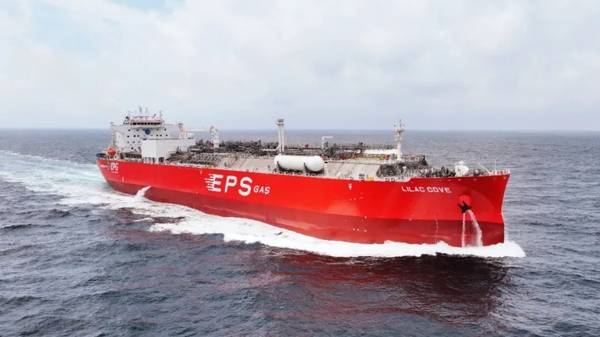
Jiangnan delivers second LPG dual-fuel VLAC in series to Singapore’s EPS
Lilac Cove, the world’s largest liquid ammonia carrier, joins Ivy Cove as Jiangnan advances its six-ship VLAC programme. |
|
|
|
||
|
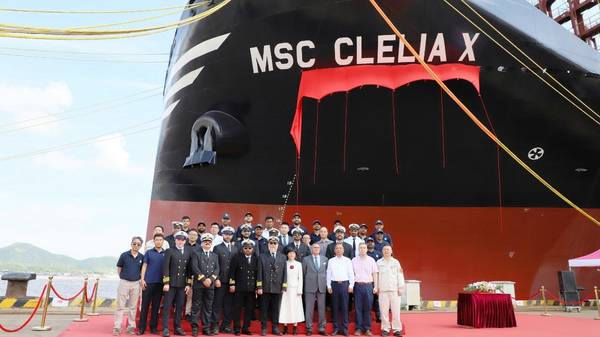
MSC LNG dual-fuel container ship delivered almost a year early
Chinese shipbuilder hands over sixth 10,300-TEU vessel in series to MSC ahead of contract schedule. |
|
|
|
||
|
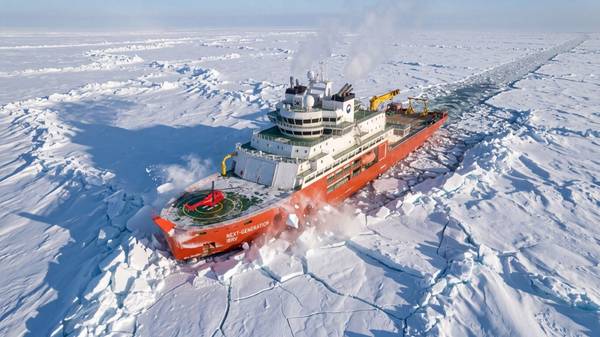
Steel cutting marks start of construction on dual-fuel icebreaking research vessel
Hanwha Ocean begins building a dual-fuel LNG/MGO icebreaker for the Republic of Korea’s Ministry of Oceans and Fisheries, due for delivery in 2030. |
|
|
|
||
|
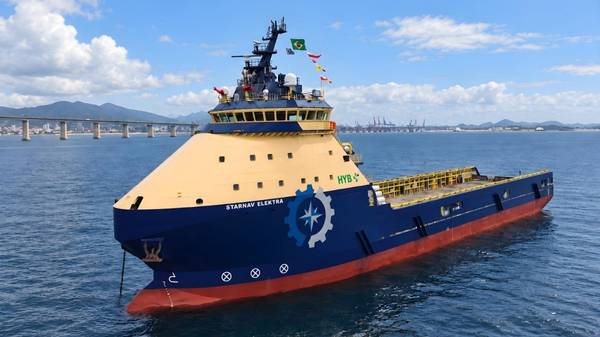
Petrobras christens first vessel under Mar Aberto fleet renewal programme
Platform supply vessel Starnav Elektra, built in Santa Catarina with an all-female crew, marks the first delivery under the fleet initiative. |
|
|
|
||
|
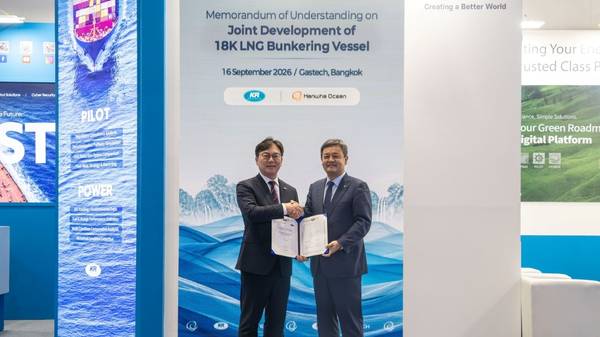
KR and Hanwha Ocean agree to develop 18,000-cbm LNG bunkering vessel designs
Pair will jointly explore two design concepts for a new LNG bunkering vessel. |
|
|
|
||
|
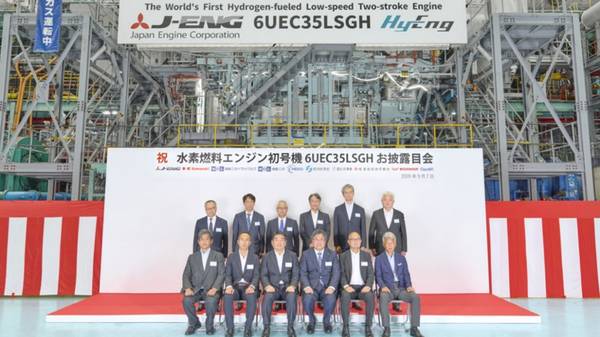
Japan Engine completes land-based testing of landmark hydrogen-fuelled engine for large vessels
Hydrogen co-firing rate of at least 95% achieved during factory testing. |
|
|
|
||
|
Ethanol edges into shipping’s fuel mix as methanol crossover eases adoption barriers
Rising interest from cargo owners, shared technology with methanol and Brazilian production growth push ethanol beyond regional niche status. |
|
|
|
||
|
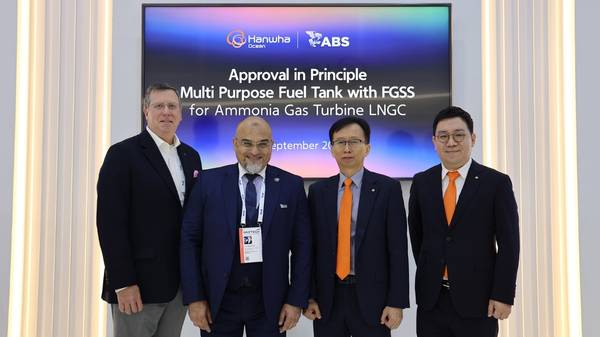
ABS grants Hanwha Ocean approval for dual-fuel tank enabling LNG-to-ammonia switch
In-principle approval awarded for fuel tank and supply system enabling LNG carriers to convert to ammonia without replacement. |
|
|
|
||
|
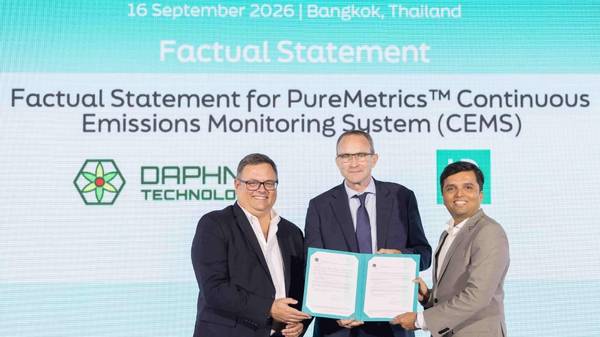
Lloyd's Register confirms suitability of Daphne Technology's emissions monitoring system
Factual Statement validates the PureMetrics design for monitoring greenhouse gas emissions from marine engines. |
|
|
|
||

|
IMO issues shipboard biofuel blend checklist developed by IBIA
Checklist for FAME-based biofuels formally incorporated into IMO document, supporting crews handling biofuel blends for the first time. |
|
|
|
||
| Swedish government bans scrubber wastewater discharges [News & Insights] |
| Lloyd's Register confirms suitability of Daphne Technology's emissions monitoring system [News & Insights] |
| IMO issues shipboard biofuel blend checklist developed by IBIA [News & Insights] |
| Four firms partner to trial continuous emissions monitoring on LNG carrier [News & Insights] |
| SEA-LNG urges EU to protect mass-balance pathway for liquefied biomethane [News & Insights] |
| EmissionLink urges demand aggregation to unlock zero-emission fuel investment [News & Insights] |