 |
Bad bunkers can significantly impact vessel operations, necessitating intervention from the crew and in some cases result in operational failure - varying from operational damage through to loss of power and subsequently loss of propulsion. Mitigating the impact of bad bunkers can help to prevent damage to vessel’s equipment and protect the safety of those on board and the environment. Bad bunkers can lead to fuel stability problems, chemical contamination and poor cold-flow properties. This paper describes the key steps that should be taken to avoid the risk of receiving bad bunkers.
Bad Bunkers
Bad bunkers refer to fuel of substandard quality, which can lead to operational disruptions and challenges in fuel management. Common fuel quality concerns include poor stability, chemical contamination, corrosive tendencies, poor combustion and poor cold flow characteristics. Thorough testing of bunkered fuel prior to putting it in operation is highly advantageous as it reveals potential issues inherent in the fuel. This data often enables proactive measures to mitigate the risk of operational complications stemming from such fuel.
Whilst the general quality of bunker fuel has been consistent over recent years, it is important to note that off-specification fuel statistics are typically based on the criteria outlined in Table 1 and 2 of ISO 8217 standard. There have been numerous occasions when bunker fuel meeting these criteria has proven to be unsuitable for onboard use due to its poor quality and on a number of occasions has caused catastrophic failures (e.g. ARA contamination case - August 2022 and March 2024, Houston contamination case April 2023 and Singapore contamination case August 2022). This necessitates additional testing methodologies such as GCMS, WAT/WDT, and Reserve Stability Number to accurately assess fuel quality.
The increase in reported operational issues stemming from contaminated fuels, which often elude detection through routine ISO 8217 testing, has experienced a notable uptick in recent years. This trend can be attributed, at least in part, to the drive towards decarbonization, notably spurred by initiatives such as IMO 2020. Consequently, fuel suppliers are increasingly experimenting with a diverse range of feedstocks to serve as blend components in conventional fossil fuels.
As the world’s largest marine fuel quality testing company covering 50% of all fuel testing, VPS can offer valuable insights and advice in relation to poor quality and/or contaminated fuel. Proactive, pre-burn, fuel testing on a regular basis, is definitely a highly recommended approach to mitigating risks to vessel operations, crew safety and environmental impact. The typical off-specification parameters associated with engine failure are usually Pour Point, Total Sediment Potential, Cat-fines and/or Water content. Whilst the International Marine Fuel Quality standard, ISO8217, includes these test parameters, it’s certainly a more diligent and wiser approach, to consider a fuel’s overall stability, cold-flow properties, chemical contamination and potential corrosivity.
At VPS, we possess the proficiency and extensive experience necessary to conduct specialised tests specifically designed to detect these issues. Our tailored testing protocols enable us to identify potential fuel-related challenges and offer operational guidance to minimise associated risks effectively.
Fuel Stability
Both High Sulphur Fuel Oils (HSFOs) and Very Low Sulphur Fuel Oils (VLSFOs), can suffer with varying degrees of instability due to thermal-aging and over-heating, high sediment content, or chemical contamination, to name but a few potential causes. Instability usually manifests itself through sediment formation, which can in turn, block onboard filters, pipework, potentially then starving an engine of fuel.
ISO8217 includes the Total Sediment Potential (TSP) test, which is a good indicator of the amount of sediment which may be potentially produced in relation to a fuel’s stability. However, additional tests such as Total Sediment Accelerated (TSA), a deliberate fuel-aging test, Total Sediment Existent (TSE), a measure of fuel cleanliness and the determination of a fuel’s stability reserve, via Separability Testing, to measure the fuel’s capacity to hold long chain asphaltenes within the fuel solution, can provide much more information regarding fuel stability determinations.
In particular, Separability Number is an excellent accompaniment to the routine hot filtration methods. It can identify potentially troublesome unstable fuels even when the Hot Filtration Test methods indicate a low sediment content. Conversely, it may indicate that a high sediment fuel is in fact quite stable and unlikely to form sludge. This information in combination, is extremely useful from an operational perspective, as it will indicate in advance if and what mitigation steps are appropriate.
Chemical Contamination
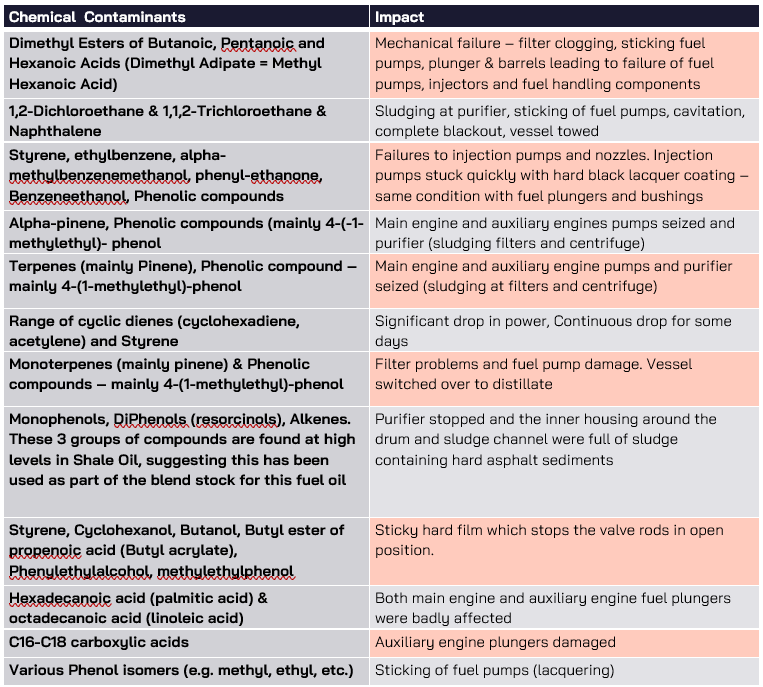
Over the years chemical contamination of marine fuels has resulted in many onboard operational issues, with numerous chemicals and chemical groups being identified as the cause. Major widespread contamination events, include Houston (2018), with over 200 vessels damaged due to a potential phenolic contamination, to Singapore (2022) where 80 vessels were affected by chlorinated hydrocarbons within the fuel and then more recently ARA (2023) where around 20 vessels suffered issues due to a cocktail of styrenes and dienes within the fuel. In between such times, many smaller cases of chemical contamination have been identified by VPS. Thankfully, many at a pre-burn stage, thus avoiding any operational issues or damage cases.
Over time, all of the following chemicals have been found by VPS in marine fuels. The effects of these are highlighted below:
Risks from chemical contamination of fuel can be significantly mitigated through pre-burn screening of fuels using VPS Chemical Screening Service. This low-cost test, utilising Gas Chromatography Mass Spectrometry (GCMS) analysis, will warn of the presence of over 70% of all volatile chemicals within fuel. With both VLSFO and HSFO we continued to see cases of vessel damages due to chemical contamination during 2023. Focusing specifically on the VPS GCMS-Head Space Chemical Screening service, as a damage prevention service, 19.9% of applicable marine fuel samples received by VPS since 2018, have undertaken this rapid, pre-burn protection service, with an average 8% of samples tested, giving rise to a “Caution” result, indicating the presence of at least one chemical contaminant and thus the notified vessel has avoided any damages.
In April 2023, a Singaporean-owned chemical and product tanker bunkered 415 m/tons of VLSFO in Houston. The vessel began to burn the fuel in May and quickly began to experience numerous issues with the auxiliary and main engines, such as exhaust gas deviating temperatures and the wearing of fuel pumps and plunger barrels. In addition, problems such as start-failure due to insufficient fuel injection, pressure build up, as well as worn out and leaking fuel pumps. Of greater concern was the complete engine stoppage enroute to the next US port, when the main engine failed. Multiple attempts were made to start the engine, all without success.
Subsequent VPS forensic laboratory testing, utilising a proprietary Gas Chromatography Mass Spectrometry (GCMS) Acid Extraction methodology, detected the presence of several phenols and fatty acid compounds within the fuel.
The vessel initiated the necessary repairs to both auxiliary and main engine fuel pumps, at a total spares cost of $200,000. In hindsight the vessel owner stated pre-burn screening would have helped significantly in avoiding such damages and costs.
Cold-Flow Properties
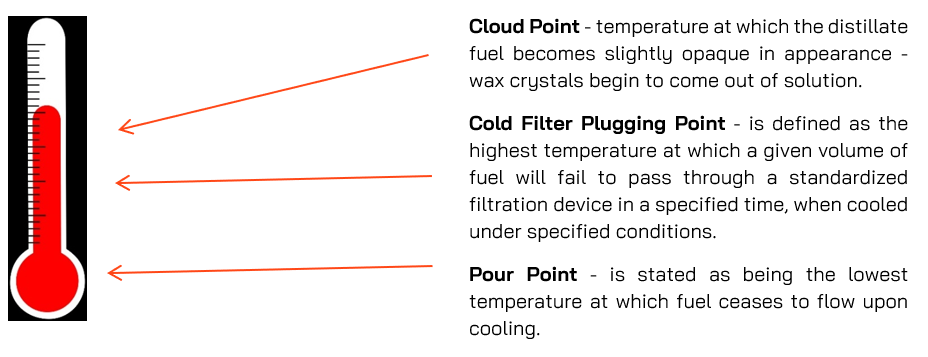
The cold-flow properties of fuels are also important to monitor closely, especially when sailing in colder temperature regions. The Pour Point of HSFOs, VLSFOs and MGO fuels, should always be monitored when colder climates are encountered. Pour Point was the most common MGO off-specification parameter in 2023, with 36.6% of MGO off-specs attributed to Pour Point. However, prior to reaching the pout point of MGO fuel, its cloud point and cold-filter plugging point behaviour offer earlier warning-signs of potential cold-flow issues, relating to wax precipitation from the fuel. It is key fuel management practice to measure these two cold-flow parameters within MGO distillates.
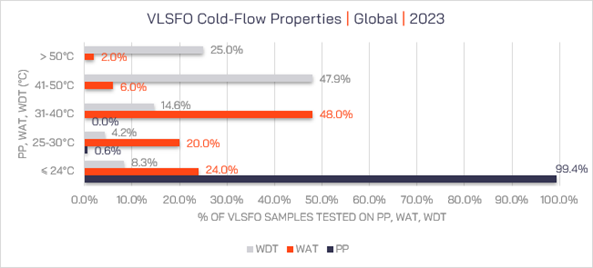
VLSFO fuels have a higher paraffinic content than HSFO and as a consequence, have a greater potential to precipitate wax, which can cause filter and pipework blockages, which can ultimately starve an engine of fuel. As VLSFOs are dark fuels, the cloud point cannot be seen, as it can with a distillate fuel. Therefore in 2019, VPS developed a proprietary test method to measure the Wax Appearance (WAT) and Wax Disappearance Temperatures (WDT) of VLSFOs.
Generally, it is recommended that the fuel temperature is kept approximately 10oC above the PP to avoid risk of solidification. However, in the majority of the global bunker ports in 2022-23 the average WAT was often higher than 30oC, and WDT higher than 40oC. This may also mean heating the fuel to avoid solidification during transfer. However, this should not necessarily mean an increase in storage temperature. Fuel oil transfer pumps on board are generally positive displacement pumps and can handle certain amount of wax that are present in the fuel.
If the fuel has a high WAT/WDT, VPS recommend heating the fuel just before the transfer operation.
Therefore, additional fuel tests, such as, Total Sediment Existent (TSE), Separability Number (Reserve Stability Number, RSN), Wax Appearance/Wax Disappearance Temperature Testing, Cloud Point, Cold Filter Plugging Point and Chemical Screening, can provide significantly greater and more valuable protective information, when assessing fuel quality than ISO8217 alone. This is why VPS offer our Additional Protection Service (APS) “bundles”. The APS includes the standard ISO8217 parameters but also fuel-relevant additional tests, in order to support our customers to greater levels with respect to, asset, crew and environmental protection.
Over the years, VPS Off-specification fuel data has proactively highlighted the potential risks associated with certain parameters. The importance of regular and wider-ranging marine fuel testing, through the Additional Protection Service, will definitely support mitigation strategies to prevent disruptions in vessel power supply due to fuel-related issues. Even a minor fuel quality issue can prove costly. A 2018 report by the Swedish Club highlighted the average cost per incident of fuel-related damage on vessels is $344K.

|
Japan Engine completes land-based testing of landmark hydrogen-fuelled engine for large vessels
Hydrogen co-firing rate of at least 95% achieved during factory testing. |
|
|
|
||
|
Ethanol edges into shipping’s fuel mix as methanol crossover eases adoption barriers
Rising interest from cargo owners, shared technology with methanol and Brazilian production growth push ethanol beyond regional niche status. |
|
|
|
||
|
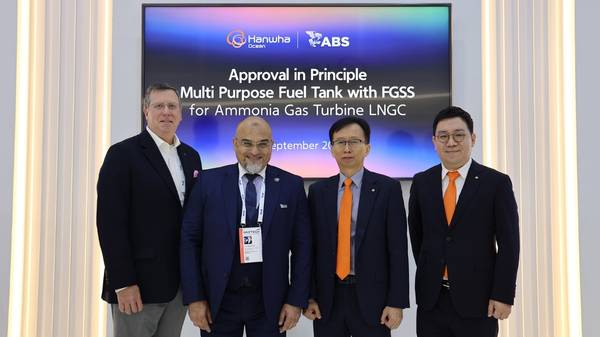
ABS grants Hanwha Ocean approval for dual-fuel tank enabling LNG-to-ammonia switch
In-principle approval awarded for fuel tank and supply system enabling LNG carriers to convert to ammonia without replacement. |
|
|
|
||
|
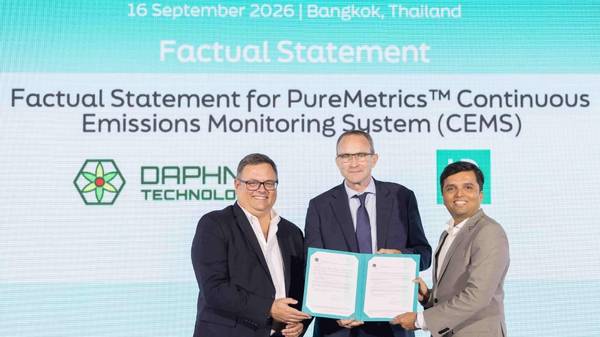
Lloyd's Register confirms suitability of Daphne Technology's emissions monitoring system
Factual Statement validates the PureMetrics design for monitoring greenhouse gas emissions from marine engines. |
|
|
|
||

|
IMO issues shipboard biofuel blend checklist developed by IBIA
Checklist for FAME-based biofuels formally incorporated into IMO document, supporting crews handling biofuel blends for the first time. |
|
|
|
||
|
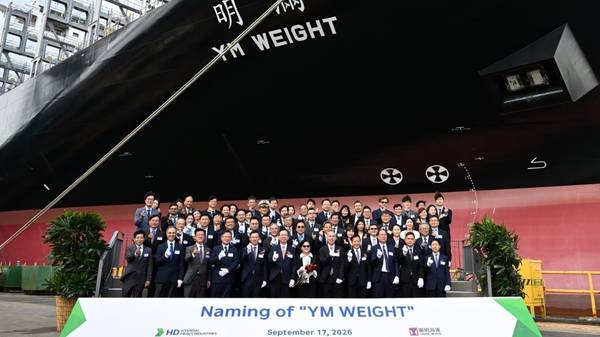
Yang Ming names fourth LNG dual-fuel container vessel YM Weight
Newbuild features high-pressure dual-fuel main engines capable of running on either LNG or low-sulphur fuel oil. |
|
|
|
||
|
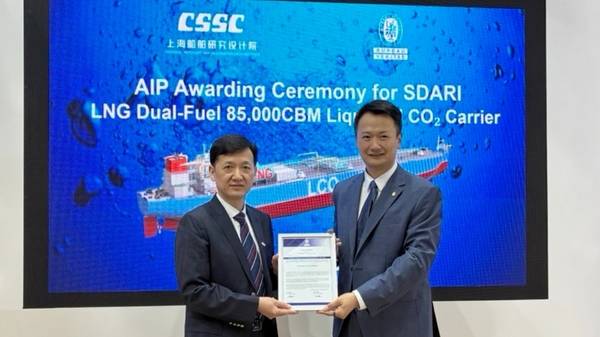
Bureau Veritas grants AiP to SDARI’s LNG dual-fuel liquefied CO₂ carrier design
Classification society approves 85,000-cbm vessel concept designed to support the growing carbon capture and storage sector. |
|
|
|
||

|
JuWonOil looking to strengthen with two Houston hires
Texas-based firm is recruiting a marine lubricants sales executive and a marine fuels and distillates trader. |
|
|
|
||
|
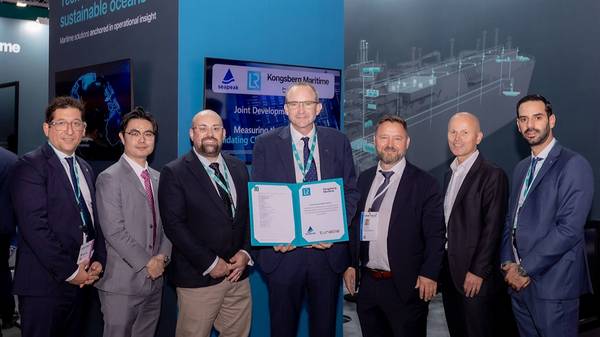
Four firms partner to trial continuous emissions monitoring on LNG carrier
LR, Seapeak, Kongsberg Maritime and Tunable will test onboard CO₂ monitoring against engine data and default emissions factors. |
|
|
|
||
|
Bunker Holding reshuffles commercial leadership across brand portfolio
Appointments announced across KPI OceanConnect, Glander International Bunkering and its digital sales operations. |
|
|
|
||
| ISO 8217 formula 'not suitable' for gauging FAME fuel energy content: VPS [News & Insights] |
| VPS performs first methanol bunker quantity survey [News & Insights] |
| VPS to host Dutch seminar on marine fuel quality, lubricants and decarbonisation [News & Insights] |
| VPS to host Dutch seminar on marine fuel quality, lubricants and decarbonisation [News & Insights] |
| Perfect storm at sea: High bunker prices meet declining fuel quality | Steve Bee, VPS [News & Insights] |
| Perfect storm at sea: High bunker prices meet declining fuel quality | Steve Bee, VPS [News & Insights] |
| VPS to host Bergen seminar on marine fuel quality, lubricants and decarbonisation regulation [News & Insights] |