Sun 28 Jun 2020, 12:25 GMT

Bunker Holding posts best-ever annual result


Declares itself 'world's leading bunkering company' with pre-tax profit of $155.2m.


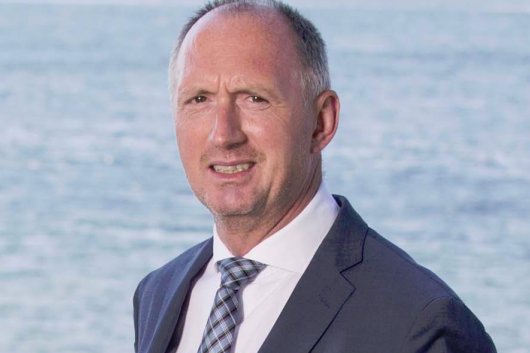
Keld Demant, CEO of Bunker Holding.
Image credit: Bunker Holding A/S
Bunker Holding - a group that has a number of marine fuels and lubricants businesses under its umbrella, including BMS United Bunkers, Bunker One, Dan-Bunkering, Glander International Bunkering, LQM Petroleum Services, Unicore Fuel, Unimarine and Unioil Supply - reports that it has recorded its best-ever annual result during the fiscal year 2019-20 as earnings before tax doubled to $155.2m, up from $77.3m the year before.

The Denmark-headquartered business ended the year with an equity base of $357m – the highest in its history, whilst revenue grew from $10.644bn to $10.9bn and margins per tonne sold (figures not disclosed) also climbed.

Net borrowings were said to be significantly below net working capital (i.e. current assets minus current liabilities), and the firm stressed that it remained 'ultra-liquid' with 92 percent of its balance sheet reported as current assets.

Five-year analysis

Over the last five fiscal years, Bunker Holding's pre-tax profit has jumped from $61m to $155.2m; and since dropping to $35m in 2016-17, the metric has increased every year since. Revenue, meanwhile, has almost doubled since 2015-16 from $5.65bn to $10.9bn. The fuels and lubricants specialist, which does not publicly release sales volume figures, is now confident enough to declare itself 'the world's leading bunkering company'.

Its closest rival, World Fuel Services, has seen a recent improvement in marine performance since declaring a $57.8m operating loss in 2017, but last year's income from operations of $67m was still below the $73m figure achieved in 2015; and sales volume has declined from 32.6m to 20.9m tonnes over the same five-year period, whilst revenue has dipped around $1.3bn to $8.06bn

Bunker Holding: financial results (in $m)

  Profit Before Tax Revenue Equity
2015-16 61 5,652 271
2016-17 35 6,459 253
2017-18 40 8,153 254
2018-19 77.3 10,644 318
2019-20 155.2 10,900 357

Long-term strategy and 'rock-solid' financials

Commenting on its performance, Bunker Holding said: "In one of the most disruptive years ever in the bunkering industry – where new regulations required the shipping industry to make a challenging transition to new, environmentally friendly low-sulphur fuels – Bunker Holding successfully executed a diligent and long[-]planned strategy."

CEO Keld R. Demant remarked: "All of us at Bunker Holding are proud to be part of this success. It is the result of relentless strategical execution, and by abilities that we have built up over the past many years.

"Our success has been enabled by our long-term commitment to recruit and retain the most capable and committed employees. At the same time, rock-solid financial foundations have enabled us to maintain both strong creditworthiness and offer attractive lines of credit."

Expertise

Bunker Holding was also keen to point out that it had been rewarded by its preparation for the introduction of lower-sulphur fuels in 2020, using its global expertise and local presence to help clients make the transition.

"Bunker Holding creates value for clients every day by working with them as a trusted partner and help them manage an ever more complicated and critical bunkering process," Demant stressed.

"We make bunkering seem simple by providing our clients with expert advice on crucial issues such as bunkering strategy, financing and availability, and with local intelligence in ports all over the world."

'Strong result' from Bunker One with strengthened portfolio

Also contributing to the record-breaking year was a reported 'strong result' from Bunker One, Bunker Holding's physical supply unit. In only its second full year of operations, Bunker One notes that it entered West Africa, strengthened its portfolio in Scandinavia, and became the market leader in the US Gulf Offshore and Caribbean.

Currently, Bunker One has 22 supply locations worldwide.

The year ahead

Discussing the year ahead, Bunker Holding observed that the effects of volatile oil prices and the Covid-19 pandemic remain unpredictable, and the firm posits that the entire industry will most likely be affected.

"We are confident that the strengths that carried us through last year will also help us through the coming turbulent months. We enjoy superior financial strength as well as great stability afforded by our family ownership, and we have highly skilled employees and market expertise. All these advantages mean that we can and will keep pursuing sustainable growth," Demant concluded.


IBIA MFM bunkering training course graphic. IBIA announces new date for mass flow meter training course in Rotterdam  

Training scheduled for 12 May follows mandatory MFM implementation at Rotterdam and Antwerp-Bruges ports.

A Maersk vessel, pictured from above. Maersk and Hapag-Lloyd suspend Strait of Hormuz transits amid Middle East security crisis  

Container carriers reroute services around the Cape of Good Hope as military conflict escalates.

Map of Middle East. Operations continue as normal at most Middle East ports  

Most facilities operating normally, with exceptions in Bahrain, Oman and Saudi Arabia.

Photograph of the 93,000-cbm very large ammonia carrier (VLAC) Gaz Ronin. Naftomar takes delivery of 93,000-cbm dual-fuel ammonia carrier  

Gaz Ronin features a MAN dual-fuel engine with high-pressure selective catalytic reduction technology.

Aurora Botnia leaving harbor. AYK Energy completes world’s largest marine battery retrofit on Wasaline ferry  

Aurora Botnia receives 10.4 MWh battery system, bringing total capacity to 12.6 MWh.

Steel cutting ceremony for an LNG dual-fuel 307,000-tonne crude oil tanker with builder's hull no. 113. Dalian Shipbuilding begins construction on LNG dual-fuel crude tanker  

Development is one of a number of milestones reported by parent company over the past few days.

Photograph of Sallaum Lines' Ocean Breeze vessel with 'Introducing The Blue Corridor' overlaid text. Sallaum Lines launches Blue Corridor sustainability initiative for Europe–Africa ro-ro trade  

Company deploys LNG-capable vessels with AI routing and eco-speed protocols on new green shipping corridor.

The platform supply vessel Viking Energy. Eidesvik Offshore signs yard contract for ammonia retrofit of PSV Viking Energy  

Halsnøy Dokk to convert platform supply vessel as part of EU-backed Apollo project.

Vanquish tanker alongside Jette Theresa oil/chemical tanker docked at terminal. North Sea Port completes risk analysis for alternative fuel bunkering operations  

Port authority says LNG, hydrogen, methanol and ammonia can be safely refuelled across its facilities.

Container ship near a port. Ammonia emerges as most feasible alternative fuel for deep-sea shipping in 2050 emissions study  

Research combining expert survey and technical analysis ranks ammonia ahead of hydrogen and methanol.