Thu 20 Jun 2019, 11:35 GMT

DNV GL highlights hydrogen fuel challenges


Discusses infrastructure, safety, risk, gas conversion and bunker vessel development.


Image credit: Pixabay
DNV GL has outlined what it considers to be the key challenges that lie ahead for the development of a hydrogen fuel bunkering market for ships.

The Norway-headquartered firm notes that hydrogen is a fuel that could potentially meet the needs of transport in the future as industries, including shipping, target decarbonization. However, DNV GL points out that there are a number of obstacles that will need to be overcome in order for hydrogen to be used by ships on a large scale.

Safety and conversion

On the issue of safety, hydrogen is highly flammable and its minute molecules make it difficult to contain. As a result, conversion to ammonia, synthetic methane or a liquid organic hydrogen carrier (LOHC) such as cycloalkanes or formic acid are being examined as alternatives.

Additionally, whilst liquefied hydrogen takes less space than compressed gas, liquefaction can consume approximately 30 percent of hydrogen's energy content - therefore making the process most feasible for large amounts of hydrogen.

Small infrastructure, small ships

Currently, there are a small number of hydrogen liquefaction facilities worldwide. According to DNV GL, around three percent of world energy consumption is used to produce hydrogen, with more than 55m tonnes of hydrogen consumed per year - mostly by the chemical and petroleum industries.

Gerd Petra Haugom, Principal Consultant at DNV GL, believes that due to the need to develop an infrastructure and acquire operational experience, hydrogen fuel will initially be used by smaller ships and vessels operating on fixed routes.

"It will be easy to start with ferries and other vessels which are on set routes where you will have limited infrastructure requirements," Haugom remarked.

Funding and first-mover risk and costs

DNV GL suggests the willingness by shipping firms to be a first mover with hydrogen - in spite of the potential risk and associated costs - will depend on the availability of private funding and government subsidies.

Fuel cells

Also on the issue of risk, hydrogen fuel cells are seen as a solution that could potentially overcome the weight and capacity constraints of batteries, but Haugom - who has worked on development projects for hydrogen-powered buses and public transport - says assessments will need to be carried out to ensure that risk levels are acceptable.

"The transfer technology for compressed hydrogen fuel has to be developed to ensure safe and fast bunkering since the volumes needed for ships are greater than for a truck or bus," DNV GL stressed.

Developing bunkering vessels

As demand for hydrogen fuel increases, there will also be a need to build hydrogen bunker vessels, DNV GL points out.

But whilst a ship that has liquid hydrogen bunker tanks will need to be refuelled with liquefied hydrogen, a vessel carrying compressed hydrogen fuel could be supplied by a liquid hydrogen bunker vessel equipped with a regasification plant, DNV GL notes.

Potential

Hydrogen demand is expected to rise across a number of industries, which in turn could lead to the development of new hydrogen supply chains that increase the availability of compressed and liquid hydrogen as a fuel.

The Hydrogen Council estimates that hydrogen could replace five percent of the world's aviation and shipping fuel by 2050.

At the same time, the council notes that ratcheting up production could bring down costs, whilst also calling for a regulatory framework.


Flag of Brazil. Petrobras resumes bunkering operations at Rio Grande Terminal after power restoration  

Brazilian supplier restarts marine fuel supply after completing an inspection following an electricity outage.

Stena E-Flexer vessel render. Stena RoRo orders battery-ready E-Flexer 2.0 ferries from Chinese yard  

Vessels include diesel engines capable of running on biodiesel and are methanol-ready.

BW Gemini vessel. Nord Gas Solutions to supply cargo and fuel systems for eight BW LPG VLGCs  

Gas-handling systems specialist awarded contract for new 90,000-cbm vessels.

Kingston Trader vessel. TFG Marine fits mass flow meter to Jamaica-bound bunker barge  

Kingston Trader becomes the first Caribbean bunkering vessel with mass flow metering as TFG Marine’s fleet coverage nears 90%.

Sebastian Vasquez and Camilo Angulo Ferrand, Monjasa. Monjasa announces full-chain marine fuel operations in Cartagena  

Monjasa says it now covers the entire marine fuel supply chain in Colombia, from oil wells to ship-side deliveries.

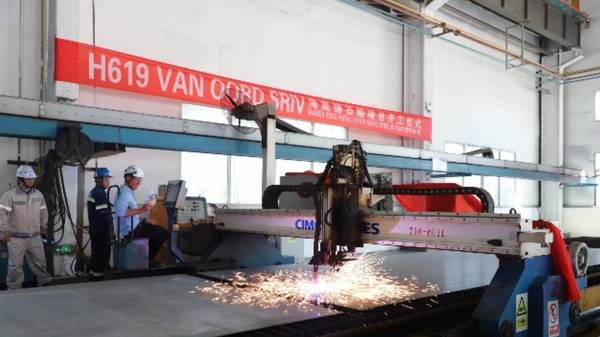
Steel-cutting ceremony for vessel with builder's hull no. H619. Ceremonies held for Van Oord’s methanol-hybrid rock installation vessels  

Two ships advance through parallel construction at China’s CIMC Raffles shipyard.

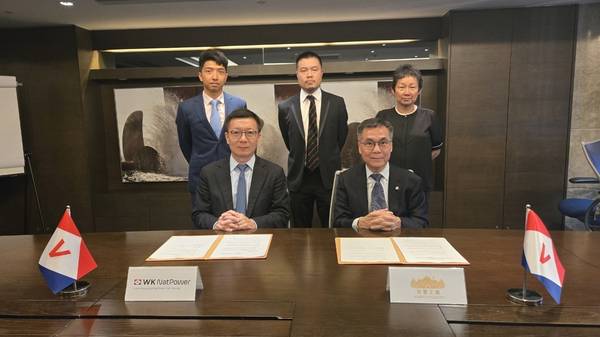
WK NatPower and AREL MoU signing. Wah Kwong NatPower signs MoU to explore Hong Kong marine electrification  

Venture will examine shore power, vessel charging and electric vessel deployment around Aberdeen’s waterfront.

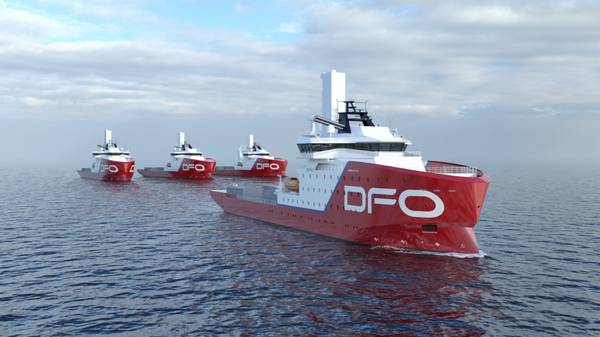
Vard 4 39 design render. Dong Fang Offshore orders CSOV with battery-hybrid propulsion  

Vard secures fifth newbuild contract from Taiwanese firm, with delivery scheduled for 2028.

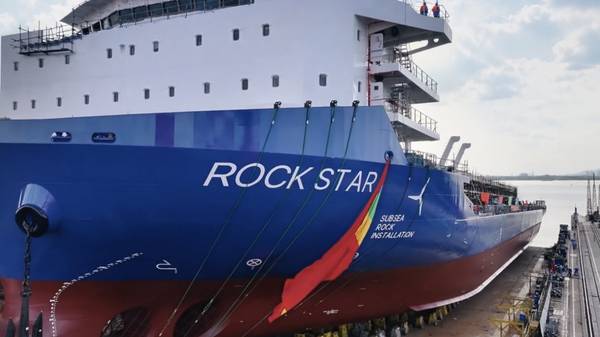
Rock Star vessel. CSL and OWL launch first subsea rock installation vessel for offshore wind  

MV Rock Star can run on MGO and methanol and is designed to support scour protection and cable burial for offshore wind projects.

François Michel and Andy McKeran. Lloyd’s Register study backs 200,000-cbm LNG carriers for fleet renewal  

Analysis finds larger LNG carriers could cut transport costs while retaining access to most major terminals.