
 |
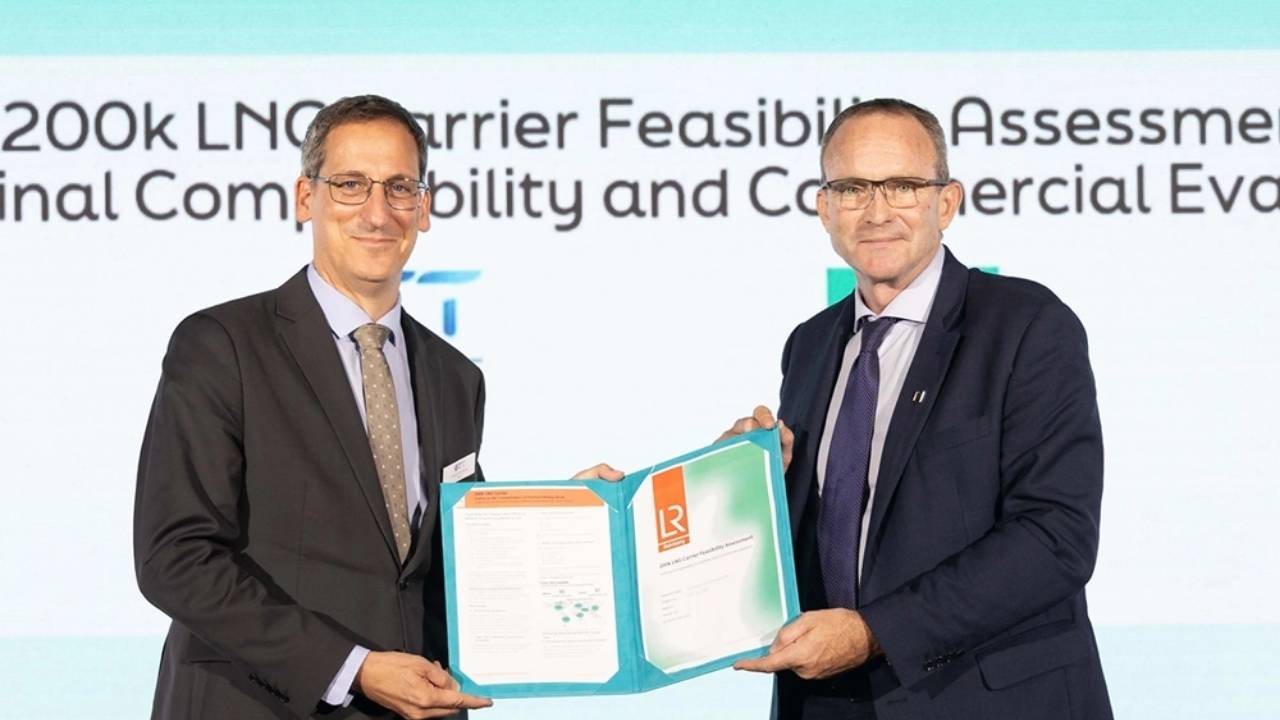
Lloyd’s Register (LR) has identified 200,000-cbm LNG carriers as a potential option for renewing the global LNG fleet, according to new analysis that found larger vessels could increase cargo capacity and lower transportation costs without requiring substantial changes to existing terminal infrastructure.
The findings were published in LR Advisory’s terminal compatibility and commercial evaluation report for GTT, presented at Gastech 2026. The report assessed representative 200,000-cbm LNG carrier designs against global LNG infrastructure and modelled their commercial performance across Atlantic and Pacific trading routes.
The analysis found that 88 LNG terminals worldwide are compatible with 200,000-cbm LNG carrier concepts, compared with 97 terminals for a conventional 174,000-cbm vessel. The accessible network still includes a number of LNG trading hubs, according to LR, which said this indicates that larger vessels could be deployed across core trades with a limited reduction in terminal reach.
The research found that LNG infrastructure across Asia Pacific, Europe, North America and the Middle East is generally positioned to accommodate 200,000-cbm LNG carrier operations.
A key finding of the report is that cargo tank configuration has little influence on terminal accessibility, with no material difference identified between three-tank and four-tank concepts. Instead, vessel beam was found to have the greatest influence on compatibility, alongside draft and displacement.
The findings come as LNG shipping faces pressure to improve transport efficiency while preserving operational flexibility. LR’s research suggests that increasing vessel size could help owners and charterers move more cargo per voyage, reduce the number of sailings required for a given transport volume and support LNG trade growth.
Alongside the technical assessment, LR’s commercial evaluation identified benefits for both owners and charterers. Despite the reduction in terminal accessibility, the larger vessel is said to offer economic advantages through increased cargo capacity and improved transportation efficiency.
LR’s modelling points to a potential owner benefit of approximately $85.5m over 30 years, alongside transport savings on representative routes. The report notes that larger vessel concepts may become increasingly relevant as LNG carriers operate at lower average speeds and as owners seek to balance transportation efficiency, fleet renewal and long-term operational flexibility.
Study co-author Sujith Tooneri, global head of newbuild advisory services at LR, commented: “The industry is entering a period where fleet renewal decisions will shape LNG transportation for decades to come. Our analysis shows that 200,000 cbm LNG carriers can retain access to most major LNG terminals while increasing cargo capacity, making them a practical option for owners looking to improve transportation efficiency and support future trade growth.”
Constantinos Chaelis, global gas segment director at LR, said: “The significance of these findings is that larger LNG carriers do not appear to require a wholesale rethink of terminal infrastructure. Many key LNG hubs are already capable of supporting these vessel concepts, which gives the market a realistic pathway to improve transport efficiency while maintaining broad trading optionality.”
|
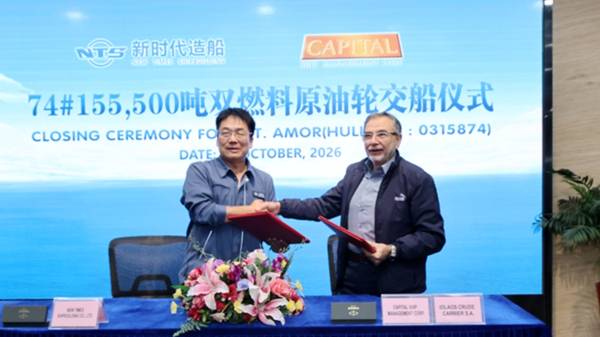
LNG dual-fuel crude tanker handed over to Capital
Jiangsu New Times Shipbuilding delivers the 155,500-DWT LNG dual-fuel crude oil vessel Amor. |
|
|
|
||

|
Gasum names Lowina Lundström as vice president, biogas
Former EIT InnoEnergy executive joins Gasum's management team to lead biogas business development from 1 December. |
|
|
|
||
|
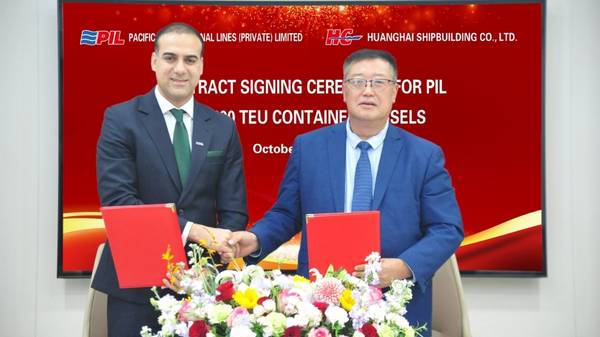
PIL orders seven methanol-ready feeder vessels from Huanghai Shipbuilding
Singapore carrier's 1,400-TEU newbuilds will boost intra-Asia capacity and support its 2050 net zero target. |
|
|
|
||
|
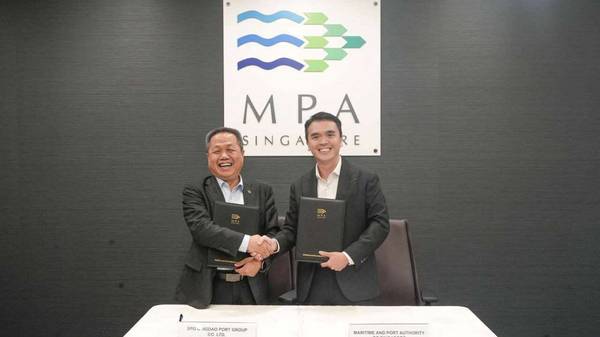
Singapore and Qingdao sign work plan to advance green and digital shipping corridors
MPA and Shandong Port Group’s Qingdao Port have agreed to pursue methanol bunkering pilots and data-sharing initiatives between the two ports. |
|
|
|
||
|
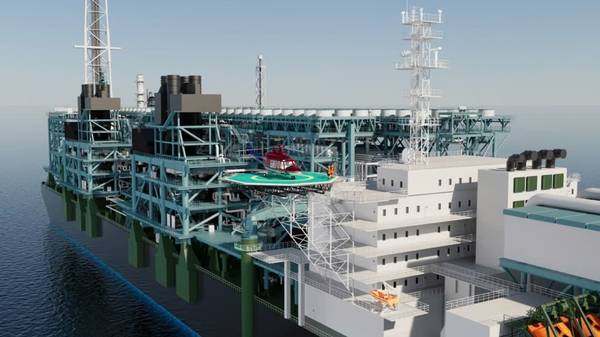
Wärtsilä to supply dual-fuel engines and thrusters for Delfin Midstream's FLNG vessel
Finnish technology group lands propulsion order for first floating LNG vessel built for US Gulf export project. |
|
|
|
||

|
Uni-Fuels advertises for senior bunker trader in Dubai
Nasdaq-listed firm recruiting for its trading team as it aims to drive growth. |
|
|
|
||
|
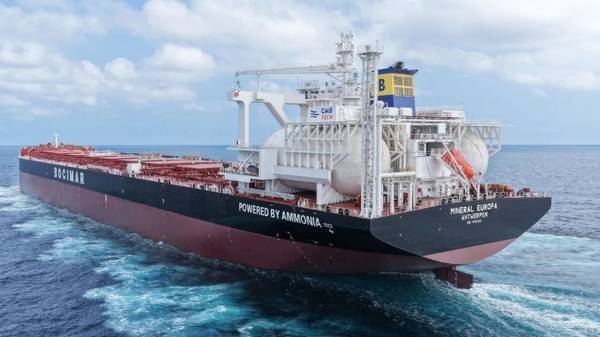
Green ammonia bunkered to ammonia-powered bulk carrier in Australian first
Pilbara Ports, Fortescue and CMB.Tech complete a ship-to-ship ammonia transfer at Port Hedland, supporting plans for a clean fuel bunkering hub in the region. |
|
|
|
||
|
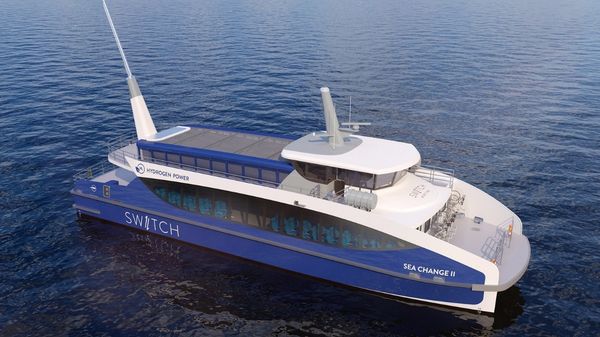
US Coast Guard agrees design framework for hydrogen-fuelled New York ferry
Switch Maritime and Incat Crowther reach regulatory agreement for a 150-passenger hydrogen fuel cell-electric fast ferry intended for New York's waterways. |
|
|
|
||
|
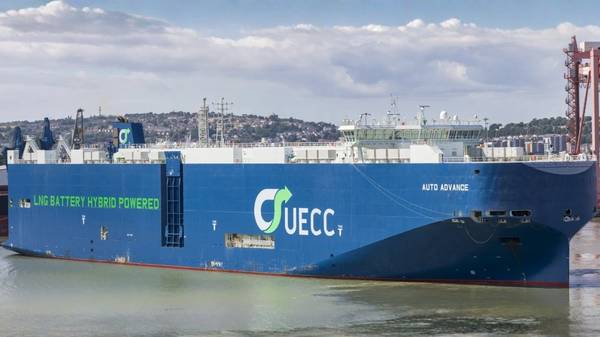
UECC fits WE Tech hybrid power systems on newbuild ro-ro vessels
Norwegian short-sea operator says battery and shaft generator technology from WE Tech Solutions has cut fuel use and auxiliary engine reliance on three newbuilds. |
|
|
|
||
|
Envision's green ammonia used to bunker world's first VLAC
Chinese energy group supplies vessel owned by Eastern Pacific Shipping as it links production and marine fuel supply chains. |
|
|
|
||
| Singapore and Qingdao sign work plan to advance green and digital shipping corridors [News & Insights] |
| US Coast Guard agrees design framework for hydrogen-fuelled New York ferry [News & Insights] |
| Wärtsilä converts LNG carrier engines to cut methane slip for Chevron [News & Insights] |
| HD Hyundai gains type approval for low-pressure ammonia dual-fuel engine [News & Insights] |
| Alternative-fuel ship orders outpace port infrastructure, LR report finds [News & Insights] |
