Mon 13 May 2019, 09:32 GMT

Quadrise in MoU to supply MSAR fuel in China


Production and supply for marine customers would also cover river transportation.


Image credit: Pixabay
Quadrise Fuels International plc (QFI), the developer of MSAR emulsion technology and fuel, has entered into a memorandum of understanding (MoU) with API POLY-GCL Alliance Ltd (API POLY-GCL) to pursue commercial opportunities involving the production and supply of MSAR fuel in China for bunker-buying customers.

The non-binding MOU also covers river transportation as well as the power and industrial fuel sectors and is valid for 24 months, after which time it will expire unless mutually extended by the parties or superseded by another agreement.

API POLY-GCL is an alliance between Ample Power Investments Ltd (API) of the British Virgin Islands and Poly-GCL Petroleum Group Holdings Ltd (Poly-GCL), located in Hong Kong.

Poly-GCL is a partnership between state-owned China Poly Group and energy conglomerate Golden Concord Holdings Ltd (GCL).

Commenting on the development, Mike Kirk, Executive Chairman of QFI, said: "We are excited to sign this MOU with API POLY-GCL to enable Quadrise to progress commercial opportunities in China.

"Utilising API POLY-GCL's related power assets and in-depth knowledge of China, we are planning to establish opportunities to progress regional MSAR projects in the power and marine sectors.

"This is a new and large market opportunity for Quadrise and offers the potential to deliver significant value to shareholders of both QFI and API POLY-GCL."

Alvin Yip, Co-Chairman & CEO of API POLY-GCL, remarked: "API POLY-GCL see significant potential for Quadrise's MSAR technology to add value to our power generation assets and downstream offering. We look forward to working with Quadrise to progress projects in a rapidly growing economy that is keen for energy efficiency and cleaner energy, where MSAR technology and fuel offers material economic and environmental advantages.

"We believe the combination of our extensive resources, strong network, assets and market knowledge, together with Quadrise's MSAR fuel application expertise, can enable the first MSAR project to be initiated in China during 2019."

Since the start of this year, ships operating within China's three Emission Control Areas (ECAs) - Bohai Bay, Pearl River Delta and Yangtze River Delta - have been required to run on fuel with a maximum sulphur content of 0.5 percent at all times.

As the sulphur content of MSAR fuel is currently above 0.5 percent, the product's use in Chinese ECAs - and worldwide from next year with the implementation of IMO's global 0.5 percent sulphur cap - will also require the installation of an exhaust gas scrubber.

In January, Chinese authorities imposed a ban on the discharge and onboard incineration of washwater generated by open-loop scrubbers in port waters within coastal ECAs, river ECAs and Bohai Rim waters. This effectively means that the use of MSAR fuel in Chinese waters would therefore have to be in conjunction with closed-loop scrubber technology - where residue is collected in a tank on board a ship for later discharge in port.

In its last financial report, for the six-month period ended December 31, Quadrise posted a GBP 1.7m loss. The company noted that cash reserves had fallen by GBP 2.4m in 12 months to GBP 1m, which together with the gross proceeds of GBP 1.51m raised from a non-underwritten open offer (where shareholders purchased stock at below the current market price) would allow it to operate until early October 2019.


Truck-to-ship (TTS) LNG bunkering at Port of Palermo. Molgas completes first LNG bunkering operation at Palermo  

Spanish energy firm carries out maiden LNG delivery at Sicilian port.

Maersk 5,900-teu vessel. Tsuneishi China delivers third methanol dual-fuel boxship in series  

Zhoushan shipbuilder hands over another 5,900-teu Maersk container vessel.

Type approval test (TAT) for ME-LGIA ammonia engine. Everllence completes type approval test for ammonia engine ahead of sea trials  

Eight classification societies oversee testing of ME-LGIA ammonia engine at Copenhagen research centre.

Zhong Ran 23 vessel. CPN bunker barge becomes first vessel listed under Hong Kong’s new quality bunkering scheme  

Zhong Ran 23 achieves listing under the Marine Department’s voluntary mass flow metering initiative.

Peder Moller, Bunker Holding. Bunker Holding posts $73m pre-tax profit amid geopolitical headwinds and board overhaul  

Marine fuels exceeds its own expectations despite 4% revenue decline.

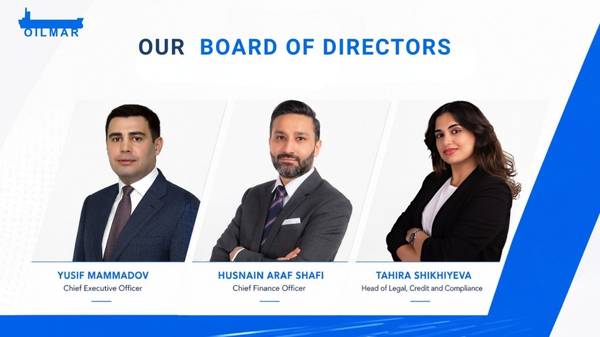
Oilmar Board of Directors graphic. Oilmar formalises governance structure with establishment of board of directors  

Dubai-based marine fuels trader Oilmar appoints three-member board.

Henrik Andersen, Vestas Wind Systems A/S. Vestas Wind Systems CEO appointed vice chair of Bunker Holding  

Henrik Andersen joins the board of the marine fuels group with more than two decades of international business experience.

Tina Revsbech, Maersk Tankers. Maersk Tankers CEO Tina Revsbech joins Bunker Holding board  

Danish USTC Group appoints shipping veteran to subsidiary’s board of directors.

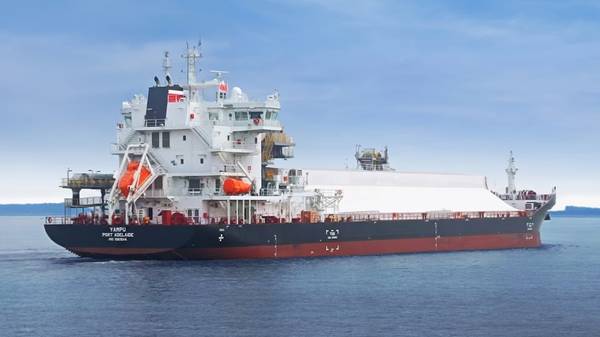
Yampu vessel. CSL delivers world’s first battery-powered self-unloading bulk carrier  

MV Yampu will transport limestone for Adbri in Australia, with full electric operation targeted by 2031.

Illustration of hydrogen fuel cell system. NYK, Yanmar and Eneos to install hydrogen fuel cell system on new Tokyo dining cruise vessel  

Three Japanese companies are collaborating to bring hydrogen propulsion to a dining cruise ship due to enter service in 2027.