Fri 6 Jul 2018, 09:41 GMT

New Mediterranean ECA study under way


Set to be completed by the spring of 2019.


Image credit: Globalquiz.org
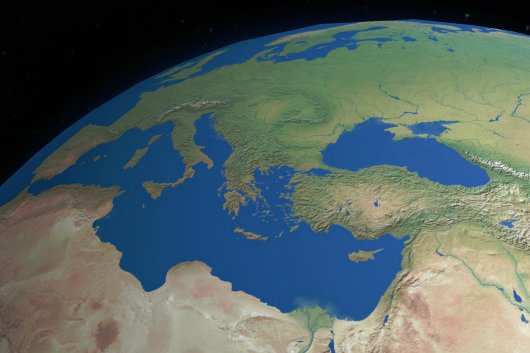
A new study to assess the benefits, costs and feasibility of implementing an emission control area (ECA) to limit sulphur oxides (SOx) from ships in the Mediterranean Sea will consider, among other things, the potential health benefits for people living around the Mediterranean as well as cost implications for ship owners.

The IMO Regional Marine Pollution Emergency Response Centre for the Mediterranean Sea (REMPEC) is coordinating the technical and feasibility study to examine the possibility of designating the Mediterranean Sea, or parts of it, as a SOx-ECA under IMO's prevention of pollution convention (MARPOL) Annex VI.

There are currently four designated SOx-ECAs worldwide: the Baltic Sea area; the North Sea area; the North American area (covering designated coastal areas off the United States and Canada); and the United States Caribbean Sea area (around Puerto Rico and the United States Virgin Islands).

In the ECAs, the limit for sulphur in fuel oil used on board ships is 0.10% mass by mass (m/m), while outside these areas the limit is currently 3.5% m/m, falling to 0.50% m/m from 1 January 2020.

An international consortium led by Energy & Environmental Research Associates (EERA) signed (in June) the contract with REMPEC to carry out the study, to be completed by the spring of 2019.

Funding for the study, which REMPEC will present to IMO's Marine Environment Protection committee (MEPC), comes from the Mediterranean Trust Fund, the IMO's Integrated Technical Cooperation Programme and a voluntary contribution from the Government of Italy.

REMPEC is administered by IMO in cooperation with UN Environment (UNEP). Its main objectives are to contribute to preventing and reducing pollution from ships, to combat pollution in case of emergency and to assist Contracting Parties to the Barcelona Convention for the Protection of the Marine Environment and the Coastal Region of Mediterranean to meet their obligations under the Convention and its protocols.

The Barcelona Convention Contracting Parties are: Albania, Algeria, Bosnia and Herzegovina, Croatia, Cyprus, Egypt, France, Greece, Israel, Italy, Lebanon, Libya, Malta, Monaco, Montenegro, Morocco, Slovenia, Spain, Syrian Arab Republic, Tunisia, Turkey, and the European Union.


China flag. Zhejiang’s first methanol-powered container ship launches in Jiaxing  

The 64-teu vessel uses methanol propulsion technology to reduce carbon dioxide emissions by 90%.

TES flag with a model vessel in the background. TES joins SEA-LNG coalition to advance e-methane as marine fuel  

Green energy company targets 1m tonnes annual e-methane production by 2030 for shipping decarbonisation.

Ethanol and methanol workshop graphic. IBIA to host workshop on ethanol and methanol marine fuels during Singapore Maritime Week  

Half-day event will examine alcohol-based fuel pathways and integration into shipping’s multi-fuel landscape.

Steel-cutting ceremony for 13,000-dwt vessel. ROC begins construction of second chemical tanker for Essberger  

Chinese shipbuilder holds steel-cutting ceremony for 13,000-dwt methanol-ready vessel with ice class capability.

Norsepower and CHIC sign agreement. Norsepower and Cosco Shipping Heavy Industry Equipment sign wind propulsion cooperation agreement  

Wind propulsion technology provider partners with Chinese shipyard to scale rotor sail production.

Wärtsilä logo. Shipping firms struggle to prioritise decarbonisation investments amid regulatory uncertainty, Wärtsilä survey finds  

Survey of 225 maritime executives reveals 70% say uncertainty hinders investment decisions despite regulatory pressure.

IMT Isca G-Flex vessel render. Longitude Engineering unveils IMT Isca G-Flex PSV design with alternative fuel capability  

Naval architecture firm launches adaptable platform support vessel design based on the IMT-984 G-Class hull.

Philippos Ioulianou, EmissionLink. Shore power infrastructure is key to cutting ferry emissions in European cities, says EmissionLink  

Port electrification is needed to enable vessels to switch off engines at berth, reducing urban pollution.

Maritime and Port Authority of Singapore logo. Singapore prioritises maritime resilience amid geopolitical uncertainty, eyes digitalisation and green fuels  

MPA chief outlines the sector’s adaptation to supply chain disruptions while advancing automation and alternative fuels.

Aerial photograph of Zhoushan Island. China exports first domestically blended biofuel for marine use from Zhoushan  

A vessel carries 2,600 tonnes of biofuel blend to Qingdao Port for international ship refuelling.