ExxonMobil has introduced its second independently accredited mass flow meter (MFM) system in
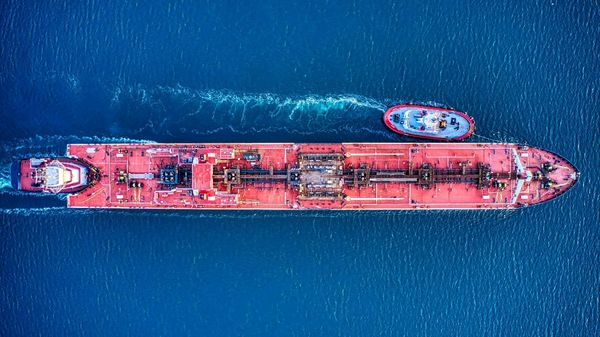
Hong Kong on board the bunker vessel
Anelly. It follows the introduction of the first independently accredited MFM in Hong Kong, fitted on the barge
Anshing.
Both metering systems are fully accredited by Lloyd's Register, in partnership with A*STAR's National Metrology Centre (NMC), the national measurement institute of Singapore, and Metcore International, a consultancy with expertise in MFMs for bunkering.
In line with industry best practice, the technology directly measures fuel mass - instead of volume - to provide an accurate measurement for vessel operators. The system's seals are validated by independent third parties that enhance traceability and help to ensure system integrity.
MFMs are designed to provide various benefits for vessel operators, suppliers and regulatory bodies. These include enhanced accuracy as a result of measuring fuel mass, increased efficiency and reduced uncertainties related to variables, including density and temperature.
Citing the example of a purchase and delivery of 1,000 metric tonnes at $300 per tonne, ExxonMobil calculates that an MFM can save an estimated US$5,0001 and up to three hours per delivery alongside, improving transparency as measurement data is logged throughout the process. The savings calculation is based on: surveyor costs (up to $2,000), a temperature measurement delta of 10 degrees centigrade (up to $2,100) and a 3-kilogramme-per-cubic-metre (kg/cbm) density delivery range (up to $1,000).
ExxonMobil introduced the first independently accredited mass flow metering system in Hong Kong in December 2015. Following accreditation by Lloyd's Register, the MFM was installed on the time-chartered bunker vessel Anshing to deliver ISO 8217:2012 bunker fuel grades RMG 380 and RMK 500.
"Our first mass flow metering system in Hong Kong received a very positive response from customers and has proved to be a great success. This second barge will help to ensure the majority of ExxonMobil fuel deliveries will be supplied via mass flow metering and also cater for larger stem sizes," said
Deepankar Banerjee, ExxonMobil's Asia Pacific marine fuels sales manager.
"ExxonMobil and Lloyd's Register continue to work together to increase access to fully accredited mass flow metering system fuel delivery services in Hong Kong," said
Douglas Raitt, Lloyd's Register Marine's regional consultancy manager. "Both ExxonMobil systems are independently validated and sealed, which underlines the security of the system versus other non-accredited meters in the market."
The expansion of independently accredited mass flow metering bunker fuel delivery services into Hong Kong follows its pioneer introduction in Singapore four years ago; an ExxonMobil-chartered bunker tanker was the first in Singapore to use a mass flow metering system approved by the Maritime and Port Authority of Singapore (MPA) for the commercial transfer of bunker fuel. The MFM-aided fuel transfer between the bunker tanker MT Emissary and Kota Layang took place on 11th July 2012.
In February of this year, the world's first National Technical Reference [TR] for Bunker Mass Flow Metering (TR48 : 2015) was launched in support of the Maritime and Port Authority of Singapore (MPA)'s initiative to use the MFM system for marine fuel oil deliveries in Singapore with effect from 1st January 2017.
According to the MPA, the TR "sets out clear requirements measurement and system integrity that provides a fair basis for custody transfer between the bunker supplier and bunker buyer in Singapore".