Tue 19 Jul 2016, 12:41 GMT

500th 50DF factory acceptance test completed


Engine can be run on either natural gas, light fuel oil (LFO), or heavy fuel oil (HFO).


The 500th engine factory acceptance test (FAT) was completed for Wartsila 50DF engine at the Wartsila-Hyundai Engine Company facility in Mokpo, South Korea. This was achieved in about 8 years, since the factory's completion in 2008.

The first Wartsila 50DF engine was introduced 13 years ago for a 74,000-cubic-metre LNG carrier which was the first LNG carrier to be powered by electric propulsion, and one of first to have internal combustion engines.

Wartsila 50DF

Designed to give high output with fuel flexibility, low emissions, efficiency and reliability

The engine can be run on either natural gas, light fuel oil (LFO), or heavy fuel oil (HFO), and can smoothly switch between fuels whilst operating. It is designed to provide the same output regardless of the fuel.

The Wartsila 50DF engine operates on the lean-burn principle. Lean combustion enables a high compression ratio, which in turn increases engine efficiency, reduces peak temperatures, and therefore also reduces NOx emissions.

Both the gas admission and pilot fuel injection are electronically controlled. The engine functions are controlled by an advanced automation system that allows optimal running conditions to be set, independent of the ambient conditions or fuel type.

Fuel flexibility

The technology enables the engine to be operated on either natural gas, light fuel oil (LFO), or heavy fuel oil (HFO), and switching between fuels can take place seamlessly during operation, without loss of power or speed. This ensures safety and continuous installation operability. The Wartsila 50DF engine is designed to have the same output regardless of the fuel used.

One of the reasons for the strong success of this particular engine over the alternatives is its superior propulsion efficiency. The clear environmental advantages that operating on gas allows, is another factor in the success of this technology. When operating in gas mode, the nitrogen oxide (NOx) emissions are at least 85 percent below those specified in the current IMO regulations, and CO2 emissions are some 25 percent less than those of a conventional marine engine running on diesel fuel. Additionally, the sulphur oxide (SOx) and particle emissions are negligible at almost zero percent.

Applications

Wartsila's advanced dual-fuel technology was first launched in the early 1990s for use in land-based power plant applications. The first marine installation of the 50DF engine came a decade later.

The fitting of Wartsila 50DF engines onboard the first LNG Carriers in 2006 set a trend in the industry. Since that introduction, 65 percent of all new LNG Carriers have been fitted with Wartsila dual-fuel engines.

In addition to its success in the LNG Carrier market, the Wartsila 50DF engine is increasingly being considered by owners and operators throughout the shipping industry. For example, in the cruise and ferry sector, where it is often necessary to operate in Emission Control Areas (ECAs), there is growing awareness of the advantages of operating on gas.

Similarly, vessels serving the offshore oil and gas industry are increasingly being fitted with Wartsila dual-fuel engines. The need for flexibility, fuel efficiency, and compliance with stricter environmental regulations, are the drivers behind this trend.


VPS logo. NE Atlantic ECA will cause significant change to the current fuel mix | Steve Bee, VPS  

The possibility of off-spec issues highlights the continuing need for proactive fuel testing to protect vessels.

Kris Vedat, SmartSea. Smart ships failing to convert data into actionable intelligence, warns SmartSea  

Maritime technology firm claims vessels collect vast amounts of data but lack integration to support decision-making.

Energy Transition Outlook 2026 Hydrogen To 2060 report cover. DNV forecasts 100-fold growth in clean hydrogen by 2060, with China leading expansion  

Classification society projects $3.2tn investment in hydrogen sector, with maritime accounting for 15% of clean hydrogen use.

World Shipping Council logo. Dual-fuel container ship and vehicle carrier fleet surpasses 1,200 vessels  

World Shipping Council reports 65% year-on-year increase in operational dual-fuel vessels to 440 ships.

Sotiris Raptis, ECSA. European Shipowners calls for ETS revenue investment and fuel supplier mandate  

ECSA urges the EU to invest €9bn in annual ETS revenues in fuel production and infrastructure.

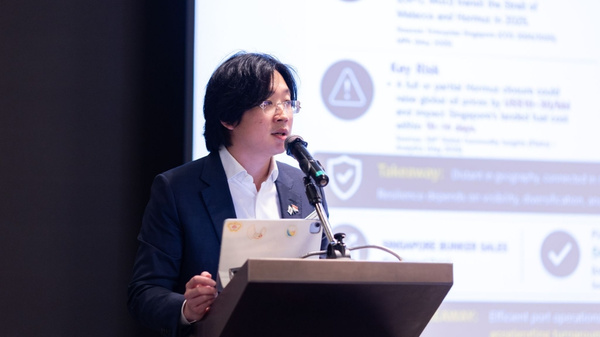
Sheen Mao Choong, SSA. Singapore bunker industry urged to prioritise resilience and collaboration  

SSA committee vice chair highlights energy security and crisis readiness at Marine Fuels Forum 2026.

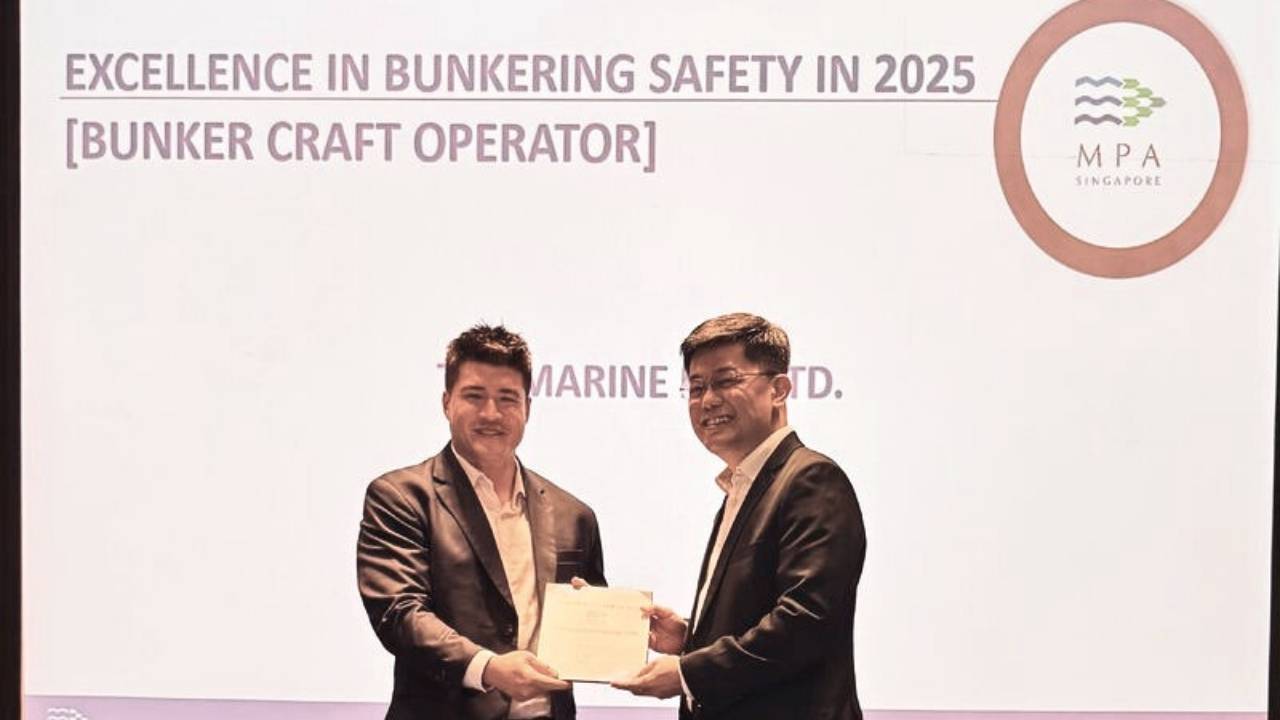
Chia How Khee, TFG Marine and David Foo, MPA. TFG Marine receives bunker safety award from Singapore maritime authority  

Marine fuel supplier recognised for safety standards and operational performance at MPA Marine Fuel Forum.

Rotterdam skyline at night. Bunker surveyor sought in Rotterdam to meet increased demand  

Dutch firm MCE Marine Surveyors is recruiting for a quantitative fuel inspection role.

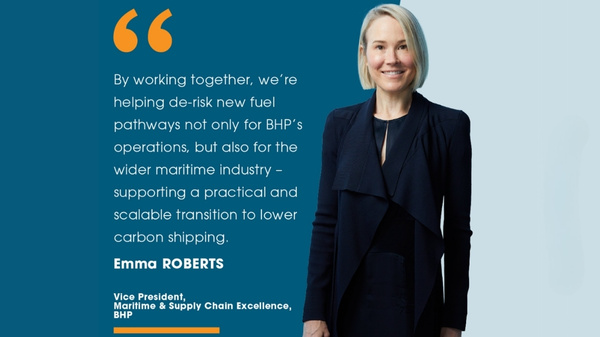
Emma Roberts, BHP. GCMD highlights BHP biofuel trials to address scaling challenges in maritime decarbonisation  

Mining company discusses need for traceability and coordinated progress across supply, cost and operational readiness.

Levante LNG vessel. Peninsula implements energy efficiency measures across bunker supply fleet  

Marine fuel supplier focusing on data-driven upgrades and operational measures to cut consumption.