Mon 22 Jun 2015, 09:12 GMT

Global Risk Management reports profit rise


Risk management specialist achieves increase in annual profit.


Global Risk Management, a company specializing in fuel risk management solutions, has announced that it achieved an annual profit before tax of US$6.2 million in the fiscal year from 1 May 2014 to 30 April 2015 compared to $5.3 million in the previous financial year.

In a statement, Global Risk Management said that the improved result was due to a "large inflow of new clients and increased activities by existing clients over the year".

"Even though the oil price races up and down, the stable growth continues at Global Risk Management," the company added.

As part of its expansion strategy, Global Risk Management has recently added further staff to its workforce and set up a trading unit that it says is "purely concentrating on optimising prices for the clients".

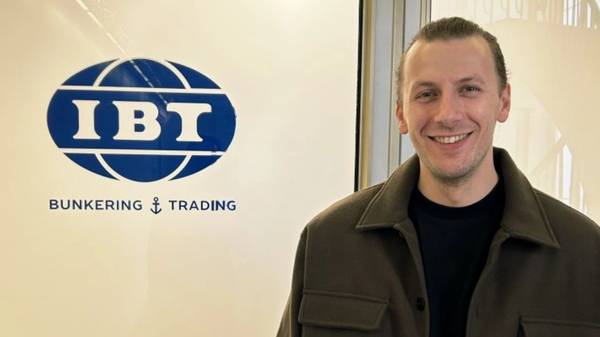
Hans Erik Christensen [pictured], managing director of Global Risk Management, remarked: "Oil is one of the most volatile commodities in the world and for many of our clients a fluctuation of even a few dollars can make it difficult for the clients to keep their budgets. We find customised solutions and help implement a strategy to eliminate fluctuations; this could be by securing the oil price from 10 percent to 100 percent of the oil price exposure."

Global Risk Management is part of A/S United Shipping & Trading Company (USTC) Ltd. group. Bunker firms A/S Dan-Bunkering and A/S Trumf Bunker also form part of the group in addition to Uni-Chartering A/S and Uni-Tankers A/S.

The company provides fuel risk management solutions to companies that are exposed to oil price fluctuations.

In addition to its head office in Middelfart, Global Risk Management has offices in Singapore and Copenhagen.

Image: Hans Erik Christensen, managing director of Global Risk Management.


Ubuntu Humanity alongside Fuelng Bellina vessel. DNV says existing LNG infrastructure can support low-GHG methane transition  

Classification society finds biomethane and e-methane compatible with current LNG fleet and bunkering networks.

IBIA bunker buyers working group graphic. IBIA launches Bunker Buyers Working Group for fuel procurement end users  

New forum aims to represent shipowners, charterers and ship managers in policy and regulatory discussions.

Carbon registry process diagram. MOL and Shell launch book-and-claim scheme for marine biofuel emissions credits  

Japanese shipping firm partners with Shell to offer environmental attribute certificates from third-party vessel operations.

Renewable Energy Directive (RED III) policy brief cover. Bureau Veritas releases report on EU Renewable Energy Directive’s impact on shipping  

Classification society examines RED III compliance challenges as member states transpose the directive into national law.

New York City skyline. IBIA to hold 2026 annual convention in New York  

The event marks the first time in recent years that the association’s gathering has been held in the Americas.

Port of Barcelona delegates. Port of Barcelona advances shore power rollout for cruise terminals  

Installation of OPS systems begins at MSC and Royal Caribbean terminals as port reorganises infrastructure.

NACKS bulk carriers with rotor sails. Anemoi and NACKS secure ClassNK approval for Ultramax rotor sail designs  

Two configurations for wind-assisted propulsion systems on bulk carriers receive approval in principle.

DP World London vessel. Elbdeich Reederei takes delivery of first methanol-capable feeder vessel  

German shipowner receives 1,250-teu dual-fuel newbuild from Chinese yard, with three more to follow.

AuctionConnect and Asyad Shipping logos. Asyad Shipping adopts AuctionConnect digital bunker platform under three-year deal  

Middle East shipping company to implement auction-based procurement system across fleet operations.

Fuel for thought: LNG for Cruise report cover. LNG remains the most deployable decarbonisation option for cruise shipping, Lloyd’s Register report finds  

Classification society’s latest research examines the fuel’s role in the sector’s energy transition and pathway to net zero.