Mitsui O.S.K. Lines, Ltd. (MOL) has announced that it has signed a contract with
Minaminippon Shipbuilding Co., Ltd. to construct four next-generation car carriers. The vessels are to be delivered in 2017 and 2018.
The newly ordered car carriers are to be installed with an electronically-controlled diesel engine with low-load optimisation (LLO) tuning by exhaust gas bypass (EGB) technology. They are also to include a waste heat energy recovery system for generator engines and electric power consumption reduction technology.
In addition, the vessels' hull form design is to be improved, especially for low-speed range, based on ship performance analysis of existing carriers. MOL says the ships will also mark "a step forward in wind pressure-reducing design", one of the basic technologies in the
Senpaku ISHIN project - an environment-friendly, next-generation vessel which MOL has been developing since 2009 to take a proactive approach to the development and introduction of technologies to reduce carbon dioxide (CO2) emissions. The new ships' reduced susceptibility to wind resistance will improve fuel efficiency in comparison with existing vessels and significantly reduce their impact on the environment, according to MOL.
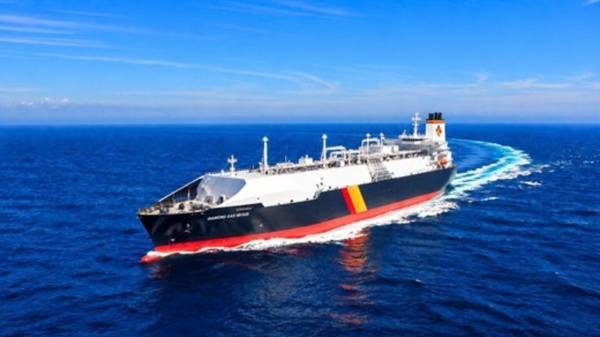
MOL has been a leading developer of innovative next-generation car carriers, and in 2012 launched the world's first newbuild hybrid car carrier, the
Emerald Ace [pictured]. The vessel is equipped with a hybrid electric power supply system that combines a 160-kilowatt (kW) solar generation system - jointly developed by Mitsubishi Heavy Industries, Ltd. (MHI) and MOL - with lithium-ion batteries that can store some 2.2 megawatt-hours (MWh) of electricity.
On the Emerald Ace, electricity is generated by the solar power generation system while the vessel is under way and stored in the lithium-ion batteries. The diesel-powered generator is completely shut down when the ship is berthed, with the batteries providing all the electricity required, thus resulting in zero emissions at the pier.
In yesterday's statement, MOL added that it "continues striving to meet customer needs by launching new car carrier services, which take full advantage of those innovative technologies, and constantly enhance the competitiveness of its car transport business".
Image: The Emerald Ace.