Thu 16 Apr 2015, 12:43 GMT

Moving fuel-laden trawler was 'the worst decision'


Greenpeace representative predicts that fuel will eventually leak, 'sooner or later'.


Julio Barea [pictured], responsible for Greenpeace Spain's campaign against oil exploration in the country, has said that the decision to move the fuel-laden fishing vessel Oleg Naydenov away from the Canary Islands coastline was "the worst decision that could have been made".

The 136-metre-long Oleg Naydenov caught fire inside the Port of Las Palmas on Saturday and was then towed to a location approximately 15 nautical miles south of Punta de Maspalomas, Gran Canaria, where it sank on Tuesday night.

According to reports, the vessel could have been carrying between 1,400 and 1,500 tonnes of marine fuel on board at the time of the incident.

Barea is quoted by Spanish media as saying: "We haven't learnt anything since the Prestige incident."

"It is much easier to control a shipwreck, a fire and a spill in a restricted area than in open water," commented Barea, whilst also warning that there is still a risk that an oil spill could take place.

In fact, Barea has predicted that the marine fuel will eventually leak, sooner or later, because the vessel was not double-hulled and because the "horrific" fire will have weakened its structure. Additionally, Barea points out that the Oleg Naydenov is not a submersible vessel that has been built to withstand high underwater pressure.

"The vessel will degrade and the fuel will definitely leak - we just don't know how much or when," said Barea, who also warned that the strong ocean currents in the area could transport the fuel to islands nearby.

"It's a huge risk and we are surprised by the decision made by Salvamento Marítimo [the Maritime Security and Rescue Society], because the structure of the ship must have been weakened by the fire," remarked Barea.


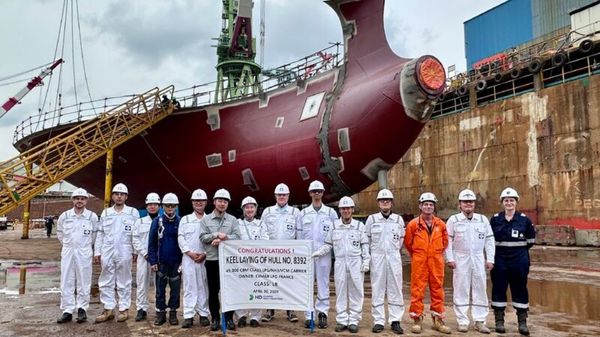
Keel-laying ceremony of a vessel with builder's hull no. 8392. Exmar lays keel for ammonia-powered midsize gas carrier  

Belgian shipping company marks construction milestone for dual-fuel vessel at Hyundai Heavy Industries yard.

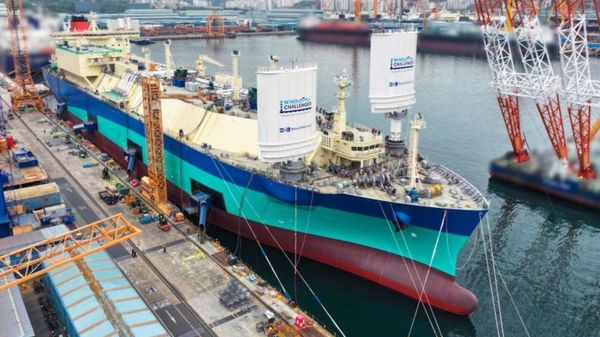
Vessel with two Wind Challenger units installed. MOL installs dual Wind Challenger hard sails on LNG carrier under construction  

Japanese shipping company fits telescoping hard sails at Hanwha Ocean's Geoje yard for 2026 delivery.

IBIA members meeting graphic. IBIA to host members meeting on mass flow meter survey findings  

Session on 14 May will examine global MFM implementation and fuel quality transparency.

Edmond Ow, GCMD. GCMD outlines phased approach to ammonia bunkering safety and operations  

Organisation details three-phase programme spanning 2023–2026 to address safety gaps in ammonia bunkering.

Johnson Matthey logo. Johnson Matthey to supply methanol technology for Liquid Sunshine biomethanol plant in China  

First phase aims for 75,000 tonnes annual capacity, with potential e-methanol expansion planned.

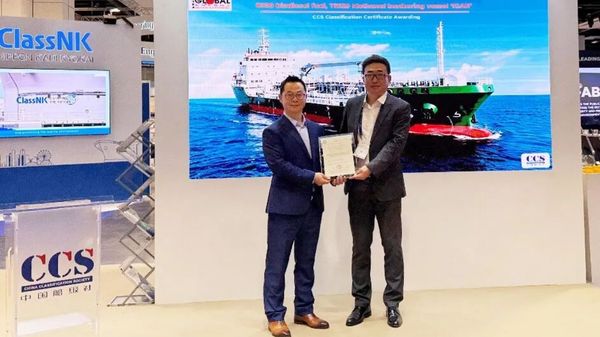
Classification certificate for methanol fuel bunkering vessels. CCS issues methanol and scrubber certifications at Singapore Maritime Week  

State-owned enterprise presents methanol classification certificate and approves open-loop exhaust gas cleaning system.

Houston skyline. Dan-Bunkering seeks senior fuel supplier for Houston office  

Marine fuel supplier is recruiting for a strategic role managing key accounts across the Americas oil and gas sector.

Monjasa logo. Monjasa reports $39m profit as marine fuel volumes hold steady at 6.8m tonnes  

Danish bunker supplier maintains volumes despite muted demand, with equity reaching $472m in 2025.

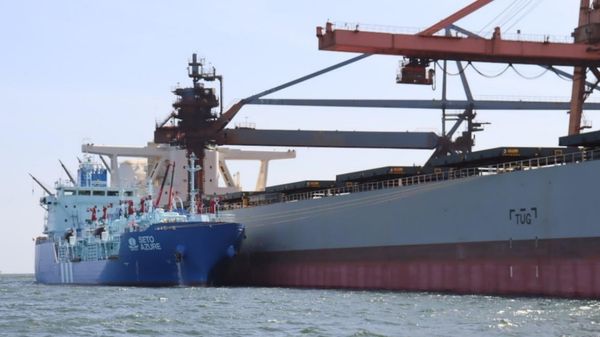
Seto Azure ship-to-ship (STS) LNG bunkering operation. Osaka Gas launches ship-to-ship LNG bunkering in Japan  

Japanese energy company now offers all three primary LNG fuel supply methods for vessels.

Gasum logo. Gasum converts to a public limited company to diversify financing options  

Finnish energy company changes legal structure from private to public limited liability company.