Belgium's
Fluxys and Russia's
Yamal LNG have signed an agreement outlining the parameters of cooperation on the transshipment of liquefied natural gas (LNG), supplied from an LNG plant on the Yamal Peninsula (Russia), at Fluxys’ LNG terminal in Zeebrugge (Belgium).
Yamal LNG is building a natural gas liquefaction plant with its first train scheduled to be commissioned in 2017. The transshipment platform in Europe will be an integral part of the logistical chain enabling LNG supply from Yamal to reach the Asian-Pacific countries when winter navigation is closed at the Arctic Ocean's Northern Sea Route, thus ensuring year-round LNG supplies to this region.
Fluxys will now carry out all technical, permitting and regulatory processes with a view to provide LNG transshipment services.
Gabriel Brecque, Shipping and Marketing Director of Yamal LNG, stated: "The transshipment platform is an integral part of Yamal LNG’s logistical chain to bring LNG from the Yamal Peninsula to the buyers. We see Fluxys as a reliable partner and a knowledgeable expert, offering us long term prospects of a mutually beneficial relationship."
Walter Peeraer, Managing Director of Fluxys, said: "If we succeed in attracting transshipment operations to the Zeebrugge LNG terminal, this would be an important project for Fluxys and the port of Zeebrugge. It would bring along a considerable investment at the terminal, link the facility to an additional source of LNG and entail a significant volume of ship movements as well."
Fluxys is an independent gas infrastructure group with assets in gas transmission, gas storage and LNG terminalling thoughout Europe. The Zeebrugge LNG terminal is owned by
Fluxys LNG, a 100% affiliate of
Fluxys Belgium, affiliate of Fluxys and operator of the infrastructure for gas transmission, gas storage and LNG terminalling in Belgium.
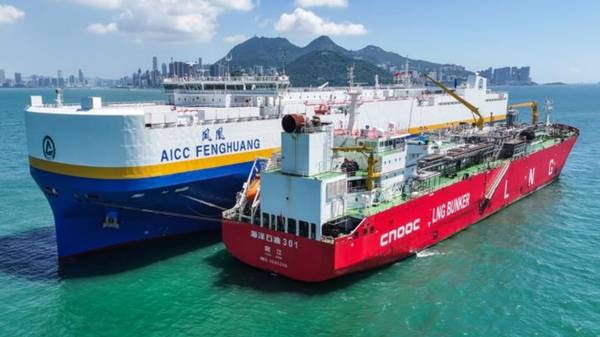
The Port of Zeebrugge's project to develop an LNG bunkering infrastructure is continuing to moving forward. The second jetty for loading and unloading LNG carriers is scheduled to enter into service in 2015. The jetty will be able to accommodate both small and large LNG carriers, with capacities of between 2,000 and 217,000 cubic metres of LNG, thus paving the way for Zeebrugge to become an LNG hub and the use of LNG as an alternative fuel for ships and long-haul trucks.
"With the construction of the second jetty, Port of Zeebrugge continues to evolve into a hub for the supply of LNG as a fuel for ships and long-distance haulage trucks," the port said in a statement last year.
From Zeebrugge, LNG can be transported via small ships to all ports in Belgium and Northwest Europe. Also, tanker trucks can load up with LNG at the terminal’s loading station. The loading station is already in operation.