Tue 19 Apr 2011, 23:44 GMT

OW Bunker advocates use of mass flow meters


Supplier hosts event to highlight the impact mass flow meters can have in measuring the quantity of fuel oil delivered.


OW Bunker, one of the world’s leading suppliers and traders of marine fuel oil, has highlighted the impact that mass flow meters can have in solving the 'fuel quantity issue' and demonstrated the steps that it is taking to ensure product quality in an event attended by key customers including DFDS, Maersk Oil, Odfjell Tankers, U-Sea Bulk, Grieg Star Shipping and Torvald Klaveness Group.

The event, which took place in Copenhagen, invited over 100 customers and industry opinion formers to see a live demonstration, presented by OW Bunker’s Technical Director, Steffen Kortegaard, of how a mass flow meter works on board one of its vessels, OW Copenhagen.

The demonstration also showed OW Bunker’s ability to conduct online blending, negating the need for tank blending, which ensures that air is not injected into the product. The company’s online monitoring of fuel oil quality also aims to ensure that the viscosity and density of the products that are supplied are within the appropriate specifications.

"Both methods ensure that there is full control over the blending process and that the sulphur content can be measured accurately; a prerequisite given the current and impending regulatory pressures," OW Bunker said.

According to OW Bunker, mass flow meters provide the most sophisticated, quick and accurate method of measuring the amount of fuel oil that is transferred during the bunkering process. The quantity is measured as the force of the fuel oil flows through vibrating tubes. Sensors and transmitters are then used to generate a linear flow signal, which is linked to software located in the bridge, which monitors the exact amount of fuel oil taken on board.

"As well as ensuring the quantity of fuel oil delivered, using a mass flow meter creates a faster and smoother bunker delivery process between the bunker barge and the receiving vessel, and makes life easier for both crews, which increases productivity and overall efficiencies within a ship owner’s/operator’s operations; a premium commodity in today’s market," OW Bunker said.

“Ensuring ship owners and operators receive the right quantity of bunker fuel that is ordered has been an age-long issue within shipping,” said Per Søholt, Director, Supply Chain Management, DFDS A/S, one of Northern Europe’s leading integrated shipping and transportation networks. "It is clear that embracing technology and innovation is one way of successfully meeting this challenge. OW Bunker’s adoption and demonstration of the practical capabilities of mass flow meters is a clear example of what is possible in meeting this challenge and it fundamentally shows the commitment and responsibility that quality fuel suppliers should have in driving positive change within the market," continued Søholt.

OW Bunker was a pioneer of the initial adoption of mass flow meters when it installed the technology on vessels within its global fleet five years ago in order to ensure and further enhance its quality control processes. Based on the positive results, the company believes that over time, the technology could become an industry standard for fuel suppliers as a means of helping customers to drive further efficiencies within their operations, and continuing to increase professionalism in bunkering. This was endorsed by Maersk Oil - an OW Bunker customer – when it recently advocated the use of mass flow meters, which it has installed on 50 vessels and which it believes will bring new levels of transparency and efficiency to the bunker industry.

“As well as improving professional and operational standards, mass flow meters provide the opportunity to increase the level of trust between fuel suppliers and their customers,” said Steffen Kortegaard, Technical Director, OW Bunker.

“We must constantly look to innovate as a means of progression and meeting some of the industry’s key challenges. Our event has provided the opportunity to show our customers the commitment that we have in meeting our obligations in pioneering positive change.” added Kortegaard.


Areion vessel. Dorian LPG takes delivery of dual-fuel VLGC capable of carrying ammonia  

The 93,000-cbm Areion can run on LPG or fuel oil and transport ammonia cargoes.

FSRU Toscana alongside Green Zeebrugge vessel. RINA awards ISCC EU certification to OLT Offshore LNG Toscana for bio-LNG supply  

Certification enables bio-LNG use in the EU as a renewable fuel under RED II and RED III directives.

World Shipping Council at IMO meeting. WSC calls for safe maritime corridor as 20,000 seafarers remain trapped in the Persian Gulf  

Industry body urges IMO member states to establish safe passage and supply access.

Graphic promoting Auramarine webinar titled 'Sustainable Fueling Part 3: Ammonia - next alternative fuel in marine'. Auramarine to host webinar on ammonia as marine fuel in April  

Finnish firm will explore ammonia’s role in maritime decarbonisation at its third spring webinar.

Front cover of study by WinGD and Envision Energy titled 'Renewable Fuel Economics: An OPEX illustration based on current costs'. Green ammonia could reach cost parity with VLSFO and LNG by 2050, study finds  

WinGD and Envision Energy study projects green ammonia operational costs competitive with conventional marine fuels.

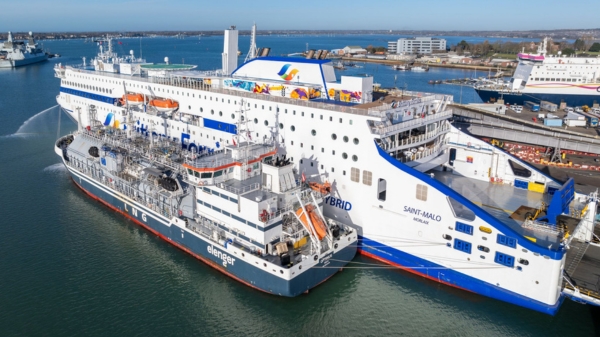
Elenger Marine's LNG bunkering vessel Optimus alongside Brittany Ferries’ Saint-Malo. Bureau Veritas verifies methane emissions on Brittany Ferries’ LNG vessels  

Verification enables ferry operator to report measured methane slip instead of regulatory default values.

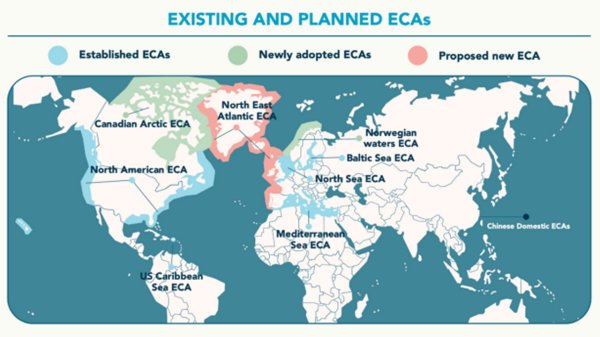
Map showing existing and planned Emission Control Areas (ECAs). Alliance calls for urgent black carbon action as new Arctic emission control areas take effect  

Canadian Arctic and Norwegian Sea ECAs now in force, with compliance deadline set for March 2027.

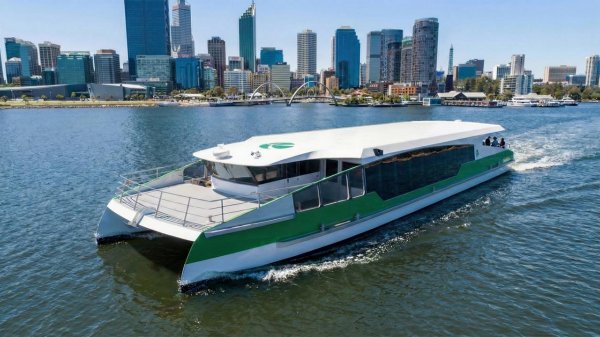
Artistic impression of battery-electric ferry for operation on Perth’s Swan River. Lloyd’s Register to class Western Australia’s first electric ferry fleet  

Echo Marine Group partners with Lloyd’s Register on five battery-electric ferries for Perth’s Swan River.

Thomas Kazakos, secretary general of The International Chamber of Shipping (ICS). ICS condemns Middle East shipping attacks as 20,000 seafarers remain trapped  

Industry body calls for urgent state action to resupply vessels and enable crew changes.

Molslinjen ferry illustration. Molslinjen order propels Australia to top of battery vessel production rankings  

Danish ferry operator’s three-catamaran order at Incat Tasmania shifts global manufacturing landscape, analysis shows.