
 |
Lloyd's Register (LR) has published new Guidance Notes for Retrofit of Alternative Fuels and Energy Saving Devices in a move designed to address the growing complexity of ship retrofit projects.
LR noted that regulatory and commercial pressures from measures such as FuelEU Maritime, the Carbon Intensity Indicator (CII) and the IMO's greenhouse gas reduction ambitions are making retrofits an increasingly relevant route for owners, with owners using retrofits to improve efficiency, reduce emissions and extend asset life.
LR said the challenge is no longer simply selecting a single fuel or technology. Retrofit projects now require owners to consider fuel storage, engine compatibility, safety systems, crew training, statutory approvals, vessel design and long-term operational impacts.
Single framework
The publication brings alternative fuels and energy-saving devices together in one retrofit framework. It covers the practical considerations of converting vessels to LNG, methanol, ethanol, ammonia, hydrogen and LPG, in addition to the installation of wind-assisted propulsion systems (WAPS) and air lubrication systems (ALS).
A central theme is that many retrofit decisions must be made earlier in the process than owners may expect, and that engine conversion capability, available onboard space, tank location, fuel-system integration and project execution can strongly influence project costs, timelines and operational outcomes.
The guidance stresses early collaboration between owners, shipyards, equipment manufacturers, flag administrations and classification societies to help avoid delays and reduce project risk.
Energy-saving technologies and human factors
The document highlights opportunities for energy-saving technologies, with LR pointing out that WAPS can benefit from incentives under FuelEU Maritime through a reward factor designed to recognise their contribution to lowering greenhouse gas intensity.
LR also identified extensive crew training, revised operating procedures, updated safety management systems and new risk assessments as essential elements of deployment. This applies particularly to fuels such as ammonia and hydrogen, which introduce new safety considerations.
Paul Herbert, principal technology specialist at LR, commented: "With much of the global fleet expected to remain in service well into the next decade, retrofit projects will play a critical role in shipping's decarbonisation journey. The challenge is no longer identifying technologies, but understanding how those technologies can be safely, practically and economically integrated into existing ships while meeting increasingly demanding regulatory requirements."
He added: "As the industry evaluates a wider range of fuel and efficiency solutions, retrofit projects are becoming more complex. This guidance has been developed to give the industry a practical framework for navigating those challenges. By bringing alternative fuels and energy-saving technologies together in a single document, we are helping owners take a more informed and structured approach to retrofit decision-making and project delivery."
The Guidance Notes are available through LR's Retrofit Research programme.
|
IBT Bunkering & Trading appoints Sales Support Specialist
Björn Hauschild joins from shipyard broker CombiTrade. |
|
|
|
||
|
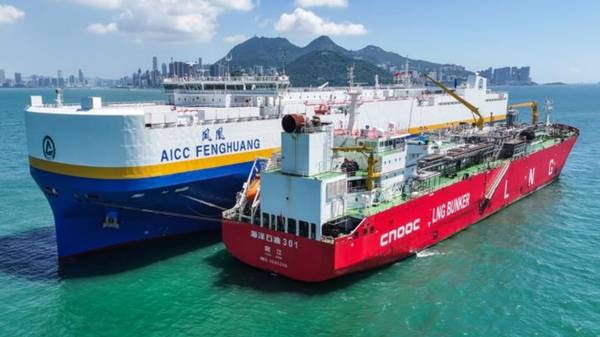
CLPe and CNOOC complete Hong Kong's first LNG bunkering of a pure car and truck carrier
Ship-to-ship operation delivered around 2,600 cbm of LNG to dual-fuel vessel AICC Fenghuang. |
|
|
|
||
|
Mercuria seeks senior sales and account manager for bunker delivery platform
Role can be based either remotely or at one of its offices in London, Geneva, Athens, or Las Palmas. |
|
|
|
||
|
Molgas Energy Group appoints Riaan van Kralingen as head of clean fuels
Van Kralingen will oversee the company's liquefied biomethane and EU allowance portfolios, succeeding Caspar Gooren. |
|
|
|
||
|
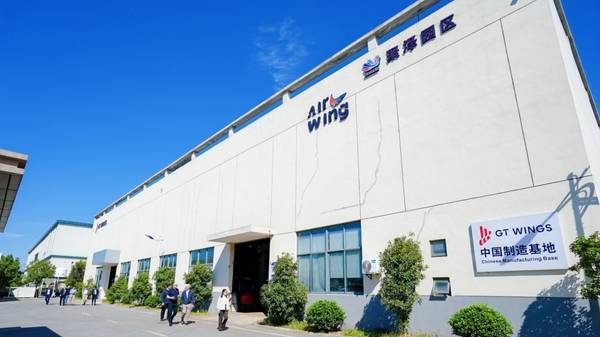
GT Wings launches compact AirWing S Jet Sail for smaller vessels
Wind propulsion developer adds lightweight unit to AirWing range as first customer-ordered AirWing20 units near completion. |
|
|
|
||
|
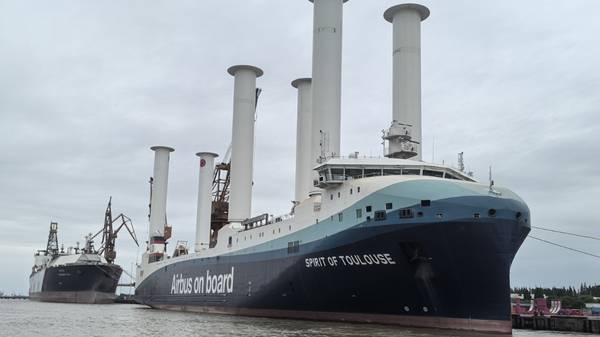
LD Armateurs' Spirit of Toulouse fitted with six Norsepower rotor sails
Six 35m rotor sails installed on the first of three methanol-capable ro-ro ships chartered by Airbus. |
|
|
|
||
|
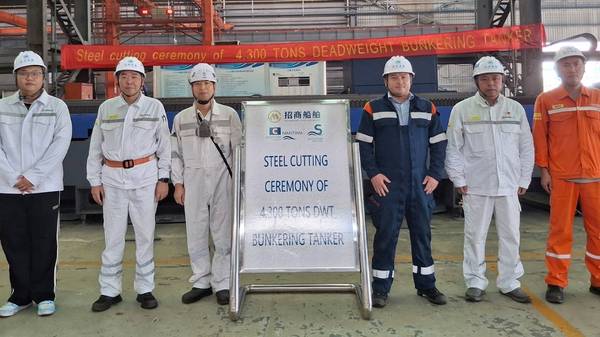
Maritima holds steel-cutting ceremony for Cap Morgiou, first of two Petroineos bunker vessels
Construction starts on bunker vessel able to carry conventional and low-carbon marine fuels, with delivery expected in early 2028. |
|
|
|
||
|
Singapore launches series of measures at SIBCON 2026
MPA announces LNG storage licences, digital bunkering grants and electric harbour craft incentives at 24th conference. |
|
|
|
||
|
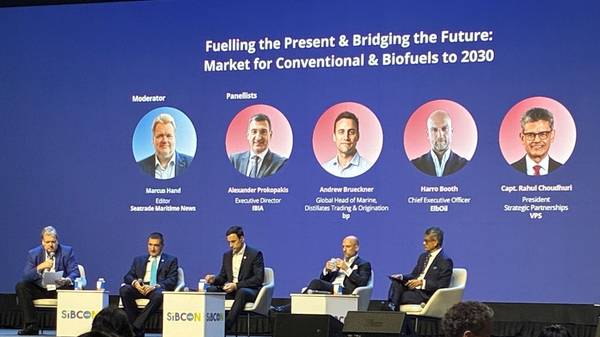
VPS outlines marine fuel standards and quality data at SIBCON 2026
VPS's Rahul Choudhuri addresses Singapore's evolving fuel standards and the quality of conventional fuels and biofuels. |
|
|
|
||
|
Singapore launches ammonia bunkering code and new standards for fuel sampling and polymer testing
MPA and Enterprise Singapore introduce one standard and two technical references at SIBCON. |
|
|
|
||
| Singapore launches ammonia bunkering code and new standards for fuel sampling and polymer testing [News & Insights] |
| Lloyd's Register, Shell and GTT launch joint project on hybrid-electric 200,000-cbm LNG carrier [News & Insights] |
| ClearMariner expands maritime sanctions screening with ESG, emissions and API support [News & Insights] |
| Lloyd’s Register study backs 200,000-cbm LNG carriers for fleet renewal [News & Insights] |
| IMO sub-committee finalises revised methanol fuel safety guidelines [News & Insights] |
