
 |
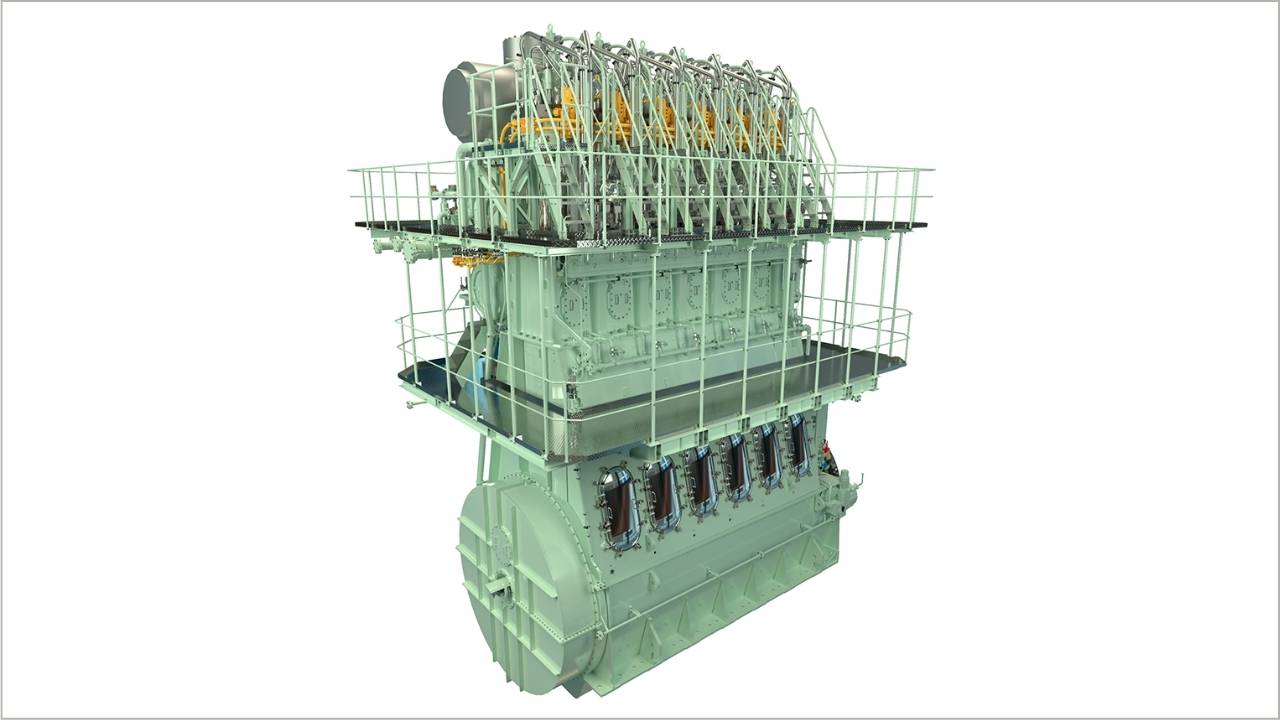
Everllence has announced the completion of an R&D test for what it says is the world's first B&W G80 ME-LGIMe (liquid gas injection—ethanol) engine, conducted at HD Hyundai Heavy Industries' Engine & Machinery Division (HHI-EMD) in Korea.
The engine is destined for the third vessel in a series of 10 very large ore carriers (VLOCs) ordered by Shandong Shipping for charter to Brazilian mining and logistics operator Vale, with vessel delivery scheduled for early 2027.
The G80 ethanol engine is derived from Everllence's existing B&W ME-LGIM methanol platform and is configured as a tri-fuel unit capable of operating on fuel oil, methanol, ethanol, or any blend of the latter two fuels. The project follows a cooperation agreement signed by Everllence and Vale in February 2026 for the development of an advanced ethanol-powered marine engine.
Bjarne Foldager, Head of Two-Stroke Business at Everllence, stated: "This marks a major milestone for the G80 engine platform, transforming it into a fully flexible tri-fuel engine capable of operating on fuel oil, methanol, ethanol, or any blend of the latter two. The project reflects our shared commitment with Vale regarding pragmatic and scalable decarbonisation pathways within the hard-to-abate shipping sector, and positions Vale at the forefront of maritime sustainability. By selecting the G80 tri-fuel engine, Vale is advancing its strategy to reduce emissions across its maritime logistics chain while maintaining operational robustness in what are currently demanding conditions for low-carbon fuels."
Christian Ludwig, Vice President and Head of Global Sales & Promotion for the Two-Stroke Business at Everllence, commented: "The G80 ethanol engine is based on the proven B&W ME-LGIM platform. It represents the latest evolution of Everllence's two-stroke dual-fuel engines, designed to enable shipowners to transition seamlessly towards lower-emission fuels without compromising operational efficiency, reliability, or safety. In general, interest in ethanol as a marine fuel has increased over the past five years as multi-fuel capability increases shipowner flexibility. We foresee the core demand for this engine coming from bulk carriers, tankers, and container vessels. With over 250 methanol engine orders under our belt already, of which more than 100 are in service, Everllence is the leading engine designer for methanol- and ethanol-fuelled engines."

|
PetroChina seeks LNG bunker trader to expand Asian marine fuel business
Role requires five to ten years of commercial experience in LNG, bunker trading, marine fuels, commodities, or energy trading. |
|
|
|
||
|
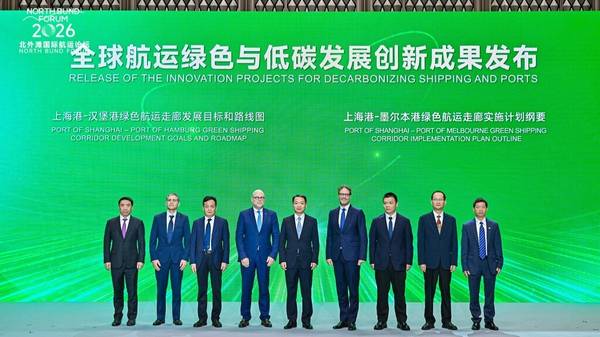
Shanghai and Melbourne ports move green shipping corridor into delivery phase
Ports launch implementation plan targeting green methanol, biofuels and shore power by 2035. |
|
|
|
||
|
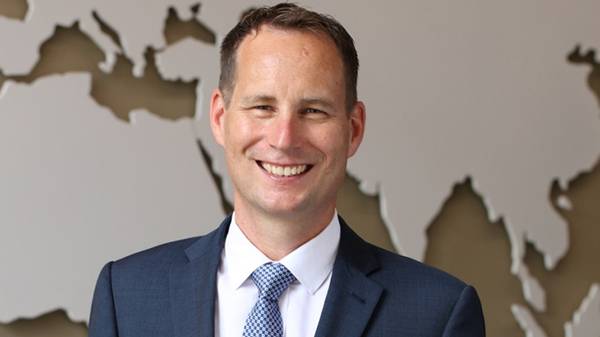
WinGD CEO warns of mounting cost due to Net Zero Framework delay
Dominik Schneiter says shipping's fossil-fuelled newbuild boom shows the cost of the IMO's delayed climate policy. |
|
|
|
||
|
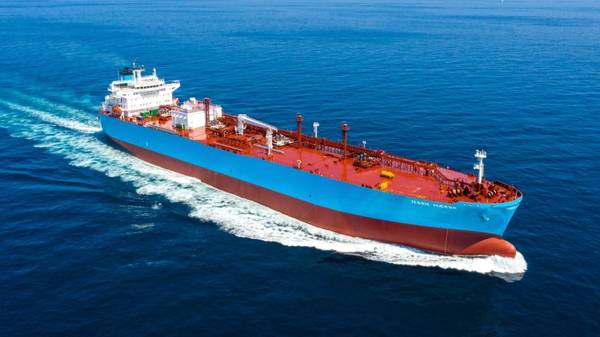
Maersk Tankers names second gas carrier in South Korea
Jessie Maersk, built to carry LPG and ammonia, joins a ten-ship series as the company expands its gas-shipping business. |
|
|
|
||
|
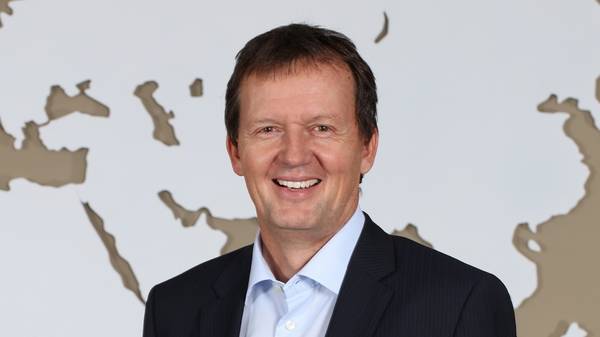
WinGD signs ten-year service deal for six COSCO LNG carriers
Swiss firm to provide global service and maintenance support for six LNG carriers powered by its 6X72DF dual-fuel engines. |
|
|
|
||
|
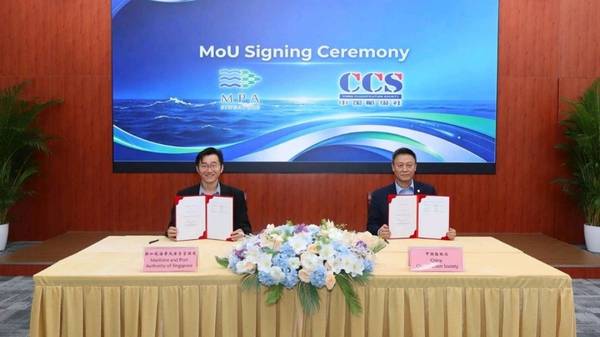
Singapore and China Classification Society deepen maritime ties with renewed decarbonisation pact
MPA and China Classification Society renew MOU, widening cooperation on green fuels, smart ships and talent development. |
|
|
|
||
|
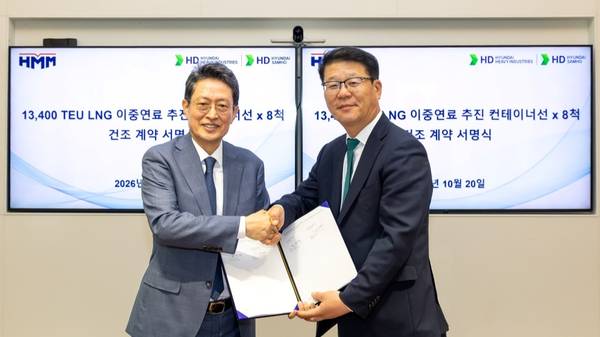
HMM orders eight LNG dual-fuel container ships in newbuild push
South Korean carrier commissions 13,000-TEU vessels from HD Hyundai, with deliveries due to begin in 2029. |
|
|
|
||
|
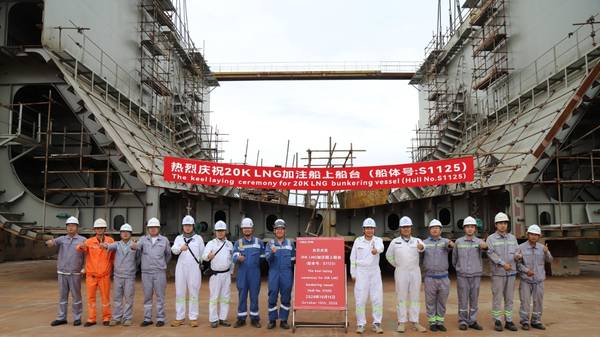
CIMC SOE advances construction on three LNG bunker vessels
Chinese shipbuilder progresses three bunker vessel projects in the same week. |
|
|
|
||
|
Verde Marine Energy adds two staff as it expands bunkering operations in ARA region
Dutch bunker supplier hires former Melroh Trading employees and launches RMG 380 3.5% HSFO barge service following Sunoco Marine tie-up. |
|
|
|
||
|
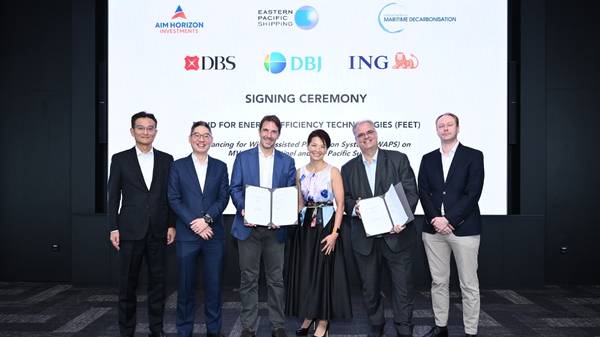
Fund for Energy Efficiency Technologies finances first wind-assisted propulsion projects with Eastern Pacific Shipping
GCMD and AIM Horizon Investments link verified fuel savings to financing for two EPS vessels fitted with wind-assisted propulsion. |
|
|
|
||
| WinGD signs ten-year service deal for six COSCO LNG carriers [News & Insights] |
| WinGD signs five-year service deal for NYK LNG carrier fleet [News & Insights] |
| LD Armateurs' Spirit of Toulouse fitted with six Norsepower rotor sails [News & Insights] |
| MPA, CMA CGM and SLNG sign MoU to explore liquefied biomethane as a marine fuel in Singapore [News & Insights] |
| Study finds methanol dual-fuel retrofit of Kamsarmax bulk carrier would take about 75 days [News & Insights] |
