
 |
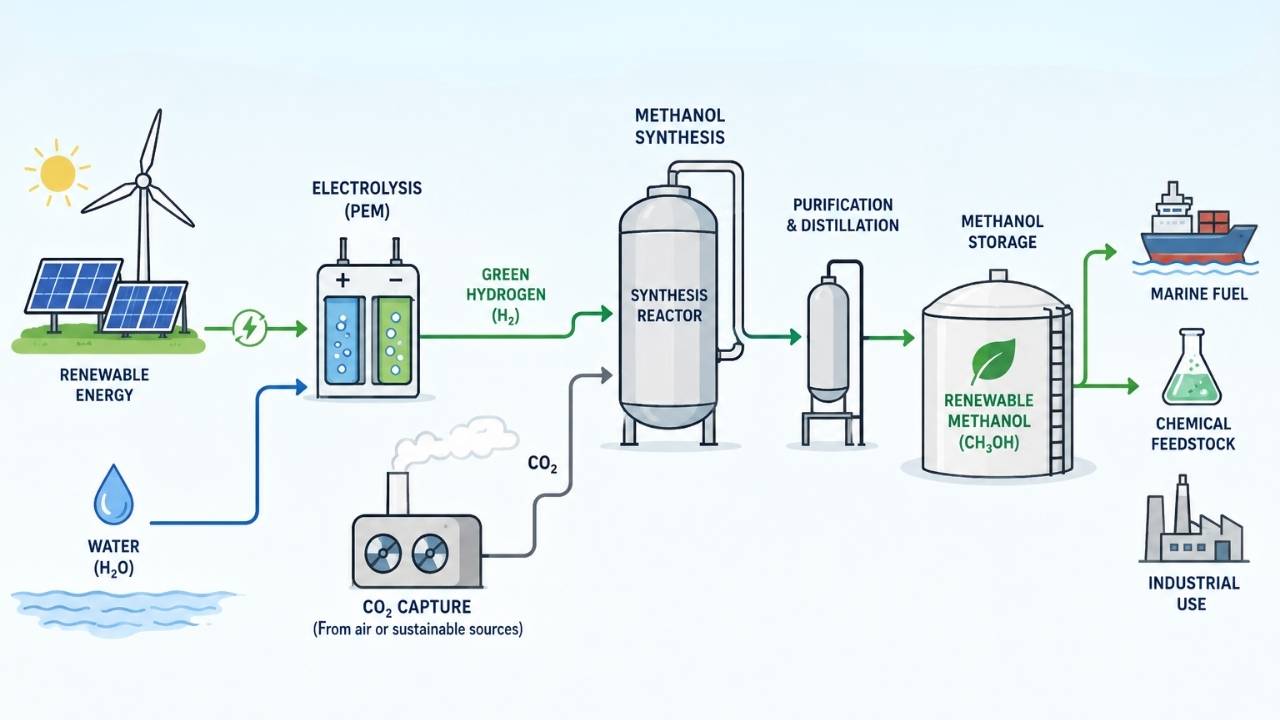
The global renewable methanol project pipeline contracted for the first time in 42 months in July 2026, according to data published by GENA, driven primarily by the cancellation of a large-scale e-methanol project in the United States.
GENA’s Project Navigator Methanol, which tracks renewable and low-carbon methanol developments worldwide, recorded a net reduction of 0.5 megatonnes, or million metric tonnes (MMT), in cumulative pipeline capacity month-on-month, bringing total tracked capacity to 61.8 MMT by 2032. The figure encompasses 285 projects, including 130 e-methanol projects representing 24.4 MMT of capacity, 137 biomethanol projects with 26.3 MMT, and 18 low-carbon methanol projects accounting for 11.2 MMT.
The contraction was largely attributable to the removal of the HIF Global Matagorda project in Texas. On 9 July, HIF Global announced that it had signed a definitive agreement to sell a 1,200-acre site in Matagorda County, Texas, for digital infrastructure development. The site had been designated for the 1,400 kilotonne per annum (kta) Matagorda e-methanol project. HIF stated that it would continue developing fuels projects at other sites. GENA said it therefore assumes the Matagorda project has been cancelled.
The cancellation follows that of the Beaver Lake Renewable Energy project in June, and has contributed to a sharp reduction in North America’s share of the global renewable methanol pipeline. The region now accounts for just 2.8 MMT of capacity, down from 4.7 MMT in May, representing 6% of the global total. GENA noted that several additional North American projects in its tracker have shown little or no development progress over the past two years, suggesting further contraction is possible.
China dominates; India emerges
China remains by far the largest contributor to the renewable methanol pipeline, accounting for 31.1 MMT, or 63% of renewable methanol capacity tracked, while Europe accounts for 11.2 MMT, or 21%. Five new projects were added to Project Navigator during July—one in Europe, two in China, and two in India—while four frozen e-methanol projects with a combined capacity of 2.1 MMT were excluded.
India is emerging as a new centre of renewable methanol development, according to GENA. As of July 2026, the country’s project pipeline had reached 2.1 MMT, with a number of additional early-stage projects also announced.
Development activity continuesDespite the headline contraction, GENA registered more than 30 development advances across individual projects during the month.
Carbon Recycling International (CRI) delivered the e-methanol reactor for China Tianying’s 170 kta e-methanol project in Liaoyuan, China. According to the Jilin Provincial Development and Reform Commission, 83 wind turbines have been installed, the main equipment for the hydrogen plant is in place, and steel structures for the methanol plant and CO₂ compressor station have been completed. The project’s announced start-up date is September 2026.
A contractor consortium won the engineering, procurement and construction (EPC) tender for the 100 kta Shenyang Hydrogen Biomass Green Methanol project, being developed by China Energy Engineering Corporation using a hybrid configuration combining biomass gasification and electrolysis. The first foundation pile for the project was subsequently drilled.
Steel structure installation has commenced at the 100 kta Huadian Diaobingshan e-methanol project in China, which is targeting the start of operations by June 2027.
In India, Mitsubishi Gas Chemical and ACME Group signed a 10-year purchase agreement covering the supply of 100 kta of e-methanol from ACME’s project in Odisha, with deliveries to begin in 2030.
GENA noted that most projects demonstrating substantial development progress have capacities in the range of 100–200 kta, and that while large-scale projects could potentially benefit from economies of scale, securing sufficient offtake in an emerging market presents material challenges.
Outlook
GENA estimates that operational renewable methanol capacity could grow from 0.9 MMT currently to between 6 MMT and 12 MMT by the end of 2031, depending on regulatory and market developments.

|
Portsmouth port publishes white paper on UK’s first multi-berth shore power system
UK port shares lessons from five-year project in bid to spur nationwide uptake of the technology. |
|
|
|
||

|
IMO seminar examines technical hurdles facing ammonia as a marine fuel
Technical seminar under the Future Fuels and Technology Project attracts over 800 participants. |
|
|
|
||
|
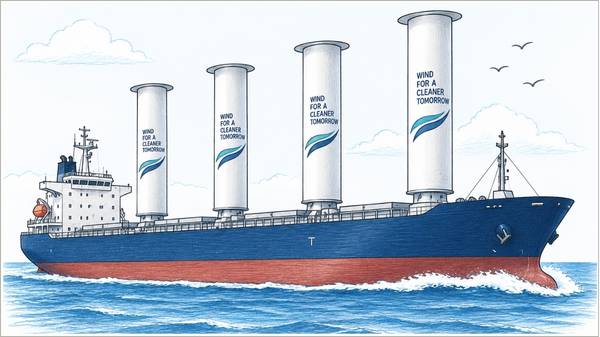
ICS to host webinar on wind-assisted propulsion for shipping
Event to bring together panel of industry experts to discuss wind propulsion as a decarbonisation option. |
|
|
|
||
|
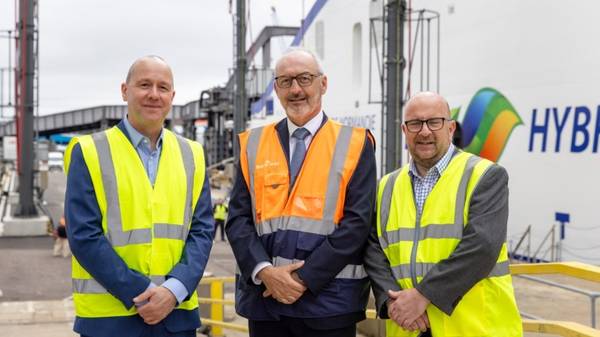
Portsmouth switches on UK’s first multi-berth shore power system
ABB technology enables Portsmouth to offer high-voltage shore power across three berths simultaneously. |
|
|
|
||

|
H2SITE lands €3.4m in Norwegian funding to scale up onboard ammonia-to-power system
Enova backing will support the development of a 700 kW ammonia-cracking system for commercial maritime auxiliary-power applications. |
|
|
|
||

|
VPS to host Hamburg seminar on fuel quality and decarbonisation
European Round Table Meeting will address marine fuel strategy, lubricants and the multi-fuel transition. |
|
|
|
||
|
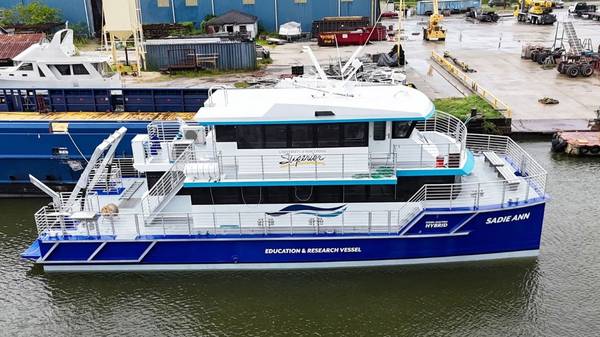
Battery-hybrid vessel enters service as a floating classroom for research students
Hybrid research vessel Sadie Ann delivered for Lake Superior education programme. |
|
|
|
||

|
Gaetan Perret to succeed Olivier Josse as Seascale Energy co-CEO
Josse will step down after 36 years, with Gaetan Perret set to become co-CEO in December. |
|
|
|
||
|
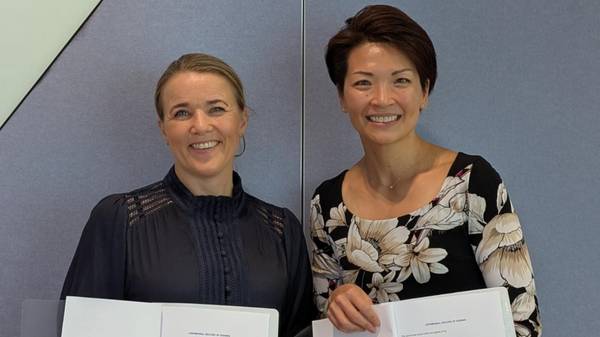
GCMD and Equinor sign five-year partnership on alternative fuels and carbon storage
Singapore-based centre and Norwegian energy company to combine expertise in maritime pilots and low-carbon fuel supply. |
|
|
|
||

|
Petrobras suspends bunker deliveries at Rio Grande after tropical storm
Storm damage and power outage leave resumption timeline unclear. |
|
|
|
||
| GCMD and Equinor sign five-year partnership on alternative fuels and carbon storage [News & Insights] |
| Jan De Nul exercises option for alternative-fuel-capable trenching vessel [News & Insights] |
| IMO sub-committee finalises revised methanol fuel safety guidelines [News & Insights] |
| Ethanol edges into shipping’s fuel mix as methanol crossover eases adoption barriers [News & Insights] |
| SGMF publishes first ISO-compliant life cycle assessment of methanol as a marine fuel [News & Insights] |
