
 |
The European Commission published its revised EU Emissions Trading System (ETS) proposal on 17 July, with the European Community Shipowners’ Associations (ECSA) broadly welcoming moves to earmark revenues and support sustainable fuels, while raising concerns over the narrow scope of eligible clean technologies and the absence of a firm commitment to withdraw the EU measure once a global agreement is reached at the International Maritime Organization (IMO).
Under the proposal, 110 million allowances are earmarked for the shipping sector, amounting to approximately €10 billion. At the national level, 50% of member states’ ETS revenues are earmarked, with shipping decarbonisation listed among the priority purposes. ECSA also acknowledged the simplification of reporting requirements between the EU ETS and FuelEU Maritime as a positive step.
Sotiris Raptis, Secretary General of ECSA, stated: “Today, the Commission has taken a first step to earmark ETS revenues at EU and national level. Support for sustainable fuels is welcome and necessary to make them available at European and global level. In this regard, support for the availability of fuels in third countries is encouraging.”
The association noted that sustainable fuels are, on average, four times more expensive than conventional fuels and said meaningful support for their uptake is needed to create a business case for investment. Fuels produced in Europe and in certain third countries are eligible for support under the proposal.
However, ECSA expressed concern that the proposal provides what it described as a narrow list of eligible clean technologies. Raptis said: “The proposal fails to deliver on the uptake of clean technologies, limiting support to wind and electricity alone. Technologies that can quickly improve energy efficiency and deliver immediate emissions savings are left without support.”
ECSA argued that the eligible technology list should cover the full range of energy efficiency projects capable of delivering emissions savings across the existing fleet, as well as new technologies required for the deployment of clean fuels.
The association also raised concerns about derogations for small islands, ice-class vessels and outermost regions, which are extended only to 2035 under the current proposal rather than for the full operational period of the system. ECSA said these should be made automatic, permanent and fit for purpose to safeguard the connectivity of Europe’s most vulnerable regions.
On the question of EU port competitiveness, ECSA warned that any measures introduced must maintain the level playing field across all segments of shipping and preserve the integrity of the system.
Regarding the IMO process, ECSA acknowledged progress in the form of a commitment to avoid double payments should an international agreement be reached, but said the proposal stops short of what is required. Raptis noted: “A clear signal to the international community that the ETS will be withdrawn once a global agreement is reached is still missing.”
The association pointed out that the 110 million allowances earmarked amount to approximately €10 billion out of the roughly €90 billion the sector is expected to pay into the system between 2030 and 2040, and called for a greater share of revenues to be directed back to the sector’s energy transition.

|
JuWonOil looking to strengthen with two Houston hires
Texas-based firm is recruiting a marine lubricants sales executive and a marine fuels and distillates trader. |
|
|
|
||
|
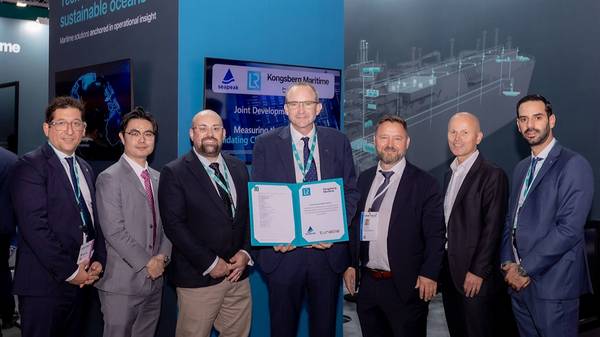
Four firms partner to trial continuous emissions monitoring on LNG carrier
LR, Seapeak, Kongsberg Maritime and Tunable will test onboard CO₂ monitoring against engine data and default emissions factors. |
|
|
|
||
|
Bunker Holding reshuffles commercial leadership across brand portfolio
Appointments announced across KPI OceanConnect, Glander International Bunkering and its digital sales operations. |
|
|
|
||
|
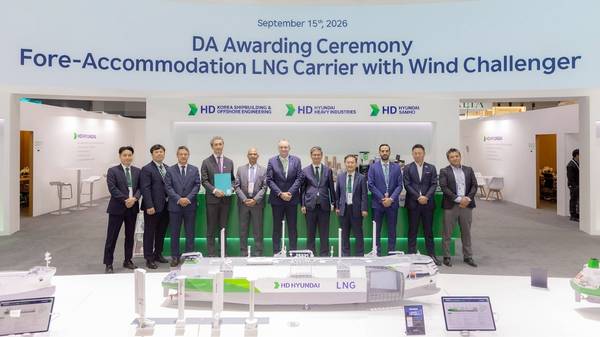
Lloyd's Register grants design appraisal for wind-powered LNG carrier concept
Vessel design featuring four Wind Challenger sails moves closer to commercial deployment. |
|
|
|
||

|
SGMF publishes first ISO-compliant life cycle assessment of methanol as a marine fuel
Study evaluating 15 production pathways completes organisation’s suite of LCAs covering LNG, ammonia and methanol. |
|
|
|
||
|
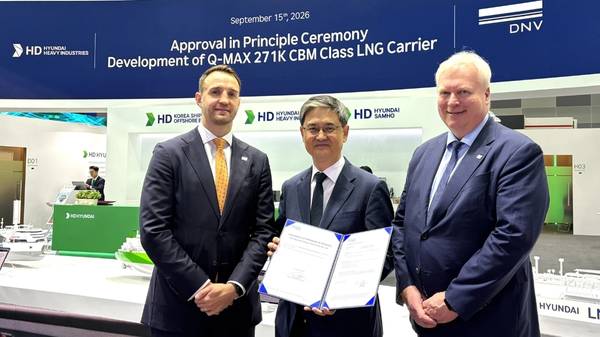
DNV grants approval in principle for HD HHI’s 271,000-cbm LNG carrier design
Classification society backs Hyundai’s largest LNG carrier design yet, featuring five membrane tanks and dual-fuel propulsion. |
|
|
|
||

|
GTT Energy launches new LNG fuel tank design for container ships
'Next-generation' LNG fuel containment system features 2 barg technology. |
|
|
|
||
|
Flex Commodities seeks operator for bunker trading operations
Candidates should have three to five years of relevant bunker or commodity trading operations experience |
|
|
|
||
|
Glander International Bunkering seeks bunker trader for Valencia office
Role open to sales professionals regardless of prior oil industry experience. |
|
|
|
||
|
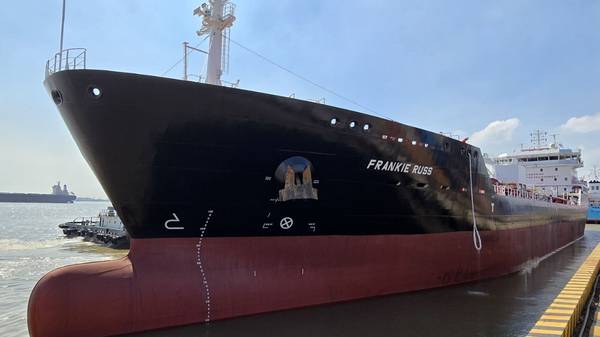
TB Marine takes over technical management of methanol-ready tanker
Newbuild MT Frankie Russ is first tanker in Ernst Russ's fleet. |
|
|
|
||
| Four firms partner to trial continuous emissions monitoring on LNG carrier [News & Insights] |
| Shipowners risk financial exposure by delaying EU allowance transfers, EmissionLink warns [News & Insights] |
| SEA-LNG urges EU to protect mass-balance pathway for liquefied biomethane [News & Insights] |
| SEA-LNG urges EU to protect mass-balance pathway for liquefied biomethane [News & Insights] |
| SEA-LNG urges EU to protect mass-balance pathway for liquefied biomethane [News & Insights] |
