
 |
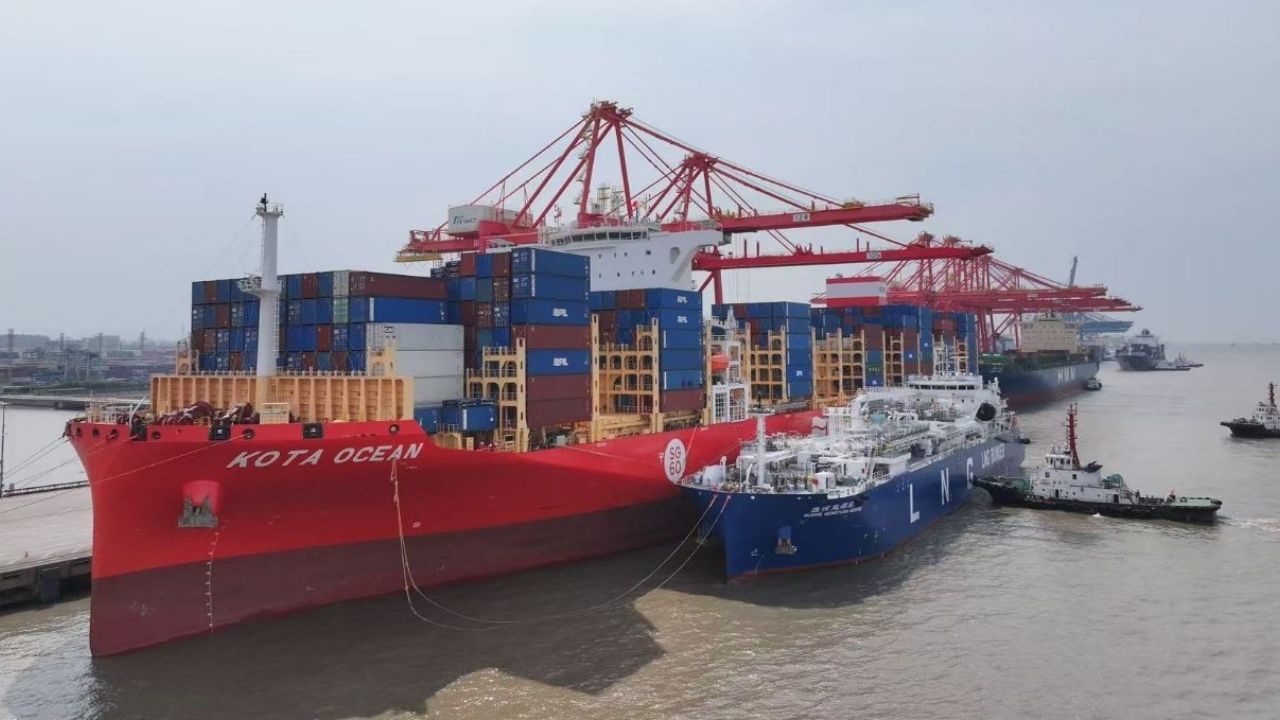
Pacific International Lines (PIL) has completed an LNG bunkering operation at Mingdong Terminal in Shanghai’s Waigaoqiao Port, marking the first such operation for both the shipping line at this location and for the terminal itself.
The operation took place from 4–5 May during China’s Labour Day holiday period. PIL’s dual-fuel container ship Kota Ocean took on approximately 4,300 cbm of LNG supplied by SIPG Energy.
The bunkering was conducted simultaneously with cargo operations at the terminal. The Pudong and Wusong maritime safety administrations provided support.
PIL noted that Kota Ocean's LNG bunkering in Shanghai required coordination between PIL’s Shanghai team, SIPG Energy, and terminal operators to ensure both cargo handling and fuel bunkering proceeded without disruption.
Kota Ocean is one of eight LNG dual-fuel vessels in PIL’s fleet and one of four of PIL's 8,200-teu LNG dual-fuel 'O-Class' series together with Kota Oasis, Kota Odyssey and Kota Orkid — the last of which made its maiden call at Singapore in November 2025.
PIL says it is committed to fleet modernisation and achieving net zero emissions by 2050. The Singaporean firm describes itself as a “future-focused shipping line” and says it is working with partners across ports, energy, and regulatory sectors to support the transition towards a more sustainable maritime sector.
|
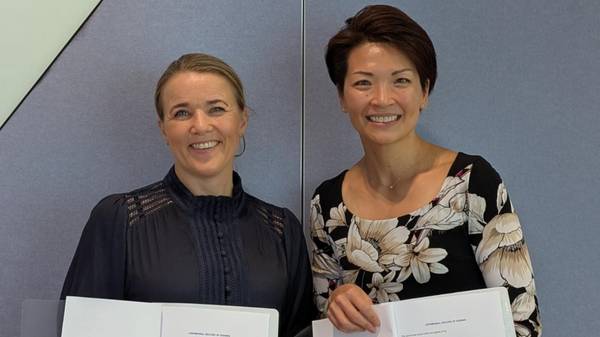
GCMD and Equinor sign five-year partnership on alternative fuels and carbon storage
Singapore-based centre and Norwegian energy company to combine expertise in maritime pilots and low-carbon fuel supply. |
|
|
|
||
|
Petrobras suspends bunker deliveries at Rio Grande after tropical storm
Storm damage and power outage leave resumption timeline unclear. |
|
|
|
||
|
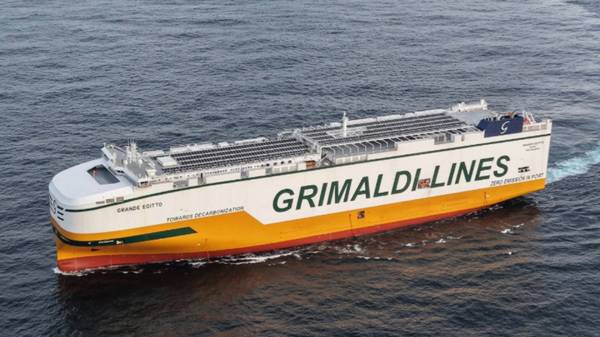
Grimaldi adds fourteenth ammonia-ready car carrier to fleet
Grande Egitto, built by China Merchants Heavy Industries Jiangsu, will operate on the Asia–East Africa trade route. |
|
|
|
||
|
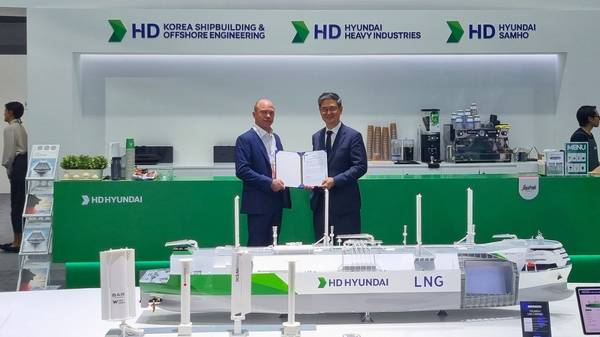
ABS grants design approval for ammonia bunkering vessel from HD HHI and HD KSOE
Approval in principle covers a 22,000-cbm multi-purpose vessel intended to supply ammonia as marine fuel. |
|
|
|
||
|
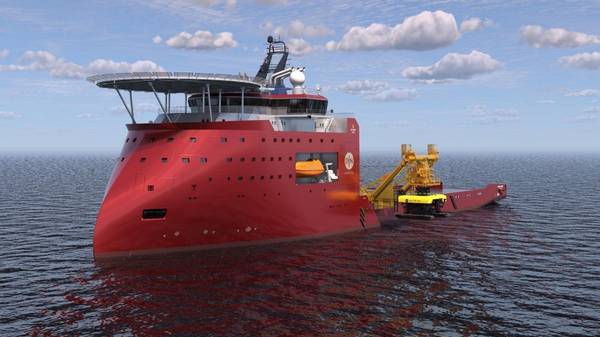
Jan De Nul exercises option for alternative-fuel-capable trenching vessel
Belgian marine contractor confirms option for a second subsea trenching vessel built on Ulstein's customised design platform. |
|
|
|
||
|
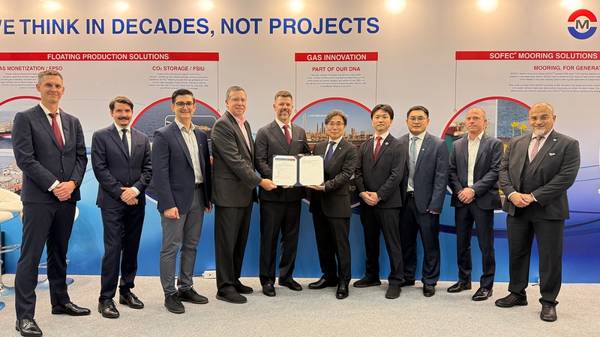
ABS grants technology qualification approval for FPSO fuel cell system
MODEC and Eld Energy’s solid oxide fuel cell system moves towards offshore trials after clearing initial ABS review stages. |
|
|
|
||

|
IMO sub-committee finalises revised methanol fuel safety guidelines
CCC 12 completes revision of interim methanol fuel guidelines while advancing work on carbon capture and low-flashpoint fuel rules. |
|
|
|
||
|
Trafigura spins off VLCC fleet into new listed shipping company
Volare Shipping established, with eight ammonia-ready vessels on order. |
|
|
|
||
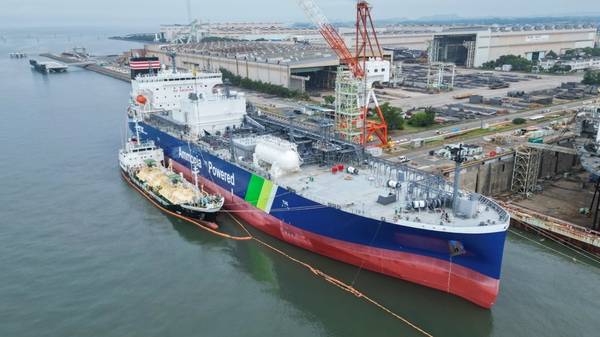
|
Japan completes world's first ship-to-ship ammonia bunkering to ammonia-fuelled vessel
Ammonia fuel transferred between ships at Ariake Shipyard ahead of gas carrier’s sea trials. |
|
|
|
||
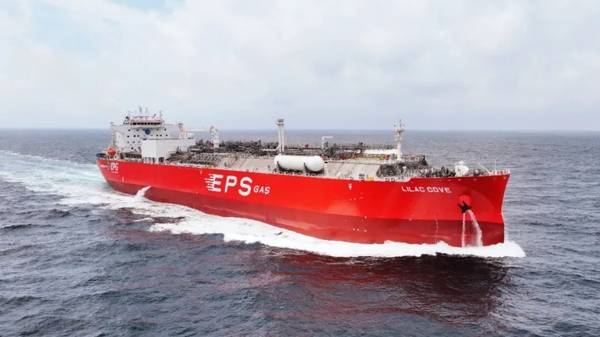
|
Jiangnan delivers second LPG dual-fuel VLAC in series to Singapore’s EPS
Lilac Cove, the world’s largest liquid ammonia carrier, joins Ivy Cove as Jiangnan advances its six-ship VLAC programme. |
|
|
|
||
| Japan completes world's first ship-to-ship ammonia bunkering to ammonia-fuelled vessel [News & Insights] |
| MSC LNG dual-fuel container ship delivered almost a year early [News & Insights] |
| Japan Engine completes land-based testing of landmark hydrogen-fuelled engine for large vessels [News & Insights] |
| Yang Ming names fourth LNG dual-fuel container vessel YM Weight [News & Insights] |
| GTT Energy launches new LNG fuel tank design for container ships [News & Insights] |
