Hapag-Lloyd reports that its average bunker price fell year-on-year (YoY) by $78, or 11.1 percent, to $625 per tonne during the first half (H1) of 2023.
Bunker consumption in H1 for the German shipping line totalled 1.98m tonnes, which was down 6.6% on the 2.12m tonnes recorded a year earlier. The decrease was said to be due to lower transport volumes, the clearing of congestion in front of ports and lower vessel sailing speeds.
As a result, bunker expenses declined by EUR 225.5m, or 16.5 percent, to EUR 1,141.9m in H1 2023, down from EUR 1,367.4m in the prior-year period.
Hapag-Lloyd: Average Bunker Price (US$/mt), 2019-23| Year | H1 | Q2 |
| 2023 | 625.00 | 603.00 |
| 2022 | 703.00 | 793.00 |
| 2021 | 421.00 | 458.00 |
| 2020 | 448.00 | 360.00 |
| 2019 | 429.00 | 434.00 |
| Year | H1 | Q2 |
| 2023 | 1,141.9 | 519.5 |
| 2022 | 1,367.4 | 786.0 |
| 2021 | 725.3 | 403.5 |
| 2020 | 862.9 | 268.6 |
| 2019 | 822.2 | 427.6 |
| Year | H1 | Q2 |
| 2023 | 1.98 | 0.95 |
| 2022 | 2.12 | 1.06 |
| 2021 | 2.11 | 1.06 |
| 2020 | 2.05 | 0.95 |
| 2019 | 2.20 | 1.10 |
Bunker consumption
Bunker consumption per slot (measured by average container slot capacity, annualised) dipped 10% in H1 to 2.18 tonnes. The improvement was due to efficiency measures and lower bunker consumption, Hapag explained.
Bunker consumption per TEU transported also decreased in H1 — by 3% to 0.34 tonnes.
As regards the consumption of low-sulphur bunker (MFO 0.1% and 0.5%, and distillates) and LNG, Hapag said the H1 figure dipped YoY from 88% to 83% due to the fitting of more vessels with scrubbers.
Key financial results
In its overall results, Hapag-Lloyd posted a H1 profit of $3,133m (down 66.9% on the $9,466m result recorded in H1 2022) and a Q2 profit of $1,102 (77% below last year's figure of $4,782m).
EBITDA of $3,775m in H1 represents a 65.5% drop compared to the previous year's $10,942m result. Second-quarter EBITDA decreased YoY by $4,239m, or 75.2 %, to $1,396m.
Revenue in H1 fell 42% YoY from $18,562m to $10,847m, whilst in Q2 the figure dropped 49.8% from $9,606m to $4,819m.
Transport expenses in H1 were 9.3% below the prior-year level, at $6,330m. This was said to be primarily due a lower bunker consumption price of $625 per tonne and lower demurrage and detention expenses.
|
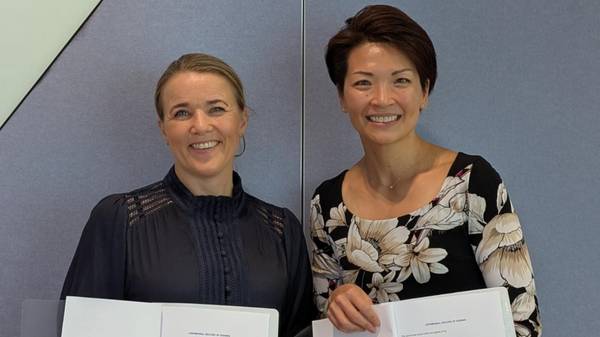
GCMD and Equinor sign five-year partnership on alternative fuels and carbon storage
Singapore-based centre and Norwegian energy company to combine expertise in maritime pilots and low-carbon fuel supply. |
|
|
|
||
|
Petrobras suspends bunker deliveries at Rio Grande after tropical storm
Storm damage and power outage leave resumption timeline unclear. |
|
|
|
||
|
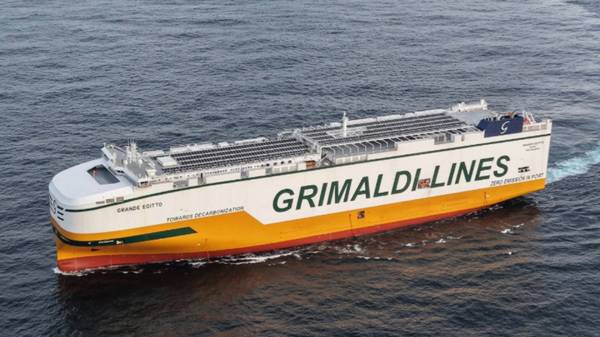
Grimaldi adds fourteenth ammonia-ready car carrier to fleet
Grande Egitto, built by China Merchants Heavy Industries Jiangsu, will operate on the Asia–East Africa trade route. |
|
|
|
||
|
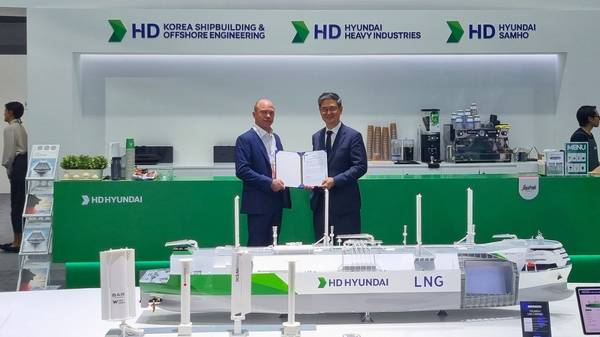
ABS grants design approval for ammonia bunkering vessel from HD HHI and HD KSOE
Approval in principle covers a 22,000-cbm multi-purpose vessel intended to supply ammonia as marine fuel. |
|
|
|
||
|
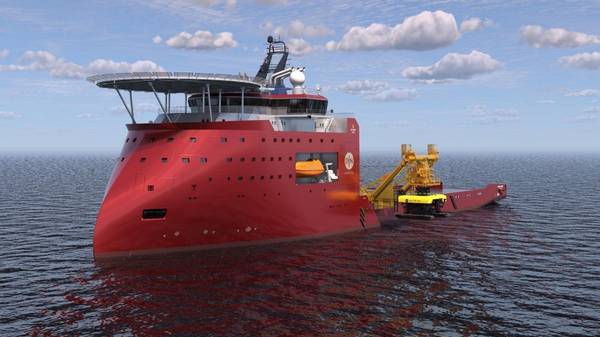
Jan De Nul exercises option for alternative-fuel-capable trenching vessel
Belgian marine contractor confirms option for a second subsea trenching vessel built on Ulstein's customised design platform. |
|
|
|
||
|
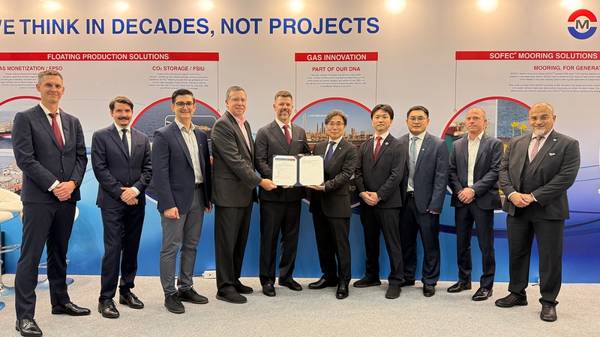
ABS grants technology qualification approval for FPSO fuel cell system
MODEC and Eld Energy’s solid oxide fuel cell system moves towards offshore trials after clearing initial ABS review stages. |
|
|
|
||
|
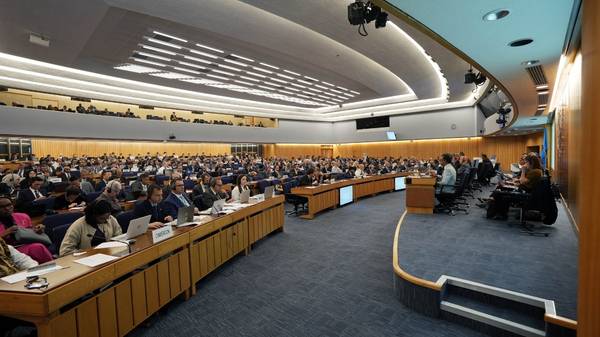
IMO sub-committee finalises revised methanol fuel safety guidelines
CCC 12 completes revision of interim methanol fuel guidelines while advancing work on carbon capture and low-flashpoint fuel rules. |
|
|
|
||
|
Trafigura spins off VLCC fleet into new listed shipping company
Volare Shipping established, with eight ammonia-ready vessels on order. |
|
|
|
||
|
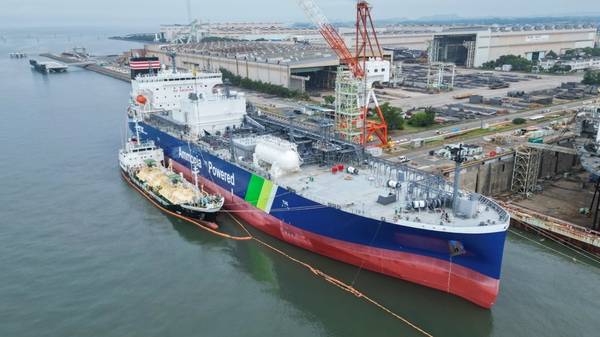
Japan completes world's first ship-to-ship ammonia bunkering to ammonia-fuelled vessel
Ammonia fuel transferred between ships at Ariake Shipyard ahead of gas carrier’s sea trials. |
|
|
|
||
|
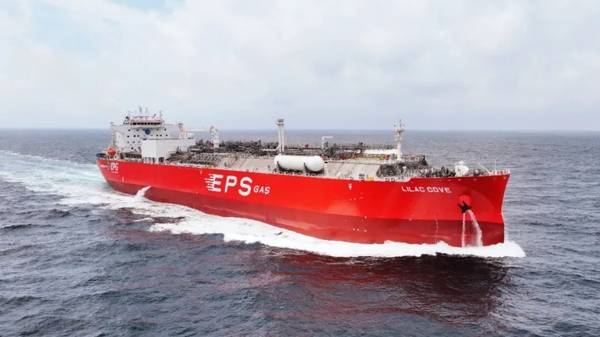
Jiangnan delivers second LPG dual-fuel VLAC in series to Singapore’s EPS
Lilac Cove, the world’s largest liquid ammonia carrier, joins Ivy Cove as Jiangnan advances its six-ship VLAC programme. |
|
|
|
||
| ExxonMobil starts Hapag ARA biofuel deliveries [News & Insights] |
| Hapag-Lloyd cuts steel for first vessel of new London Express class [News & Insights] |
| Hapag-Lloyd signs shore power agreement with Hamburg Port Authority [News & Insights] |
| Hapag-Lloyd and Seaspan complete first methanol retrofit under five-ship programme [News & Insights] |
| Scan Global Logistics and Hapag-Lloyd expand biofuel partnership to cut shipping emissions [News & Insights] |
| Hapag-Lloyd and Kuehne+Nagel partner on biofuel initiative for Asia-Europe trade [News & Insights] |