Fri 28 Feb 2020, 14:51 GMT

World Fuel Services posts highest marine income since 2015


Despite drop in revenue and fourth consecutive annual decline in sales volume.


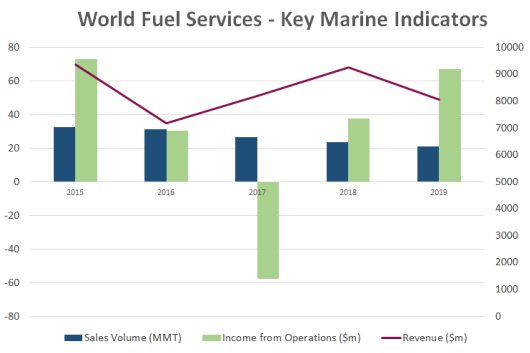
Image credit: Bunker Index. Source: World Fuel Services
World Fuel Services (WFS) reports that its marine segment posted an increase in income from operations of $29.3m, or 77.5 percent, to $67.1m in 2019 compared to the previous year.

The firm's annual gross profit of $181.5m, which was a year-on-year (YoY) rise of $35.7m, or 24.5 percent, was said to be mainly due to stronger performance in core resale operations.

The improvements in income and gross profit were achieved despite a YoY decline in marine revenue of $1.191bn, or 12.9 percent, to $8.059bn. Sales volume also fell over the 12-month period - by $2.8m, or 11.8 percent, to 20.9m tonnes.

In an analysis of performance over the last five financial years, the results show that WFS managed to find a way to adapt its business model to generate a marine income in 2019 similar to that achieved in 2015, but with far lower volume sold. Between 2016 and 2019, WFS, for the first time, had to contend with four consecutive annual declines in marine tonnage, and it posted successive reductions in marine earnings between 2016 and 2017 as the company went through a difficult period.

But this was followed by back-to-back increases in marine income between 2018 and 2019, resulting in a rise of $124.9m - from -$57m to $67.1m - in the space of two years. The 2019 figure was only just below the $73.0m result achieved in 2015, and this despite sales volume falling by more than a third (35.9 percent) - from 32.6m tonnes to 20.9m tonnes - over the same period.

Commenting on the results, Ira Birns, Executive Vice President and Chief Financial Officer, stated: "Our marine team did an outstanding job, driving increased profitability throughout 2019 by refining the core portfolio and a heightened focus on driving stronger returns."

Key Marine Performance Indicators: 2015-19

Year Sales Volume (MMT) Revenue ($m) Income from Ops ($m) Gross Profit ($m)
2015 32.6 9,367.2 73.0 189.6
2016 31.4 7,182.5 30.2 149.5
2017 26.5 8,199.3 -57.8 126.0
2018 23.7 9,249.5 37.8 145.8
2019 20.9 8,058.5 67.1 181.5
Fourth quarter

In the fourth quarter, WFS's marine segment posted an income from operations of $22.9m - a $15.9m improvement on the previous year. Gross profit climbed YoY by $15.3m, or 37.0 percent, to $56.6m - the highest level since the fourth quarter of 2014.

Revenue fell $291.2m, or 12.2 percent, to $2.091bn, whilst sales volume was down 16.4 percent to 5.1m tonnes from the previous year's figure of 6.1m tonnes.

Discussing performance, Birns remarked: "The significant year-over-year gross profit increase was principally related to strong results in core resale activity, driven in part by market volatility related to the new IMO standard and the transition from high-sulphur to low-sulphur fuel oil."

CEO Michael Kasbar said: "Our marine segment posted yet another quarter of outstanding results, closing out a year that produced the strongest annual marine earnings since 2015."

"The financial performance of our marine business in the fourth quarter is testimony to the value of our core reselling business and our growing network of strategic physical locations. Both activities complement each other and provide us with an unparalleled ability to manage risks and provide surety of supply."

Birns noted that almost 85 percent of marine fuel sold by WFS in the first quarter of 2020 is expected to be either low-sulphur fuel oil or marine gas oil (MGO) - up from around 55 percent in the last three months of 2019. This, according to the CFO, "should provide opportunities to again drive strong profitability in the first quarter [of 2020]" as prices remain significantly higher for these products than high-sulphur fuel oil.

Overall company performance

In its overall company results for 2019, WFS achieved a rise in net income of 51.2m, or 40.1 percent, to $178.9m as the aviation and land segments contributed with income from operations of $283.9m and $55.0m, respectively.

Gross profit climbed $93.5m, or 9.2 percent, to $1.112bn, whilst revenue fell $2.931bn, or 7.4 percent, to $36.819bn.

In Q4, meanwhile, net income jumped $26.9m, or 90.9 percent, to $56.5m.

MGO  

Areion vessel. Dorian LPG takes delivery of dual-fuel VLGC capable of carrying ammonia  

The 93,000-cbm Areion can run on LPG or fuel oil and transport ammonia cargoes.

FSRU Toscana alongside Green Zeebrugge vessel. RINA awards ISCC EU certification to OLT Offshore LNG Toscana for bio-LNG supply  

Certification enables bio-LNG use in the EU as a renewable fuel under RED II and RED III directives.

World Shipping Council at IMO meeting. WSC calls for safe maritime corridor as 20,000 seafarers remain trapped in the Persian Gulf  

Industry body urges IMO member states to establish safe passage and supply access.

Graphic promoting Auramarine webinar titled 'Sustainable Fueling Part 3: Ammonia - next alternative fuel in marine'. Auramarine to host webinar on ammonia as marine fuel in April  

Finnish firm will explore ammonia’s role in maritime decarbonisation at its third spring webinar.

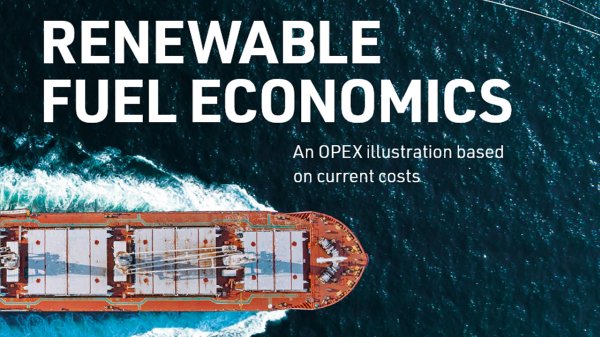
Front cover of study by WinGD and Envision Energy titled 'Renewable Fuel Economics: An OPEX illustration based on current costs'. Green ammonia could reach cost parity with VLSFO and LNG by 2050, study finds  

WinGD and Envision Energy study projects green ammonia operational costs competitive with conventional marine fuels.

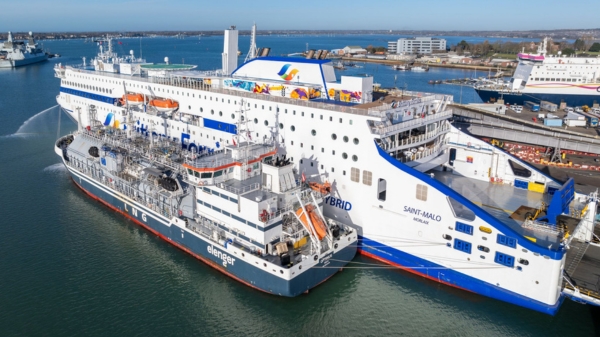
Elenger Marine's LNG bunkering vessel Optimus alongside Brittany Ferries’ Saint-Malo. Bureau Veritas verifies methane emissions on Brittany Ferries’ LNG vessels  

Verification enables ferry operator to report measured methane slip instead of regulatory default values.

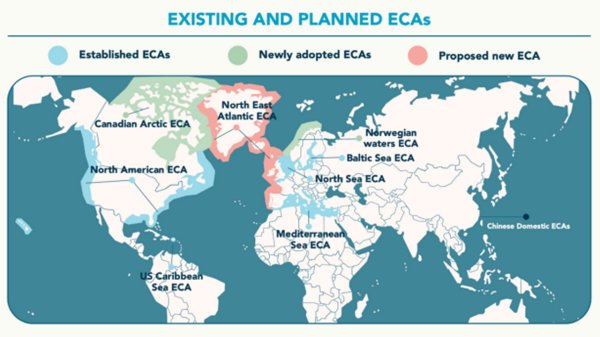
Map showing existing and planned Emission Control Areas (ECAs). Alliance calls for urgent black carbon action as new Arctic emission control areas take effect  

Canadian Arctic and Norwegian Sea ECAs now in force, with compliance deadline set for March 2027.

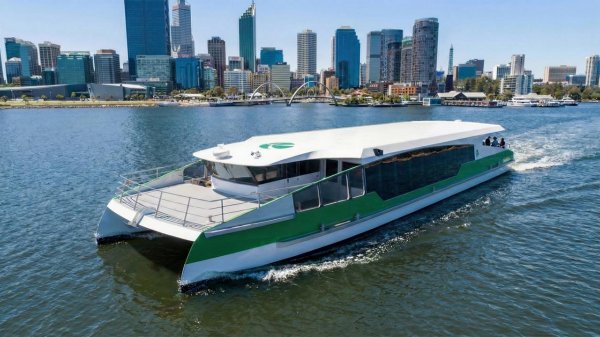
Artistic impression of battery-electric ferry for operation on Perth’s Swan River. Lloyd’s Register to class Western Australia’s first electric ferry fleet  

Echo Marine Group partners with Lloyd’s Register on five battery-electric ferries for Perth’s Swan River.

Thomas Kazakos, secretary general of The International Chamber of Shipping (ICS). ICS condemns Middle East shipping attacks as 20,000 seafarers remain trapped  

Industry body calls for urgent state action to resupply vessels and enable crew changes.

Molslinjen ferry illustration. Molslinjen order propels Australia to top of battery vessel production rankings  

Danish ferry operator’s three-catamaran order at Incat Tasmania shifts global manufacturing landscape, analysis shows.