Fri 14 Dec 2018, 16:53 GMT

Risk minimisation in uncertain times | Geos Group


Company offers service to help minimise the financial risks associated with fuel price fluctuations.


Image credit: Unsplash
By Geos Group

As the UK's Brexit crisis continues to keep the world on tenterhooks, the Geos Group (Sea Bunkering) is working closely with vessel owners and operators in the shipping and offshore industries to help minimise the financial risks associated with fuel price fluctuations.

In these times of deep political and economic uncertainty, the company has seen an increase in enquiries about its price risk management service, which stabilises fuel costs and helps with budgetary planning.

Adam Russell, the company's Trading and Hedging Manager, said: "As traders, physical suppliers and purchasers, we have become accustomed to volatile fuel prices over the last few years, so the uncertainty of the current situation is almost business as usual. We are helping more and more of our clients to develop a hedging strategy, which replaces a risk-laden and uncertain future with a more certain outcome. Our advice to ship owners and operators is: don't gamble on the markets at this time, make sure your hedges are in place, continue to trade responsibly and don't take unnecessary risks. This becomes even more important when trading in sterling."

The price of oil, and therefore the price of marine gas oil, rises and falls on a daily basis as a result of the large number of political, economic and environmental events unfolding around the world all the time. Bunker fuel represents a significant proportion of the cost of running a vessel, and a rising market can impact heavily on operational costs.

There are several hedging tools offered by the Geos Group (Sea Bunkering) that can help to mitigate these risks, including:

The Swap

The swap contract, or 'fixed price paper', fixes the price of a volume of fuel to be delivered in the future. The buyer and seller agree an index price (which changes), usually based on benchmark price assessment figures. When the index price moves above the agreed fixed price, the seller pays the buyer the difference; when the index price moves below the agreed fixed price, the buyer pays the seller the difference. This helps to flatten out price fluctuations over time.

The Cap

The cap protects the buyer from rising prices, whilst enabling him/her to take advantage of falling prices. As with a swap, a fixed price and an index price are agreed upon. When the index price moves above the agreed fixed price, the seller pays the buyer the difference. However, if the index goes below the agreed fixed price, there is no payment due from buyer to seller. The fixed price therefore protects the buyer from rising prices, but allows him/her to benefit from price reductions. Buyers are required to pay an up-front premium for this service, which varies according to contract length, volume, price and market conditions.

The Collar

The collar keeps the bunker costs within an agreed range. A maximum price (cap) and minimum price (floor) are agreed. When the index price moves above the cap, the seller pays the buyer the difference; when the index price is below the floor, the buyer pays the seller the difference; when the index price is in between the cap and floor, so within the collar, no payments are made. There is no up-front premium payment for this service, and the best part is that the buyer only pays for protection when he/she can best afford it (when prices are low and below the floor).

The Swap Option (Swaption)

Here, the buyer of a cap has an option, but not an obligation, to buy a swap. So, if the market ends up above the swap price level, the buyer will exercise the right to enter the swap contract. There is an up-front premium to be paid for this service, which acts as a kind of insurance policy to the buyer.

Although there is still some risk involved, and possibly an additional cost, a hedging strategy that is carefully structured to suit a ship owner or operator's requirements can significantly protect them against the financial risks presented by a highly volatile fuel market.

For more information about purchasing marine fuel, contact the Geos Group (Sea Bunkering) on +44 (0)1491 845474 or email commercial@geosgroup.com.


Areion vessel. Dorian LPG takes delivery of dual-fuel VLGC capable of carrying ammonia  

The 93,000-cbm Areion can run on LPG or fuel oil and transport ammonia cargoes.

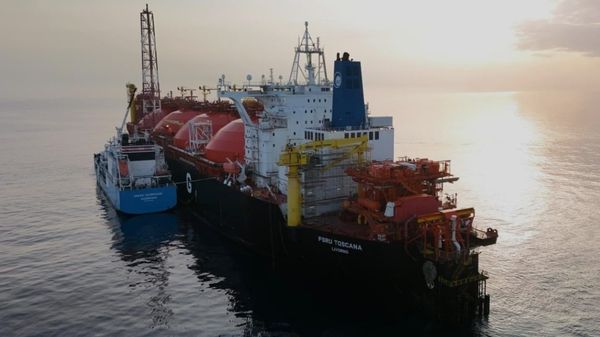
FSRU Toscana alongside Green Zeebrugge vessel. RINA awards ISCC EU certification to OLT Offshore LNG Toscana for bio-LNG supply  

Certification enables bio-LNG use in the EU as a renewable fuel under RED II and RED III directives.

World Shipping Council at IMO meeting. WSC calls for safe maritime corridor as 20,000 seafarers remain trapped in the Persian Gulf  

Industry body urges IMO member states to establish safe passage and supply access.

Graphic promoting Auramarine webinar titled 'Sustainable Fueling Part 3: Ammonia - next alternative fuel in marine'. Auramarine to host webinar on ammonia as marine fuel in April  

Finnish firm will explore ammonia’s role in maritime decarbonisation at its third spring webinar.

Front cover of study by WinGD and Envision Energy titled 'Renewable Fuel Economics: An OPEX illustration based on current costs'. Green ammonia could reach cost parity with VLSFO and LNG by 2050, study finds  

WinGD and Envision Energy study projects green ammonia operational costs competitive with conventional marine fuels.

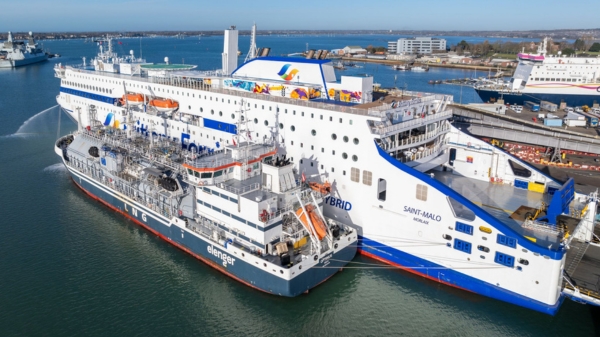
Elenger Marine's LNG bunkering vessel Optimus alongside Brittany Ferries’ Saint-Malo. Bureau Veritas verifies methane emissions on Brittany Ferries’ LNG vessels  

Verification enables ferry operator to report measured methane slip instead of regulatory default values.

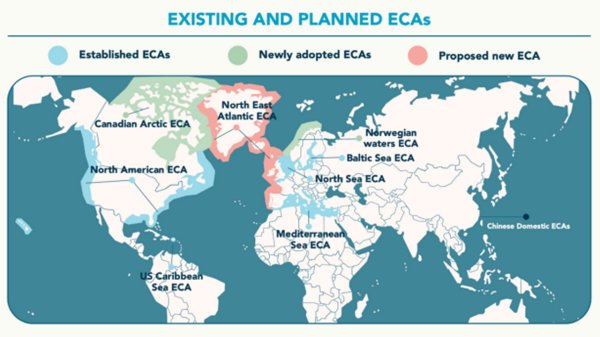
Map showing existing and planned Emission Control Areas (ECAs). Alliance calls for urgent black carbon action as new Arctic emission control areas take effect  

Canadian Arctic and Norwegian Sea ECAs now in force, with compliance deadline set for March 2027.

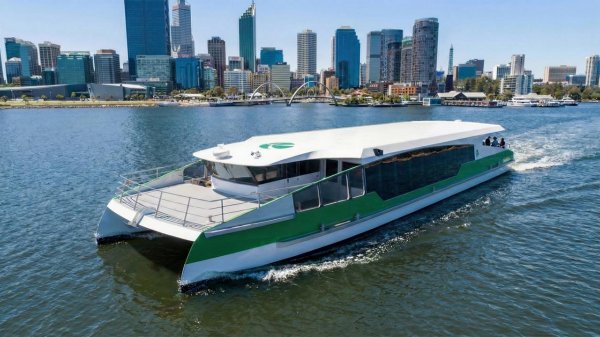
Artistic impression of battery-electric ferry for operation on Perth’s Swan River. Lloyd’s Register to class Western Australia’s first electric ferry fleet  

Echo Marine Group partners with Lloyd’s Register on five battery-electric ferries for Perth’s Swan River.

Thomas Kazakos, secretary general of The International Chamber of Shipping (ICS). ICS condemns Middle East shipping attacks as 20,000 seafarers remain trapped  

Industry body calls for urgent state action to resupply vessels and enable crew changes.

Molslinjen ferry illustration. Molslinjen order propels Australia to top of battery vessel production rankings  

Danish ferry operator’s three-catamaran order at Incat Tasmania shifts global manufacturing landscape, analysis shows.