
 |
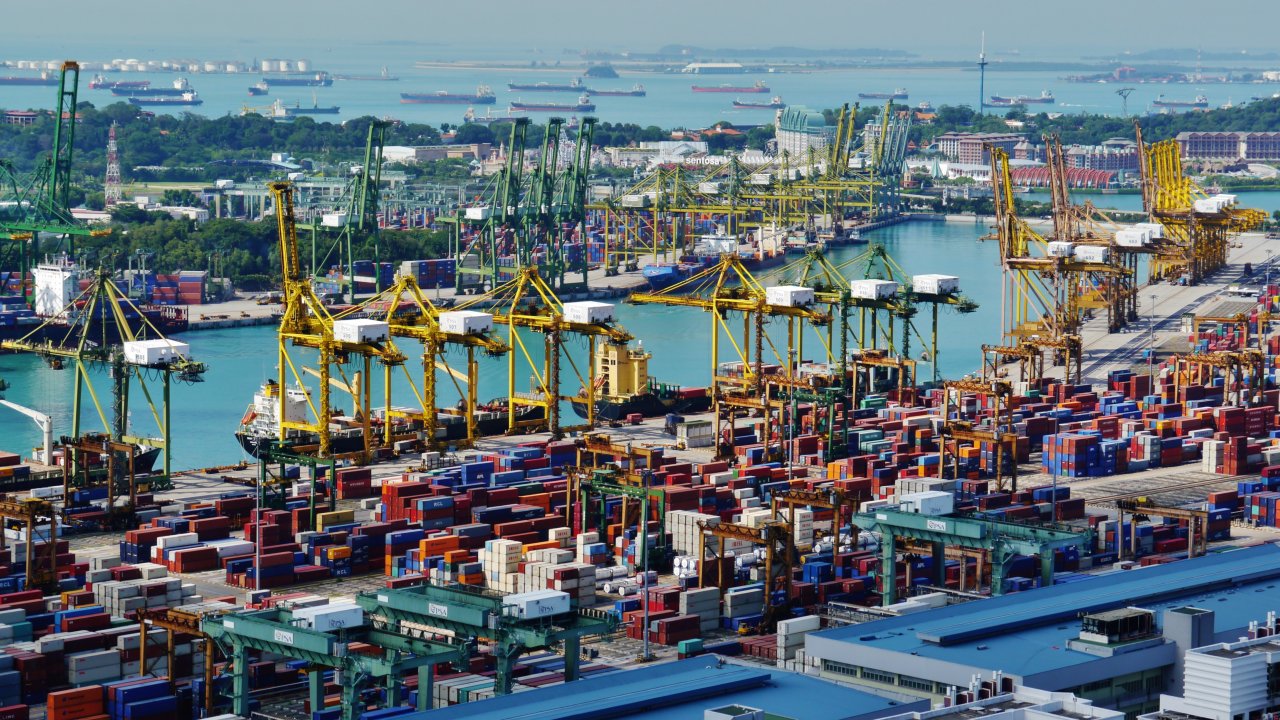
Singapore's bunker market held largely steady in October 2025, with total sales amounting to 4.818m tonnes, according to the latest data from the Maritime and Port Authority of Singapore (MPA). The figure, which is 1.2% lower than the 4.878m tonnes recorded a year earlier, is the first year-on-year decline since February.
Sales of Singapore's best-selling product, very-low-sulphur fuel oil (VLSFO), eased slightly YoY by 80,800 tonnes, or 3.2%, to 2.433m tonnes in October 2025.
Volumes of high-sulphur marine fuel oil (MFO) rose modestly by 52,900 tonnes, or 2.9%, from 1.814m tonnes in October 2024 to 1.867m tonnes this year.
The port's third-largest product, low-sulphur marine gasoil (LSMGO), posted a firmer performance in percentage terms. Sales increased by 48,700 tonnes, or 14.2% YoY, climbing from 343,300 tonnes to 392,000 tonnes last month.
Bio-blended VLSFO, although still a much smaller segment, saw one of the most pronounced declines among the port's fuel grades. Sales dropped by 66,200 tonnes, or 56.9%, from 116,200 tonnes a year earlier to just 50,000 tonnes in October 2025.
Bio-MFO also contracted. Volumes fell by 10,600 tonnes, or 48.8%, to 11,100 tonnes, down from 21,700 tonnes during the corresponding month in 2024.
LNG bunkering recorded a positive result as sales climbed YoY by 10,000 tonnes, or 19.8%, rising from 50,600 tonnes to 60,600 tonnes in October 2025. However, when comparing data for the first ten months with the previous year, LNG volumes are 285,700 tonnes compared with 334,600 tonnes in 2024.
Vessel bunker calls, meanwhile, rose to 3,753 — the second-highest level in the city-state's history. It is only surpassed by the figure recorded in December 2019: 3,829.
|
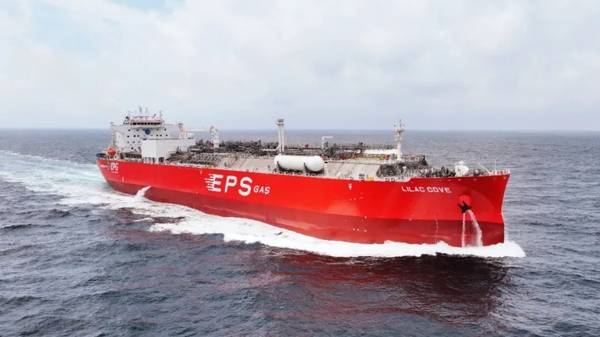
Jiangnan delivers second LPG dual-fuel VLAC in series to Singapore’s EPS
Lilac Cove, the world’s largest liquid ammonia carrier, joins Ivy Cove as Jiangnan advances its six-ship VLAC programme. |
|
|
|
||
|
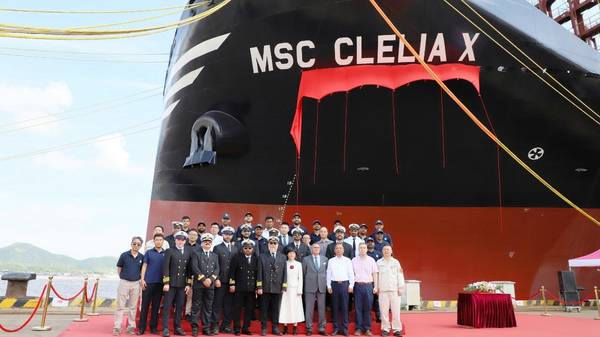
MSC LNG dual-fuel container ship delivered almost a year early
Chinese shipbuilder hands over sixth 10,300-TEU vessel in series to MSC ahead of contract schedule. |
|
|
|
||
|
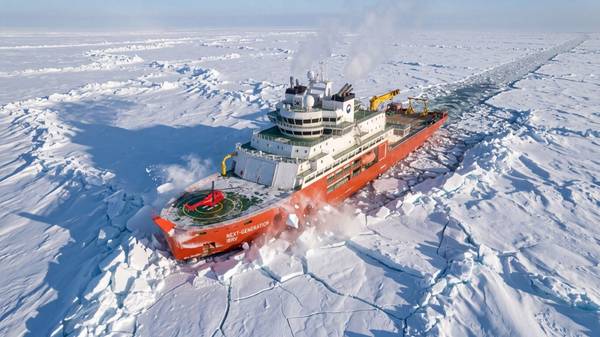
Steel cutting marks start of construction on dual-fuel icebreaking research vessel
Hanwha Ocean begins building a dual-fuel LNG/MGO icebreaker for the Republic of Korea’s Ministry of Oceans and Fisheries, due for delivery in 2030. |
|
|
|
||
|
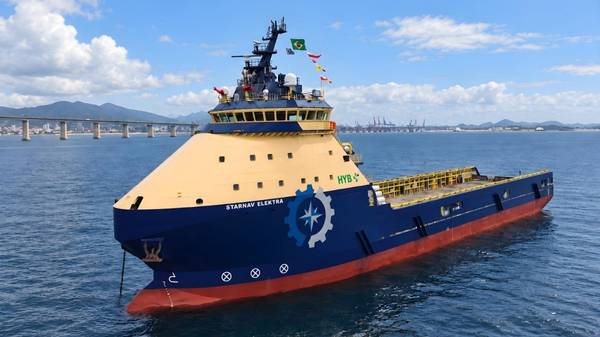
Petrobras christens first vessel under Mar Aberto fleet renewal programme
Platform supply vessel Starnav Elektra, built in Santa Catarina with an all-female crew, marks the first delivery under the fleet initiative. |
|
|
|
||
|
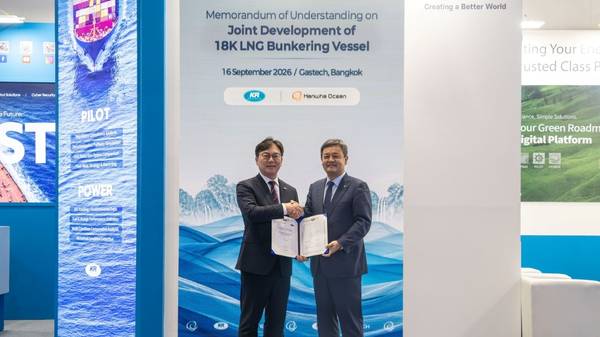
KR and Hanwha Ocean agree to develop 18,000-cbm LNG bunkering vessel designs
Pair will jointly explore two design concepts for a new LNG bunkering vessel. |
|
|
|
||
|
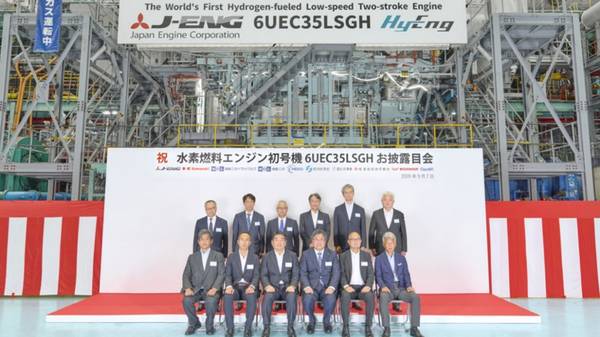
Japan Engine completes land-based testing of landmark hydrogen-fuelled engine for large vessels
Hydrogen co-firing rate of at least 95% achieved during factory testing. |
|
|
|
||
|
Ethanol edges into shipping’s fuel mix as methanol crossover eases adoption barriers
Rising interest from cargo owners, shared technology with methanol and Brazilian production growth push ethanol beyond regional niche status. |
|
|
|
||
|
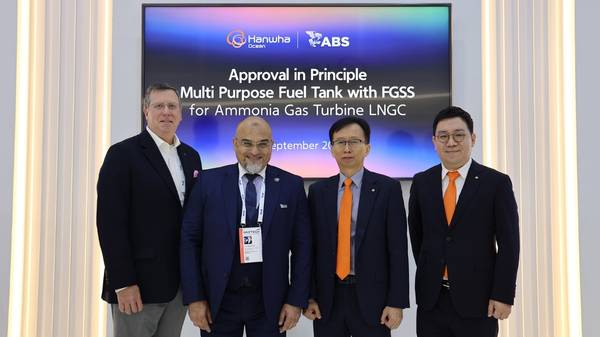
ABS grants Hanwha Ocean approval for dual-fuel tank enabling LNG-to-ammonia switch
In-principle approval awarded for fuel tank and supply system enabling LNG carriers to convert to ammonia without replacement. |
|
|
|
||
|
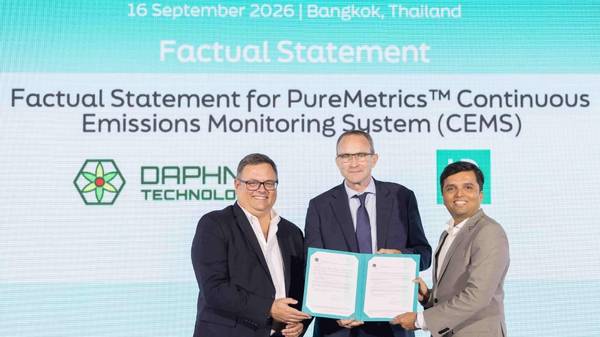
Lloyd's Register confirms suitability of Daphne Technology's emissions monitoring system
Factual Statement validates the PureMetrics design for monitoring greenhouse gas emissions from marine engines. |
|
|
|
||

|
IMO issues shipboard biofuel blend checklist developed by IBIA
Checklist for FAME-based biofuels formally incorporated into IMO document, supporting crews handling biofuel blends for the first time. |
|
|
|
||
| Record-breaking 12-month bunker sales in Singapore hit 55.38m tonnes in August 2025 [News & Insights] |
| MPA Singapore and DNV renew partnership to advance maritime decarbonisation and digitalisation [News & Insights] |
| ABB wins contract to power Singapore's first floating LNG terminal [News & Insights] |
| MSC LNG dual-fuel container ship delivered almost a year early [News & Insights] |
| Steel cutting marks start of construction on dual-fuel icebreaking research vessel [News & Insights] |
| Steel cutting marks start of construction on dual-fuel icebreaking research vessel [News & Insights] |
| KR and Hanwha Ocean agree to develop 18,000-cbm LNG bunkering vessel designs [News & Insights] |
| ABS grants Hanwha Ocean approval for dual-fuel tank enabling LNG-to-ammonia switch [News & Insights] |
