Wed 19 Sep 2018, 09:37 GMT

NGOs hail Greenland HFO ban support


Clean Arctic Alliance applauds government's commitment to 'actively work for a ban'.


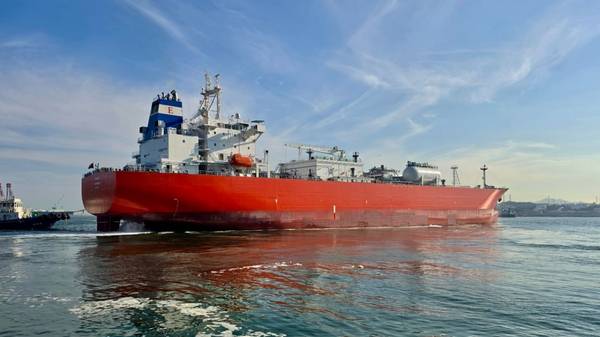
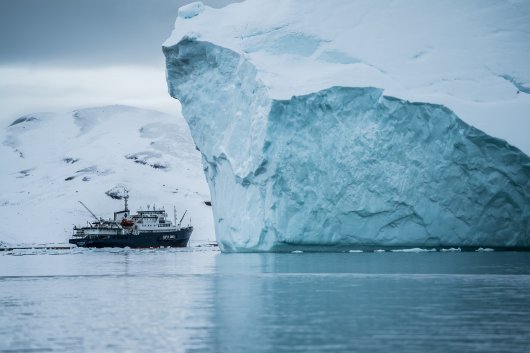
Vessel pictured off the coast of Greenland.
Image credit: Unsplash
NGO coalition Clean Arctic Alliance has hailed an announcement made by the government (Naalakkersuisut) of Greenland suporting a ban on the use and carriage of heavy fuel oil (HFO) by ships in the Arctic.

Commenting on the news, Kare Press-Kristensen, Senior Advisor to the Danish Ecological Council, a member of the Clean Arctic Alliance, remarked: "We applaud Greenland's government for speaking up for the much needed protection of the Arctic's nature and communities, by supporting the banning of the world's most polluting fuel - heavy fuel oil. After spending time measuring air pollution from cruise ships burning HFO in Greenland this summer, I'm very relieved that Greenlandic politicians support banning it."

In its statement, Greenland's government had said: "Naalakkersuisut has agreed to actively work for a ban on HFO in the Arctic, via the UN International Maritime Organization (IMO). The prohibition must cover both navigation and transport of HFO in the Arctic. Naalakkersuisut's position on the case has awaited an analysis of the socio-economic, environmental and climate consequences for Greenland of a possible ban on sailing on HFO in the Arctic.

"The Ministry of Nature and Environment states that the analysis is now available and, on this basis, Naalakkersuisut has decided to support a ban on sailing and transport of HFO in the Arctic. The analysis shows that a ban on sailing on HFO will be associated with a socioeconomic cost of approximately 8.1 million kroner [EUR 1.085 million/ $1.268 million] annually.

"A very important reason for avoiding HFO in Arctic waters is that marine casualties, which lead to waste of HFO in the marine environment, can have major environmental and economic consequences. HFO is very difficult and partly impossible to collect at low sea temperatures. Therefore, in case of major spill of HFO, there is a high risk that the oil will remain in the water for a long time or on the coasts that the oil may endanger."

In April 2018, the International Maritime Organization's Marine Environment Protection Committee (MEPC72) agreed to move forward on developing of a Arctic ban on HFO - which is already banned in Antarctic waters.

MEPC72 directed one of its sub-committees (PPR6) - which will meet in early 2019 - to develop a ban on heavy fuel oil use and carriage for use by ships in the Arctic, "on the basis of an assessment of the impacts" and "on an appropriate timescale".

"Arctic summer sea ice is approximately half the extent it was in the 1970s and half the volume, while the region's strongest sea ice has broken up twice this year, for the first time on record. The use of heavy fuel oil in the Arctic not only increases the risk of devastating oil spills, but it also generates higher emissions of black carbon, which exacerbate the melting of both sea and glacier ice," Clean Arctic Alliance stressed.

Sian Prior, Clean Arctic Alliance Lead Advisor, added: "With MEPC73 coming up next month in London, Greenland's backing of a ban on the world's dirtiest shipping fuel in the Arctic is a timely encouragement for IMO member state governments to strengthen their commitment to quickly end the use and carriage of heavy fuel oil in Arctic waters. The best thing IMO member states can now do for their domestic shipping industries is to send a clear signal for investment in alternatives to HFO. We're also calling on shipping companies crossing the Arctic - such as Maersk and COSCO - to show industry leadership and move towards cleaner fuels, and to commit to decarbonised forms of propulsion in the future."


TMS Tankers logo. Lloyd’s Register delivers fleet-wide energy transition roadmap for TMS Tankers  

LR Advisory maps vessel-level compliance risk and decarbonisation pathways across the Greek owner’s tanker fleet.

Dr Prapisala Thepsithar, GCMD. GCMD shares biofuel assurance and green finance insights at Hong Kong shipping decarbonisation forum  

The Global Centre for Maritime Decarbonisation presented pilot findings on biofuels and energy efficiency financing.

Laura Maersk ethanol bunkering graphic. Maersk conducts large-scale ethanol bunkering trial on Laura Maersk in Rotterdam  

A.P. Moller – Maersk has conducted a barge-delivered ethanol bunkering operation as part of ongoing fuel trials.

Luminara vessel truck-to-ship bunkering. MOL Techno-Trade completes first LNG bunkering for international cruise ship in Hokkaido  

Truck-to-ship LNG operation at Hakodate marks first such supply to an international cruise vessel in Hokkaido.

Acta Gemini vessel. Acta Marine takes delivery of methanol dual-fuel CSOV Acta Gemini for RWE wind farm charter  

The vessel will support operations at the Sofia Offshore Wind Farm at Dogger Bank.

Yeva Wood and Kirsten Møller Jørgensen. Malik Supply expands Danish team with bunker trader and finance hire  

Danish bunker supplier Malik Supply adds two new staff across its Fredericia and Aalborg offices.

AiP award ceremony for a 10,000-teu biofuel-powered container ship. HJSC wins AiP for 10,000-teu biofuel-powered container ship design  

South Korean shipbuilder HJ Shipbuilding & Construction receives classification society approval for its biofuel vessel design at Posidonia.

Active vessel. Capital Clean Energy Carriers takes delivery of LNG carrier and dual-fuel gas carrier, secures five new charters  

Athens-based CCEC expands its fleet and pushes contracted revenue backlog to $3.1bn.

VPS logo. Fuel quality management for vessels in extended idle: Arabian Gulf, Gulf of Oman and adjacent anchorages | Rahul Choudhuri, VPS  

Managing fuel quality deterioration following the closure of the Strait of Hormuz.

Person signing a document. Agastya Green Fuels signs 250,000 t/yr e-methanol offtake deal with Sri Lanka’s SAR Group  

Indian producer and Sri Lankan maritime firm agree long-term green methanol supply partnership.