BC Ferries'
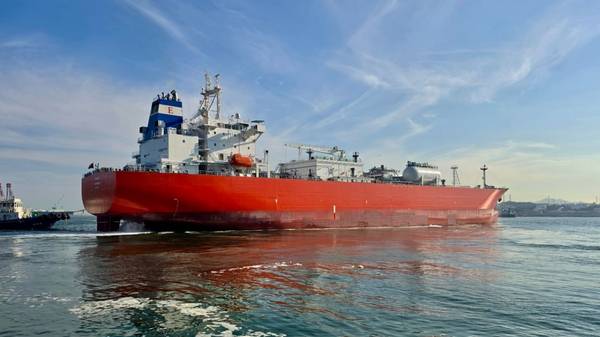
Spirit of British Columbia was removed from service on September 6 to prepare for departure to Remontowa Ship Repair Yard S.A. in Gdansk, Poland, where it will undergo a
dual-fuel conversion and mid-life upgrades (MLUs) between the
autumn of 2017 and the
spring of 2018.
Once the conversion to dual-fuel is completed, the vessel will be able to operate on liquefied natural gas (LNG) or ultra-low sulphur marine diesel.
Explaining the reason for the conversion,
Mark Wilson, BC Ferries' Vice President of Engineering, said:
"Last fiscal year, we spent approximately
$100.2 million on diesel fuel, of which the two Spirit Class vessels consumed approximately
15.5 percent.
"
Liquefied natural gas costs significantly less than marine diesel. The conversion of the two largest ships in the fleet along with the three new dual-fuel Salish Class vessels that all entered service this year will go a long way to help both our environmental footprint and with fare affordability for our customers."
BC Ferries says it expects to reduce CO2 emissions by
12,000 tonnes annually - equivalent to taking approximately 2,500 vehicles off the road per year - by using natural gas to fuel its Spirit-class vessels.
Other planned upgrades to the Spirit of British Columbia include the renewal of navigation equipment and propulsion equipment components - including rudders, steering system, bow thrusters and propeller blades - to reduce energy consumption.
After the planned upgrades on the Spirit of British Columbia are completed, the
Spirit of Vancouver Island is due to undergo the same process between the autumn of 2018 and the spring of 2019. This schedule will allow for these two vessels - the largest in the fleet - to be back in operation during the summer months when traffic is at its highest.
The Spirit of British Columbia was constructed in 1993 and the Spirit of Vancouver Island was built the following year. BC Ferries plans to operate the two vessels for
another 25 years.
Both ships service the Metro Vancouver to Victoria route, which is the busiest route for the company's fleet.
As
Bunker Index previously reported, Polish shipyard Remontowa was awarded the $140 million Spirit-class upgrade contract after one shipyard from British Columbia, Seaspan's Vancouver Shipyard, was among the three shipyards shortlisted and invited to participate in the request for proposal (RFP) process, but withdrew.
"The company [Remontowa] is well experienced and proven with LNG-fuelled ships. All of these elements factored heavily into the decision of contract award," BC Ferries said in March 2016.