Buss Shipping, the shipping arm of the worldwide maritime logistics service provider
Buss Group, is to install
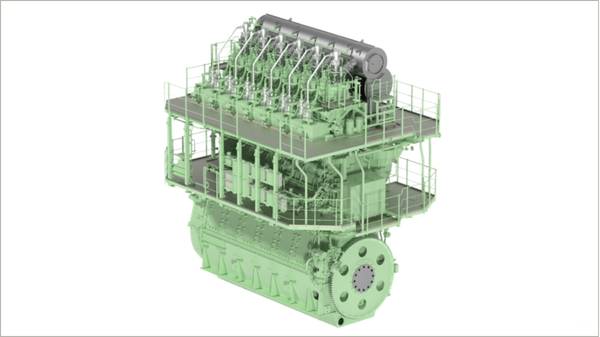
Alfa Laval PureSOx exhaust gas cleaning systems [pictured] on two of its container vessels at the beginning of next year in a move that is set to provide the transportation firm with "valuable fuel economy in a competitive charter market", Alfa Laval says.
Headquartered in Hamburg, Germany, Buss Shipping is a container ship operator with 20 feeder ships and an established chartering business. To meet the requirements of today's charter market, the company is focusing on the sustainable modernization of its existing fleet.
As a key step in this process, hybrid Alfa Laval PureSOx systems are to be retrofitted on board the vessels
Condor and
Corsar. Both are container feeders of 1025 TEUs that operate exclusively in Emission Control Areas (ECAs). Since they frequent the low-alkalinity waters between Rotterdam and St. Petersburg, as well as ports like Hamburg with zero-discharge requirements, a scrubber with closed-loop mode was "a necessity", Alfa Laval says.
"The hybrid PureSOx systems on the Condor and Corsar will provide emission compliance with maximum flexibility and fuel economy. This will uphold the competitiveness of our offer to charter customers,"
Torben Kölln, Managing Director of Buss Shipping said in a statement.
Custom engineering
The Condor and Corsar will each receive a hybrid PureSOx system with multiple inlets, connecting the main engine and two auxiliary engines to one U-design scrubber. In contrast to earlier systems with multiple inlets, the inlets will now lead into a single scrubber jet section - an advance in construction that will make the scrubber even more compact.
"The PureSOx solution was well engineered and allowed a sophisticated integration of the scrubber system into our container feeder ships," remarked
Christoph Meier, Project Manager, Buss Shipping. "The custom construction let us avoid major modifications inside the vessel, which together with the pre-outfitting gave us a short installation time. All those factors contributed to a competitive price."
A compliant solution... and cheaper fuel
For the engineering of the PureSOx systems, Buss Shipping GmbH & Co. KG cooperated with
SDC Ship Design & Consult GmbH. Detailed engineering was handled by the shipyard
German Dry Docks GmbH & Co. KG, which is contracted to install the systems following deliveries by Alfa Laval in January and February 2016.
"The work between Buss Shipping, Alfa Laval, the shipyard and the engineering consultant has been smooth and productive," commented
Mark Aarbodem, Project Manager at Alfa Laval. "Alfa Laval's scrubber design and project management experience, together with the strong cooperation from the rest of the team, will ensure a reliable outcome for Buss Shipping."
"All parties have worked together to arrive at a compliant solution that will benefit our charter operations," said Kölln. "Rather than paying for expensive fuel, our container vessels will be able to serve charter customers at a competitive price - while still retaining our margins."