Finnish firm
Wärtsilä has received its first two orders, a total of seven engines, for the Wärtsilä
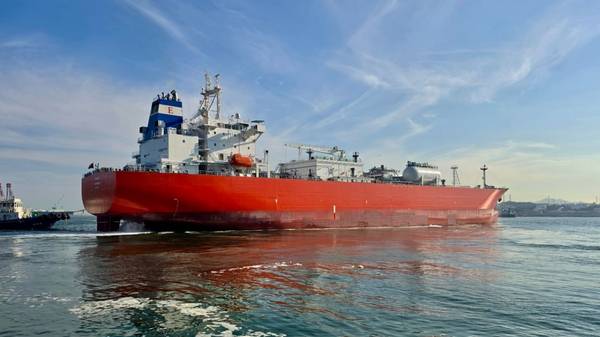
X62 2-stroke low speed engine. The X62 is a midsize engine tailor-made for Panamax bulk carriers, Aframax or Long Range 2 (LR2) tankers and container feeders. It is part of the new Wärtsilä Generation X 2-stroke engine family, which was recently introduced to the market.
According to the contracts, the main engines will be supplied to power:
- Four new LR2 tankers being built for
Kyklades Maritime Corporation, a Greek ship owner, at
Hyundai Heavy Industries Co., Ltd. (HHI) in South Korea.
- Three bulk carriers for
Suisse-Atlantique, the Switzerland-based global fleet operator, to be built at
Hyundai Mipo Dockyard's (HMD) facilities in Vietnam.
The vessels will be of the new
Ecodesign developed by the yards to reduce fuel consumption and emissions. Both orders were signed during the second quarter of 2013, and the engines will be manufactured by Wärtsilä's licensee,
Hyundai Heavy Industries Co., Ltd. - Engine & Machinery Division (HHI-EMD), in South Korea.
According to Wärtsilä, the X62 engine suits the new Ecodesign vessels as it meets the fuel efficiency and emission targets for the ships.
"The Wärtsilä X62 gives significant benefits to ship designers and yards by being the most compact and lightest engine in its class. With this engine, designers have more freedom to optimize hull lines and design vessels with higher pay loads and better chartering competitiveness. Compared to earlier generations of main engines, daily fuel consumption savings of as much as 10 per cent can be achieved, while lubricating oil consumption has also been optimized," Wärtsilä said.
Delivery of the engines to the four 115,000 deadweight tonnage (dwt) tankers is scheduled for June 2014, and the vessels are expected to be in global operation by the end of 2014.
Wärtsilä says that the ships will fully comply with the
International Maritime Organization's (IMO)
Energy Efficiency Design Index (EEDI), which is aimed at promoting the use of more energy-efficient and thus less-polluting equipment and engines.
The engines for the three 88,000 DWT bulk carriers are to be delivered in April, July and October 2015, and the ships are scheduled to be launched in June, September and December 2015 and will operate worldwide.
"We are familiar with Wärtsilä engines, and know that we can rely on their efficiency and reliability. In particular, the new Wärtsilä X62 engine has features that are very exciting for us," said
Alfred Jaeggi, Technical Manager at Suisse-Atlantique.
For
Kyklades Maritime, the X62 engines offer an important way to address fuel consumption and to comply with the increasingly tight environmental legislation. Therefore the technology is central for their operations.
"The current needs of the shipping industry, namely reduced operating costs, fuel efficiency, environmental compliance, and reliability are all addressed in the design of the Wärtsilä X62. These are the first of many orders that we will receive for this new generation engine, and we are delighted to be co-operating with these highly respected fleet owners and world class shipyards for these deliveries," said
Martin Wernli, Vice President, Wärtsilä Ship Power, 2-stroke.
A number of the ships in Kyklades Maritime Corporation's existing fleet are powered by earlier versions of the Wärtsilä 2-stroke engines. Suisse-Atlantique has a history of operating ships with Wärtsilä main engines.
The Wärtsilä X62 engine
The Wärtsilä X62 is part of the recently introduced Generation X engine family and has been designed as a main engine for Aframax tankers, Panamax/Kamsarmax bulk carriers, as well as feeder container vessels.
The new engine offers high propulsion efficiency in a unique combination of low engine revolutions and an engine design with a minimum physical width. This results in a slimmer aft vessel hull design, leading to further propeller efficiency improvements. One of the main targets when designing the Wärtsilä X62 was to allow for slim hull lines to provide the ship with greater efficiency.
The Wärtsilä X62 has a cylinder bore of 620 mm and its power output is in the 6,360 to 21,280 kW range. It comes in 4 to 8 cylinder configurations.
The Wärtsilä X62 is said to be fully compliant with IMO Tier II requirements. It can also be equipped with a SCR catalyst to meet IMO Tier III NOx emission levels, and a scrubber to reduce SOx emissions to 0.1% - even with high sulphur fuels.
"The introduction of the EEDI index also puts an emphasis on CO2 emissions and total vessel efficiency. The internal engine efficiency of Wärtsilä X62 and the possibility to apply various Power Take Off (PTO) arrangements for onboard electricity production, make it easy for shipyards to meet these new requirements," Wärtsilä said.