Wed 6 Feb 2013, 12:41 GMT

Agreement to develop solar cell technology applications


Project will be initially focussed on incorporating solar technology into a configurable rigid sail.


Japan's Eco Marine Power (EMP) has announced that it will collaborate with Solbian Energie Alternative Srl of Italy to jointly develop applications for its solar cell technology across a variety of marine renewable energy projects for shipping, including the Aquarius MRE System.

Initially, the cooperation will be centred around lab testing activities in Osaka, Japan, with the focus being on incorporating Solbian’s technology into EMP’s EnergySail - a configurable rigid sail that is able to tap into the power of the wind and sun. However, it is planned to expand the range of testing later this year to also include sea trials and apply Solbian technology to other projects such as the AquariusUSV and Aquarius Eco Ship.

The Solbian product, in its various versions, is a light, flexible and impact resistant PV module, which can even be walked upon. Lightness and flexibility make Solbian modules particularly suited to marine and sustainable mobility applications.

According to EMP, the use of lightweight polymer films instead of traditional glass allows new applications for the proven technology of crystalline silicon cells. "The careful choice of materials and their thickness creates the right balance between protection of thin photovoltaic cells and the creation of a flexible and light case," EMP said.

EMP added: "The polymers used are also characterized by high resistance to weathering, enabling certification according to IEC 61215 and 61730, a guarantee of long life even under the most extreme conditions, such as on racing yachts where the Solbian technology was applied for the first time. Solbian Energie Alternativehas also been certified to comply ISO 9001:2008, OHSAS 18001 & ISO 14001 -a new step in quality control.

"The range of SolbianFlex panels is constantly evolving, trying to meet the demands of the market while offering the possibility to realize custom products according to customers’ requests.

"This collaboration between Solbian and Eco Marine Power will help drive the adoption of renewable energy technologies across the shipping sector. This will also lead to development of further innovative solutions for marine applications in the years ahead which will help reduce noxious gas emissions from ships and vessels of all types in addition to reducing fuel costs."

Deal   Italy  Japan 

UEC60LSJ ammonia-fuelled engine render. J-ENG secures orders for four ammonia-fuelled engines under Japanese PCTC project  

Vessels form part of plan to build four ammonia-fuelled car carriers, a dedicated bunkering vessel and supply chain.

Hanwha Power receives ABS AiP for battery-powered containership design. ABS grants AIP to Hanwha Power for 1,700-TEU battery-powered container ship  

Design uses roughly 151 MWh of swappable battery storage for fully electric propulsion on a container vessel.

Peter Krahenbuhl, WinGD. WinGD signs first licence deal with HD Hyundai Marine Engine to expand Korean production  

Mid-bore engine portfolio gains new production route into Korea's bulk carrier and tanker newbuild markets.

ONE Symphony naming ceremony. Ocean Network Express names ammonia- and methanol-ready newbuild ONE Symphony  

Vessel features conventional diesel main engine, with concept designs approved for possible future conversion to methanol or ammonia.

Sing Fuels logo. Sing Fuels seeks Asia-based supply trader to bolster bunker procurement team  

Singapore bunkering firm is recruiting a supply trader to manage marine fuel purchasing across Asia.

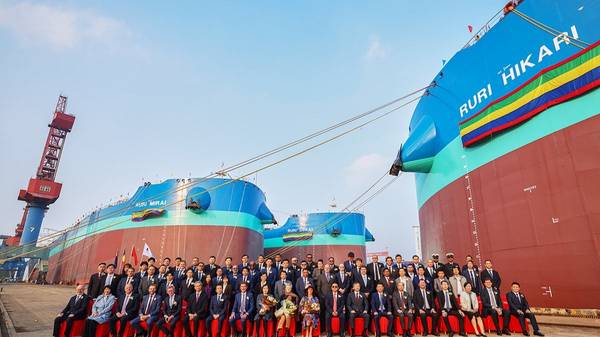
MOL joint naming ceremony. MOL names world's first ammonia-fuelled Capesize bulk carriers  

Naming of Ruri Mirai, Ruri Sekai and Ruri Hikari signals ammonia's arrival as a marine fuel for large bulk carriers.

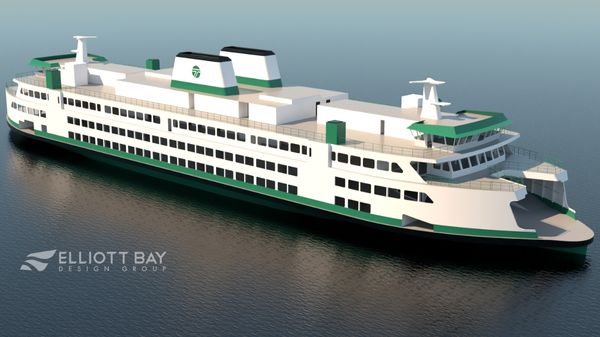
Washington State Hybrid-Electric 160-Auto Ferry vessel render. ABB wins Washington State Ferries' third hybrid-electric vessel order  

ABB extends its role in the US ferry operator's electrification programme, which targets emission-free operations by 2050.

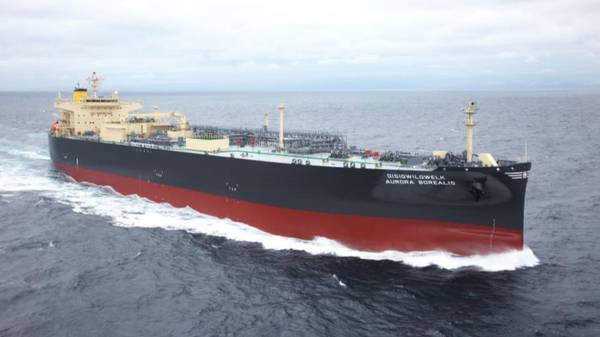
Aurora Borealis vessel. Kawasaki Heavy Industries delivers LPG-fuelled carrier Aurora Borealis  

Ship could also be modified in future to allow for ammonia-fuelled operation.

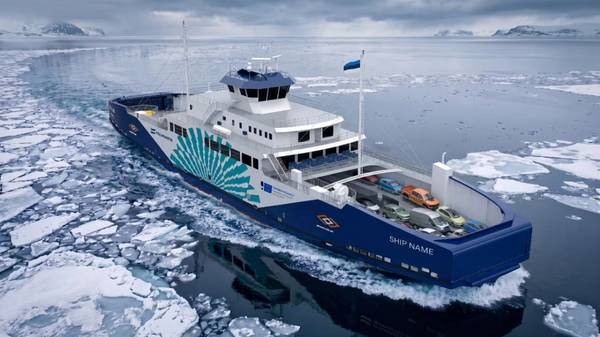
Rendering of Estonia's first shore-charged electric ferry. Estonian State Fleet's shore-charged electric ferry completes model testing in Germany  

Hull and propulsion tests show the vessel's energy consumption remains within contracted limits with room to spare.

Kypros Island vessel. Tsuneishi delivers first methanol dual-fuel Kamsarmax bulk carrier from Chinese yard  

Shipbuilder claims progress towards establishing a mass-production system for vessels designed to reduce environmental impact.