China-based market report business
Research in China has announced the launch of a new market report on marine power systems entitled
Global and China Marine Power System Industry Report, 2011.
Please find below a summary of the report's findings and a table of contents.
Report Summary
By usage, marine power systems can be divided into main engines and auxiliaries. Main engines can be classified into internal combustion engines and turbine engines. Turbine engines are primarily used in the naval field. Internal combustion engines are mainly diesel engines, including low-speed (Rpm<300), medium-speed (Rpm=300-1100) and high-speed (Rpm>1100) ones. Auxiliaries mainly include generators and auxiliary equipment.
The diesel engine was invented by a German in 1875. Over 100 years later, MAN, where the inventor of diesel engine worked, designs 80% of the low-speed diesel engines in the world. MAN also produces a small amount of low-speed diesel engines, licenses a large number of other companies to produce the low-speed diesel engines designed by it, and charges design fees and royalties from them. After acquiring Swiss Suzler, Wartsila entered the field of low-speed diesel engines and now occupies an 18% market share, while Japan's Mitsubishi Heavy Industries (MHI) has a 2% market share.
In the field of medium-speed diesel engines, Wartsila is the absolute leader with nearly 50% market share. Like MAN, Wartsila licenses other companies to produce the diesel engines designed by it, but the number of its licensed manufacturers is lower than that of MAN. MAN and Caterpillar also produce medium-speed diesel engines. Caterpillar entered this field through acquiring Germany's MAK in 1998.
In the field of high-speed diesel engines, there are many manufacturers, and the largest one is Germany's Tognum (MTU), followed by Japan's Yanmar, France's SETI (MAN), Caterpillar, Cummins, Volvo and John Deere.
Although the shipbuilding industry is in a downturn, there are many highlights in the field of marine power, wherein the hottest topics are the implementation of IMO TIER III standards in 2016 and LNG-fuelled vessels. Compared with IMO TIER II standards implemented in 2011, IMO TIER III standards will require that NOx emissions should be lower than the level stipulated by IMO TIER II standards by at least 70%, which will be quite a challenge.
Only a small number of vessels in the world currently comply with IMO TIER III standards, tens of thousands of ships cannot do so. There are two solutions: first, to install SCR and EGR systems in engine systems. Germany, Finland, the United States, Japan and other leading countries started the development of SCR systems in the late 1980s, and have achieved full automated monitoring and management of SCR systems.
In 2010, Wartsila Group and ABB cooperated with Swiss Hug Engineering and developed a compact SCR system, which was 80% smaller than the traditional system. In March 2011, MAN installed the compact SCR systems it developed in 6S46MC-C8 low-speed marine diesel engines for the first time. In June, NYK, Oshima Shipbuilding, MHI, Akasaka and other companies cooperated to complete the world's first shipboard trial on a large low-speed diesel engine SCR system. In July, South Korea's HHI successfully developed SCR systems. China has not yet started to develop marine SCR systems.
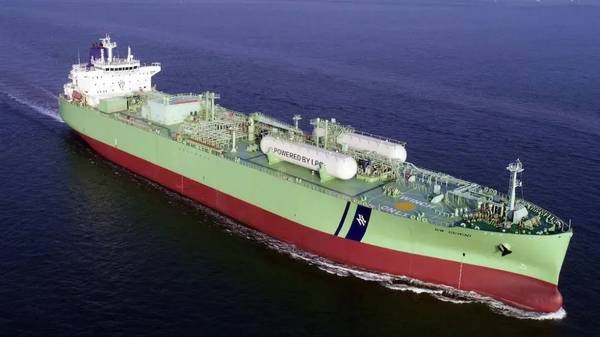
The second solution is to adopt clean burning gas engines (namely LNG-fuelled engines) which can meet IMO TIER III standards without adding any auxiliaries. Gas engine manufacturers mainly include Wartsila and Rolls-Royce.
LNG has advantages as a ship fuel. Compared with marine fuel oil (MFO) and heavy fuel oil (HFO), LNG is cheaper; LNG can help reduce carbon dioxide emissions and other waste and particulate matter significantly; LNG long-term supply is also stable. Therefore, in the next 5 to 10 years, the number of vessels taking LNG as fuel will continue to increase.
Content Summary
1. Overview of Global Shipbuilding Industry
1.1 Overview
1.2 Current Status
1.3 Global Shipbuilding Industry by Region
1.4 South Korea Shipbuilding Industry
1.5 China Shipbuilding Industry
2. Overview of Marine Power System
2.1 Profile
2.2 EEDI
2.3 IMO TIER III and ECA
2.4 SCR and EGR
3. LNG-fuelled Power System and Electric Propulsion
3.1 Current Status and Outlook of LNG Carrier
3.2 Power of LNG Carrier
3.3 Typical Application of DFDE
3.4 LNG Fuel
3.4.1 Advantages and Disadvantages of LNG Fuel
3.4.2 Current Status and Outlook of LNG-fuelled Vessel
3.4.3 Power System of LNG-fuelled Vessel
3.5 Marine Electric Propulsion
3.5.1 Profile
3.5.2 Pod Marine Electric Propulsion
3.6 Dynamic Positioning System (DPS)
4. Marine Power Industry
4.1 Market Scale of Marine Engine
4.2 Low-Speed Diesel Engine
4.3 Medium and High-Speed Diesel Engine Market
4.4 Chinese Marine Diesel Engine Market
4.5 Ranking of Global Marine Diesel Engine Manufacturers
5. Main Marine Engine Manufacturers
5.1 MAN5.1.1 MAN ME-GI
5.2 Wartsila
5.2.1 Wartsila Dual Fuel Engine
5.2.2 Dual Fuel Engine Conversion
5.3 Caterpillar Marine Power Systems
5.4 Mitsubishi Heavy Industries
5.4.1 UST Steam Turbine5.5 Tognum (MUT)
5.6 Rolls-Royce
5.6.1 Natural Gas Engine
5.6.2 Gas Turbine
5.7 Hyundai Heavy Industries
5.8 Doosan Engine
5.9 STX Engine
5.10 Mitsui Engineering & Shipbuilding
5.11 Hudong Heavy Machinery
5.12 CSSC-MES Diesel
5.13 Hefei Rong An Power Machinery
5.14 Shaanxi Diesel Engine Heavy Industry
5.15 Dalian Marine Diesel
5.16 Qingdao Qiyao Wartsila MHI Linshan Marine Diesel Co., Ltd.
5.17 Yichang Marine Diesel Engine
5.18 Weichai Heavy Machinery
5.19 Zibo Diesel Engine
5.20 Zhenjiang CME
5.21 ZGPT Diesel Heavy Industry
5.22 Yuchai Marine Power
5.23 Jiangsu Antai Power Machinery
5.24 Zhejiang YungPu Heavy Machinery
5.25 Zhongji Hitachi Zosen Diesel Engine
5.26 Daihatsu Diesel MFG
5.27 Yanmar