
 |
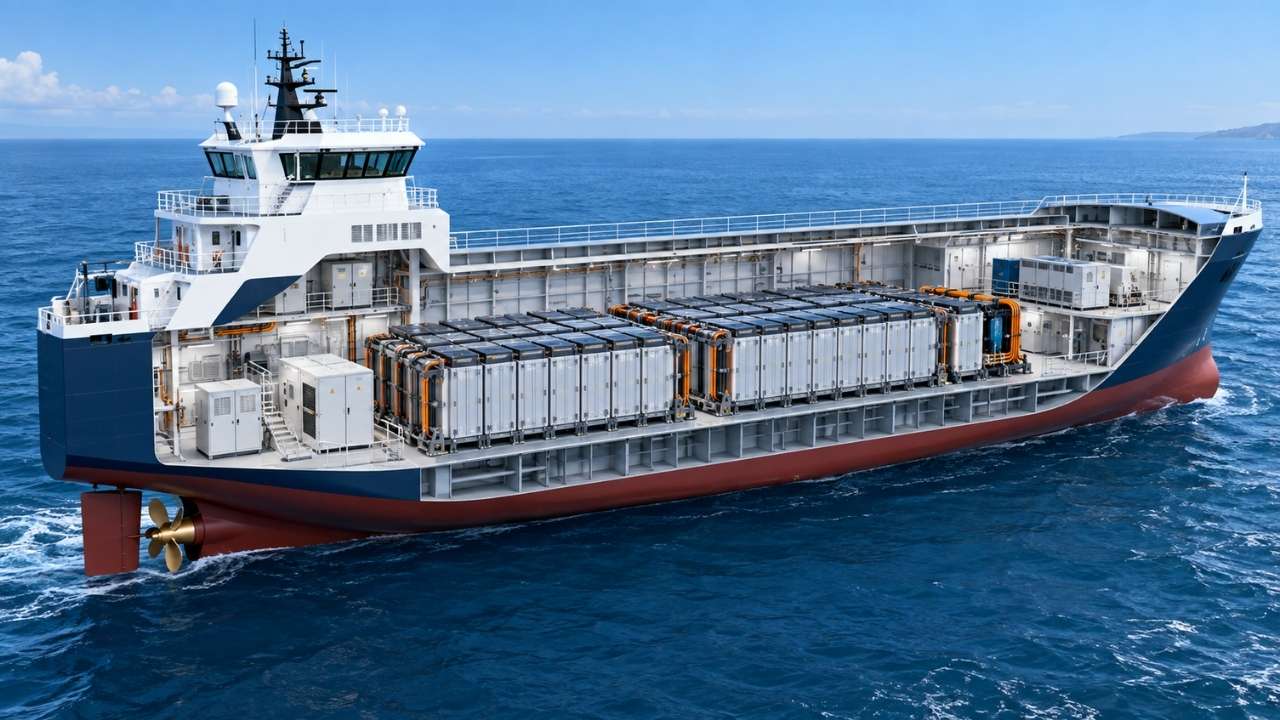
Battery-electric propulsion has moved from experimental technology to established practice on short-sea shipping routes, with ferries, tugboats and short-haul cargo vessels operating on battery power worldwide. But according to the International Chamber of Shipping (ICS), taking that technology across oceans presents a different set of challenges entirely.
In an article published on 28 September, ICS examined whether batteries can extend beyond coastal and short-sea operations into deep-sea shipping — an industry that the organisation notes is responsible for nearly 3% of global greenhouse-gas emissions and faces regulatory pressure from the International Maritime Organization and bodies such as the European Union to decarbonise.
The energy-density problem
The central obstacle, according to ICS, is scale. Vessels crossing oceans require continuous energy for days or weeks without refuelling, and current battery technology cannot match the energy density of conventional fuels without imposing weight and space penalties on cargo capacity.
Andrea d'Ambra, ship design manager at Grimaldi Group, said: "Battery energy density remains far too low for primary propulsion on large deep-sea vessels. Providing sufficient energy for even one or two days of navigation would require such a large number of batteries that a significant proportion of the vessel's cargo capacity would be lost. The challenge becomes even greater for voyages lasting several days or weeks."
Torsten Büssow, director of the electrical and power systems business at Wärtsilä Marine, illustrated the scale of the problem with figures: a vessel operating with a 10-megawatt (MW) propulsion load for four weeks would need close to 7,000 megawatt-hours (MWh) of energy, translating — with current technology — into tens of thousands of tonnes of batteries. Büssow noted that while improvements in energy density, integration and power electronics could reduce this footprint, weight and space would remain considerations, adding that emerging technologies are unlikely to change the equation quickly.
Matching technology to voyage length
Rather than asking whether batteries can fully replace fuel, ICS frames the more relevant question as where batteries deliver value across different vessel profiles.
Büssow distinguished between route types. On short routes — typically under three hours and often below 1.5 hours — batteries are already used as primary propulsion, particularly on ferries that can recharge at either end of a journey. Medium-range trades of around eight to 10 hours, including smaller container feeders, bulk carriers and ro-ro vessels, represent what Büssow described as the next frontier, with projects entering the market, although funding is sometimes needed to offset higher upfront capital costs.
For deep-sea shipping, Büssow observed that batteries currently create most value as part of hybrid systems rather than as standalone propulsion — a position d'Ambra shares. D'Ambra said: "Their most realistic role in deep-sea shipping will remain as part of an integrated energy system. Batteries can work alongside engines powered by fossil, bio-based or alternative fuels, supporting blackout prevention, peak shaving, load optimisation and potentially zero-emission operation during specific and limited phases."
In hybrid configurations, batteries can absorb energy during periods of low demand and release it during peaks, allowing engines to run more efficiently while also providing spinning reserve, emergency power and supporting zero-emission operation in ports. ICS notes that as low-carbon fuels enter the market at a premium, the economics of hybridisation — reducing fuel consumption, engine running hours and maintenance requirements — become more relevant for owners preparing for tightening emissions requirements.
Infrastructure and grid constraints
Even substantial improvements in battery technology would address only part of the challenge, according to d'Ambra, who pointed to the infrastructure required to recharge very large battery installations during port calls without extending the time needed for commercial operations. This would require shore-side charging facilities and adequate electrical-grid capacity at ports.
ICS points to progress already underway. Büssow highlighted an EU programme to equip ports with standardised IEC 80005 high-voltage shore power, allowing ships to switch off engines in port and charge larger battery installations. The Maritime and Port Authority of Singapore has also begun developing charging infrastructure for harbour craft, launching what it describes as its first public marine charging point at Marina South Pier.
For vessels spending several hours alongside, existing shore-power standards could provide much of the framework needed, according to ICS. Faster-turnaround operations such as ferries require more specialised solutions, with the Megawatt Charging System emerging as one potential standard for smaller, high-power installations. Ports will also need to combine smart energy management, local energy storage, renewable generation and load balancing to accommodate large charging loads without destabilising regional electricity networks, the article states.
Safety and regulation
Larger battery installations bring greater emphasis on thermal management, fire protection and onboard procedures. Büssow said regulation has progressed alongside the technology, with safety requirements increasingly differentiated by battery chemistry — battery rooms using lithium iron phosphate (LFP) chemistry, for example, can now accommodate installations of up to 25 MWh.
Büssow stated: "The development of standards and regulations is progressing alongside advances in battery technology, helping to ensure that larger battery installations can be deployed safely."
Crew capability will also need to evolve, ICS notes, with the challenge extending beyond maintaining battery systems to ensuring crews understand and trust increasingly integrated control systems so vessels can realise efficiency benefits.
An integrated approach
ICS concludes that fully battery-powered ships crossing oceans remain a distant prospect, but this does not make batteries peripheral to deep-sea decarbonisation. Instead, the organisation points to an integrated energy system in which batteries complement low-carbon fuels, shore power, wind-assisted propulsion and efficiency technologies.
Büssow commented: "Looking ahead, decarbonisation will not rely on a single technology. The most practical pathway is an integrated energy mix combining batteries, low-carbon fuels, shore power, further propulsion efficiency measures and advanced energy management, with each technology contributing where it creates the greatest value."
For deep-sea shipping, according to ICS, the immediate opportunity for batteries lies not in replacing engines outright, but in supporting broader efficiency gains across the vessel.
|
Maersk completes first US ethanol bunkering of a deep-sea container ship
Shipper tests US-produced corn ethanol as a marine fuel aboard the Tangier Maersk. |
|
|
|
||
|
CMA CGM names methanol-powered vessel after Molière’s Alceste
Ship features a MAN B&W 8G85ME two-stroke engine configured to run on conventional marine fuel and methanol. |
|
|
|
||

|
VPS to run marine fuel management course in Singapore
Two-day programme in November covers fuel handling, testing and decarbonisation rules, including a laboratory tour. |
|
|
|
||

|
Petrobras launches HSFO bunker sales in Rio de Janeiro
Brazilian supplier begins prompt HSFO deliveries in Rio, pricing the fuel more than $80 per tonne below VLSFO. |
|
|
|
||
|
Changhong International launches eighth LNG dual-fuel container ship for MSC
10,300-TEU vessel is designed to meet ammonia- and methanol-ready specifications. |
|
|
|
||
|
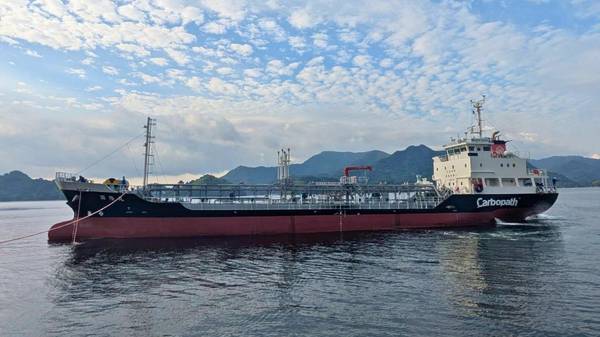
Japan completes first methanol-fuelled coastal vessel and conducts inaugural bunkering
Mitsubishi Gas Chemical, Kokuka Sangyo and Hanshin Diesel Works mark the completion of methanol-fuelled chemical tanker Kokuryu Maru. |
|
|
|
||
|
Eleven Energy recruiting trader for new Singapore office
Saudi bunkering firm looking to hire in Asian city-state ahead of planned January 2027 start date. |
|
|
|
||

|
VPS advertises for bunker surveyor role in Singapore
Testing and inspection firm seeks candidate to conduct bunker fuel surveys under Singapore Standards SS 648 and SS 600. |
|
|
|
||
|
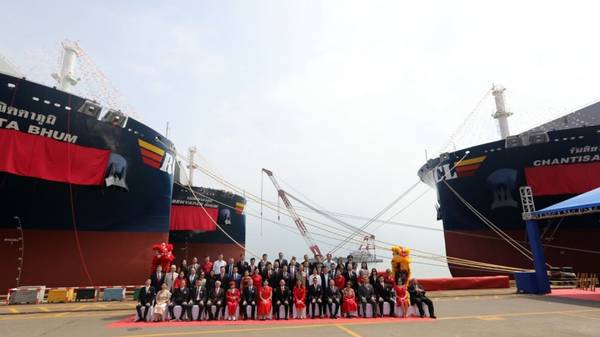
RCL names first three of eight dual-fuel-ready 4,488-TEU vessels in China
Regional Container Lines takes delivery of Anitta Bhum on day of naming ceremony. |
|
|
|
||
|
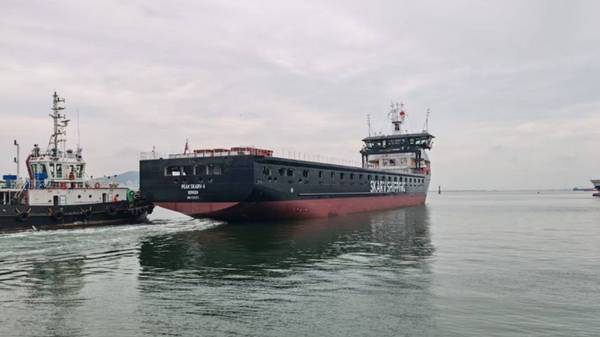
Skarv Shipping completes newbuilding programme with delivery of ammonia-ready Peak Skarv 4
Short-sea operator takes delivery of fourth vessel from Huanghai Shipyard, with ammonia-fuelled vessel next. |
|
|
|
||
| Maersk completes first US ethanol bunkering of a deep-sea container ship [News & Insights] |
| CMA CGM names methanol-powered vessel after Molière’s Alceste [News & Insights] |
| Changhong International launches eighth LNG dual-fuel container ship for MSC [News & Insights] |
| RCL names first three of eight dual-fuel-ready 4,488-TEU vessels in China [News & Insights] |
| RCL names first three of eight dual-fuel-ready 4,488-TEU vessels in China [News & Insights] |
