
 |
ClassNK has released an updated edition of its 'Guidelines for Ships Using Alternative Fuels' (Edition 3.1), incorporating the latest IMO interim guidelines for hydrogen-fuelled ships and introducing new structural strength requirements for methanol and ethanol fuel tanks.
The Tokyo-based classification society announced the revision on 18 August, stating that the updated guidelines are intended to enable shipyards, designers and shipowners to carry out design and safety assessments in line with current international standards.
The revision makes changes to two key sections. In Part D, covering hydrogen-fuelled ships, ClassNK has incorporated the IMO’s 'Interim Guidelines for the Safety of Ships Using Hydrogen as Fuel' (MSC.1/Circ.1701), which were finalised at the 11th session of the IMO Sub-Committee on Carriage of Cargoes and Containers (CCC 11) in September 2025. ClassNK notes that the updated Part D also introduces a hydrogen leak frequency table, derived using a Bayesian statistical method, that can be used for the safety assessments required under the IMO guidelines. The Bayesian approach had previously been applied by ClassNK to estimate ammonia leak frequencies.
In Part A, covering methanol- and ethanol-fuelled ships, ClassNK says it has established structural strength requirements for methanol and ethanol fuel tanks. These requirements were not previously addressed in the relevant IMO guidelines (MSC.1/Circ.1621), which were issued in 2020. According to ClassNK, the new requirements have been developed based on its experience in design reviews of such vessels and are intended to enable more efficient implementation of tank design assessments.
ClassNK noted that it participated as a member of the Japanese delegation to CCC 11 and contributed to discussions that led to the finalisation of the IMO’s hydrogen fuel guidelines now reflected in Part D.
The guidelines also cover LPG and ammonia as alternative fuels, though the current revision is focused on hydrogen and methanol/ethanol provisions.
According to ClassNK, the revisions are intended to allow the development of alternative-fuelled ships to proceed “in a more rational” manner, by providing design and assessment guidance that aligns with the latest international standards and incorporates the classification society’s own leak frequency estimates.
The guidelines are available to registered ClassNK users via the 'My Page' section of its website.
|
IBIA to host ethanol marine fuel workshop in New York
Limited-capacity session will examine ethanol’s commercial, technical and regulatory prospects as a shipping fuel. |
|
|
|
||

|
Corvus Energy’s Blue Whale NxtGen battery system gains DNV type approval
DNV approval confirms the safety and performance of Corvus Energy’s large-scale battery system for ferries, cruise ships and offshore vessels. |
|
|
|
||
|
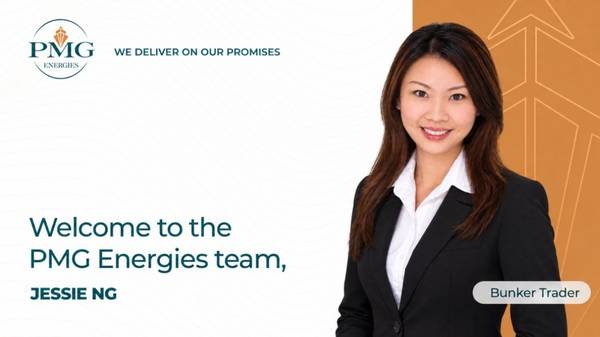
PMG Energies appoints Jessie Ng as bunker trader in Singapore
Bunker firm adds experienced trader to Singapore team. |
|
|
|
||
|
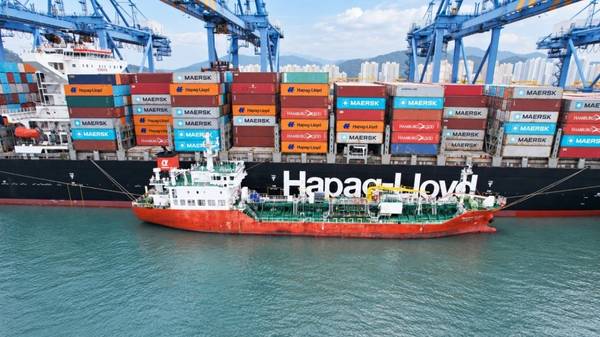
Hapag-Lloyd completes simultaneous-operations biomethanol bunkering in Busan
Container line bunkers ISCC EU-certified biomethanol from Goldwind during SIMOPS, advancing its 2024 supply agreement. |
|
|
|
||
|
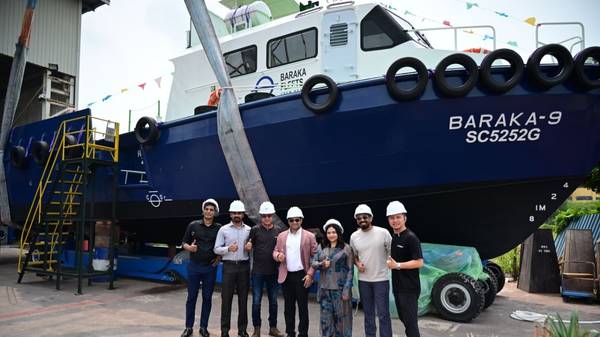
Pinnacle Marine launches B100-compatible harbour craft Baraka-9 for Trans Wave
Singapore shipbuilder adds another biodiesel-ready vessel to a fleet renewal programme aimed at harbour craft decarbonisation. |
|
|
|
||
|
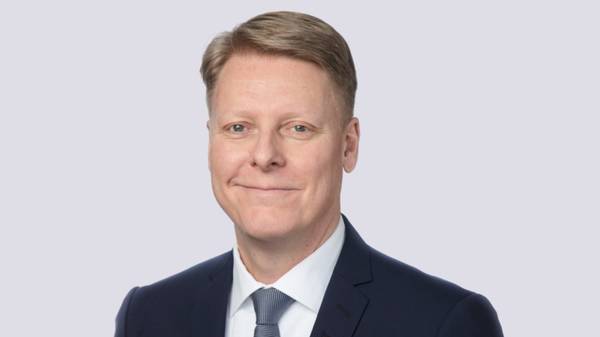
Glander International Bunkering creates European commercial director role, appoints Rune Kongstein
Marine fuels firm is aligning its European operations under a single commercial leadership structure. |
|
|
|
||
|
VPS to run marine fuel management course in the Netherlands this November
Two-day training programme covers fuel quality, handling and decarbonisation regulations. |
|
|
|
||
|
Wind-assisted propulsion 'no longer just a concept', ICS panel says
Shipowners weigh wind power as a practical, low-risk route towards decarbonisation targets. |
|
|
|
||
|
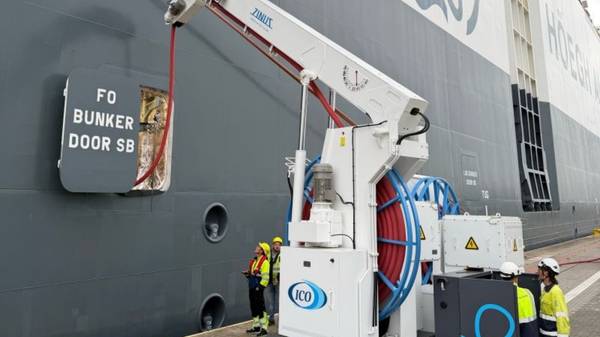
Höegh Autoliners vessel connects to shore power for the first time in Europe
Höegh Starlight used 11 kV shore power in Zeebrugge, allowing it to switch off its auxiliary engines while alongside. |
|
|
|
||
|
Chinese shipbuilder ROC signs deal for up to eight methanol-ready CSOVs
Contract signed with European shipowner for vessels designed for offshore wind farm maintenance work. |
|
|
|
||
| Pinnacle Marine launches B100-compatible harbour craft Baraka-9 for Trans Wave [News & Insights] |
| Pinnacle Marine launches second B100-compatible harbour craft for Les Star [News & Insights] |
| Petrobras launches HSFO bunker sales in Rio de Janeiro [News & Insights] |
| Changhong International launches eighth LNG dual-fuel container ship for MSC [News & Insights] |
| CSL and OWL launch first subsea rock installation vessel for offshore wind [News & Insights] |
