
 |
Lloyd's Register Maritime Decarbonisation Hub (the Decarb Hub) and the Mærsk Mc-Kinney Møller Center for Zero Carbon Shipping (MMMCZCS) have jointly launched a suite of resources designed to help shipowners, operators and managers prepare for the safe adoption of ammonia as a marine fuel.
The package comprises an ammonia process safety management (PSM) maturity self-assessment tool and three ammonia competency and training practitioner handbooks. Collectively, they form part of an initiative called 'Fuel Safety Frameworks: Ammonia', which aims to draw on expertise from across the shipping, energy, fuel production, training and technology sectors. The resources are available free of charge via the Decarb Hub website.
Addressing ammonia's hazard profile
While progress has been made in understanding the technical requirements for safe ammonia fuel systems, the two organisations say ammonia's toxicity introduces safety challenges that must be managed throughout a vessel's operating life. They argue this calls for new approaches to operational safety management, training and risk control, both ashore and at sea.
The PSM maturity self-assessment tool uses a five-tier maturity scale intended to help operators identify weaknesses in their safety management practices and track improvements over time. Rather than checking regulatory compliance, the tool is designed to support ongoing improvement. Because best practices for managing ammonia safety are still emerging in the maritime sector, the tool draws its evaluation framework from industries that already manage comparable hazards, such as chemical processing and oil and gas.
Tom Chitseko, Head of Risk and Safety at the Decarb Hub, commented: "The industry has made significant progress in understanding the technical requirements for ammonia-fuelled vessels. People, processes and organisations must be equally ready. These resources provide practical guidance to help shipowners, operators and managers build that readiness and more systematically manage the risks posed by the use of ammonia as a marine fuel."
Competency handbooks cover three safety-critical areas
The three practitioner handbooks focus on emergency response, maintenance, and leak detection, management, isolation and repair. Each handbook translates operational scenarios into competency and training expectations for a range of shipboard and shore-based roles, including seafarers, vessel managers, terminal personnel, shore support teams and emergency responders.
Martin Eriksen, Head of Safety Leadership and Operations at MMMCZCS, stated: "Ammonia asks for more of our safety management than conventional fuels we're used to. A leak that would be a contained minor technical failure with conventional fuel can become an operational crisis with ammonia. This tool has been developed so operators don't have to work that out the hard way — it gives them a structured way to see where their safety management stands today, and what 'ammonia-ready' looks like in practice."
Eriksen noted: "Additionally, the tool draws on process safety management, which has a decades-long track record in chemical engineering and oil and gas, handling exactly the kind of hazards ammonia introduces. This tool translates that experience into something maritime operators can use, in their language, against their operations."
The resources build on the partners' earlier Ammonia Phase 3 Competencies and Training project, which set out to identify the capabilities and operational requirements needed to support the safe deployment of ammonia-fuelled vessels.
|
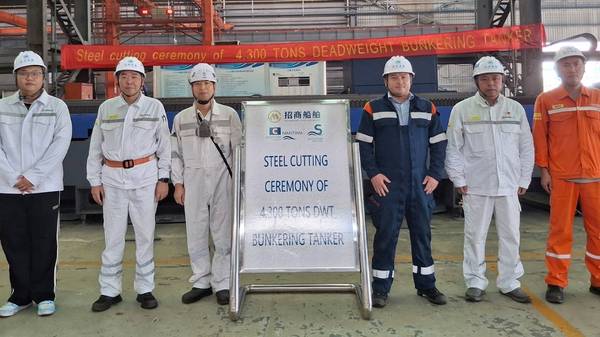
Maritima holds steel-cutting ceremony for Cap Morgiou, first of two Petroineos bunker vessels
Construction starts on bunker vessel able to carry conventional and low-carbon marine fuels, with delivery expected in early 2028. |
|
|
|
||
|
Singapore launches series of measures at SIBCON 2026
MPA announces LNG storage licences, digital bunkering grants and electric harbour craft incentives at 24th conference. |
|
|
|
||
|
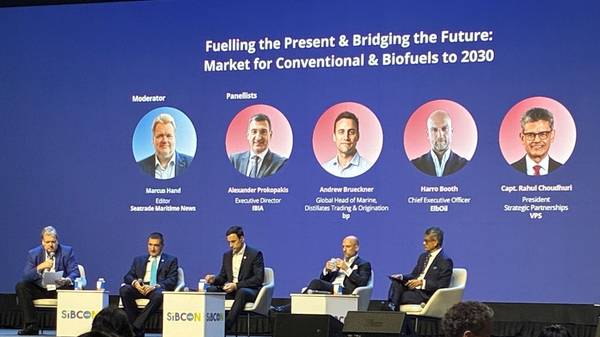
VPS outlines marine fuel standards and quality data at SIBCON 2026
VPS's Rahul Choudhuri addresses Singapore's evolving fuel standards and the quality of conventional fuels and biofuels. |
|
|
|
||
|
Singapore launches ammonia bunkering code and new standards for fuel sampling and polymer testing
MPA and Enterprise Singapore introduce one standard and two technical references at SIBCON. |
|
|
|
||
|
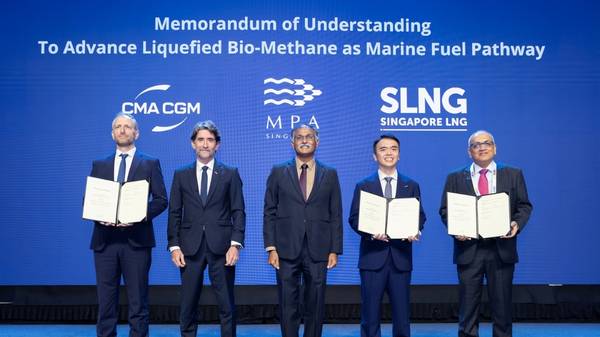
MPA, CMA CGM and SLNG sign MoU to explore liquefied biomethane as a marine fuel in Singapore
Three-way agreement will examine certification, supply and bunkering of LBM using Singapore's existing LNG infrastructure. |
|
|
|
||
|
ROC wins order for PSVs featuring replaceable containerised battery system
Nantong Rainbow Offshore secures 1+1 contract for 4,000 DWT platform supply vessels. |
|
|
|
||
|
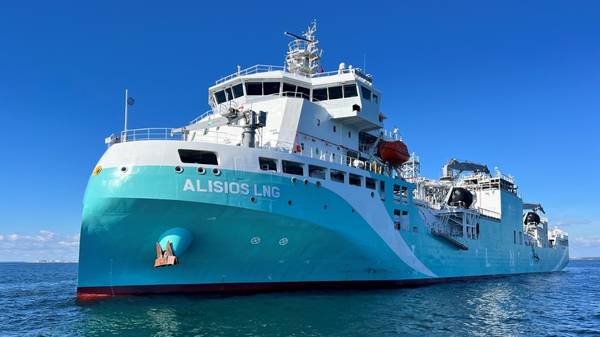
Axpo completes first LNG bunkering in Valencia, with over half bio-LNG
Ship-to-ship transfer to a container vessel makes Valencia the company's fourth Spanish port for LNG bunkering. |
|
|
|
||
|
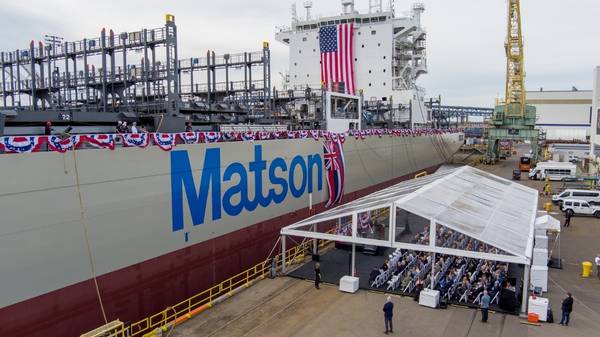
Matson christens Makua, first of three LNG-ready Aloha Class container ships
Dual-fuel vessel, due for delivery in early 2027, is the first of three ships worth around $1bn. |
|
|
|
||
|
CMB.Tech seeks Singapore-based ammonia operations manager for Asia Pacific
New hire will oversee ammonia chartering and bunkering and liaise with Far East partners. |
|
|
|
||
|
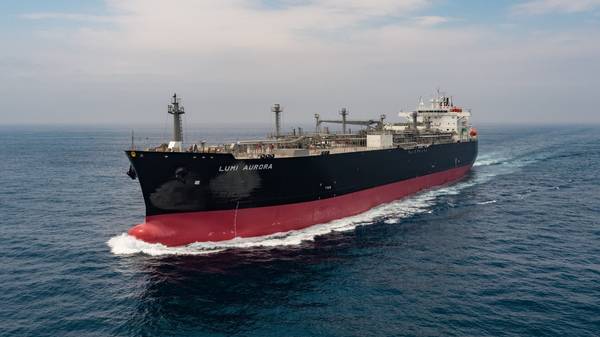
IINO Lines deploys first Ice Class IB VLGC on long-term charter to Borouge International
LPG-fuelled Lumi Aurora will carry North American gas to Borouge International's Porvoo plant in Finland. |
|
|
|
||
| Singapore launches ammonia bunkering code and new standards for fuel sampling and polymer testing [News & Insights] |
| Wagenborg launches first EasyMax 2.0 vessel, prepared for methanol, ammonia and LNG [News & Insights] |
| Lloyd's Register, Shell and GTT launch joint project on hybrid-electric 200,000-cbm LNG carrier [News & Insights] |
| ClearMariner expands maritime sanctions screening with ESG, emissions and API support [News & Insights] |
| New Times Shipbuilding launches 299,500-DWT LNG dual-fuel crude oil tanker [News & Insights] |
