
 |
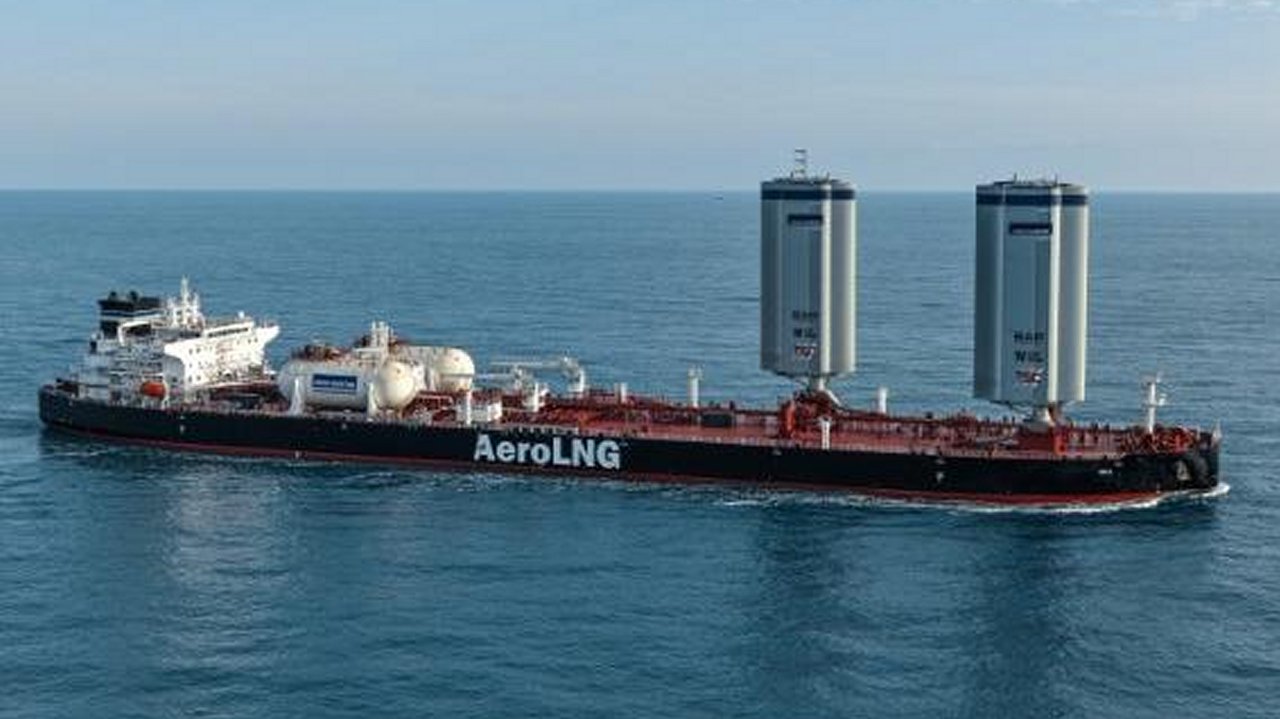
Bureau Veritas Marine & Offshore has completed a technical review confirming BAR Technologies’ calculation of available effective power generated by two 37.5-metre WindWings installed on tankers under the UML AeroPower LR2 programme.
The WindWings installations have a combined sail area of 760 square metres. According to Bureau Veritas, BAR Technologies’ computational fluid dynamics (CFD) methodology and resulting force matrix are consistent with International Maritime Organization guidance for innovative energy-efficiency technologies.
Following the review, the classification society concluded that the submission met all assessment requirements, including compliance with the CFD code specification, boundary conditions, grid independence, validation against experimental data, and the generation of installation-specific force matrices.
Bureau Veritas said the approval provides a class-reviewed calculation of wind-assisted propulsion power contribution without the need for extended full-scale testing.
WindWings technology is already in commercial service across the Union Maritime fleet, including on the AeroPower vessels Brands Hatch and SPA. Construction is also underway on the first 113,600-dwt vessel in the AeroPower newbuild programme at Xiamen Shipbuilding Industry, with additional LR2 and MR2 tanker projects under development at shipyards in Asia.
John Cooper, CEO of BAR Technologies, said: “WindWings are already delivering in commercial service. What this approval does is formalise how that performance is assessed and recognised by class. Owners don’t need promises — they need certainty. A consistent, class-recognised methodology provides that certainty.”
Lauren Eatwell, Head of WindWings at BAR Technologies, commented: “As WindWings continue to be adopted in larger tanker programmes, consistency in performance validation becomes critical. This approval ensures that the engineering analysis behind each installation is assessed to recognised standards, supporting predictable integration across vessel series.”
Alex Gregg-Smith, President of Marine & Offshore at Bureau Veritas, stated: “Bureau Veritas’ review confirmed that BAR Technologies’ WindWings available effective wind power calculation for UML AeroPower LR2 tankers is consistent with IMO Circ.896 guidance for innovative energy-efficiency technologies. Our assessment examined the underlying modelling approach, validation processes and generation of installation-specific force matrices. Independent verification supports the consistent application of recognised technical standards and enables safe integration of wind-assisted propulsion systems within existing regulatory frameworks.”
The approval is expected to support wider adoption of wind propulsion systems as they are incorporated into tanker and bulker newbuild programmes.
|
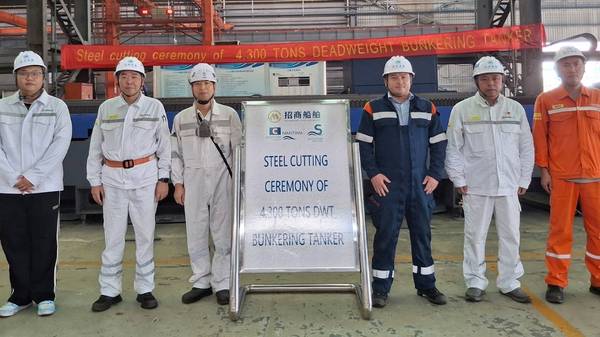
Maritima holds steel-cutting ceremony for Cap Morgiou, first of two Petroineos bunker vessels
Construction starts on bunker vessel able to carry conventional and low-carbon marine fuels, with delivery expected in early 2028. |
|
|
|
||
|
Singapore launches series of measures at SIBCON 2026
MPA announces LNG storage licences, digital bunkering grants and electric harbour craft incentives at 24th conference. |
|
|
|
||
|
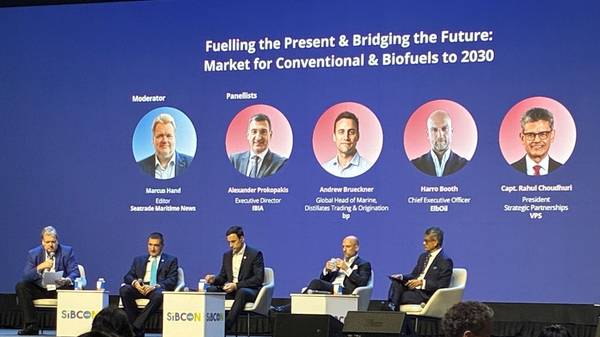
VPS outlines marine fuel standards and quality data at SIBCON 2026
VPS's Rahul Choudhuri addresses Singapore's evolving fuel standards and the quality of conventional fuels and biofuels. |
|
|
|
||
|
Singapore launches ammonia bunkering code and new standards for fuel sampling and polymer testing
MPA and Enterprise Singapore introduce one standard and two technical references at SIBCON. |
|
|
|
||
|
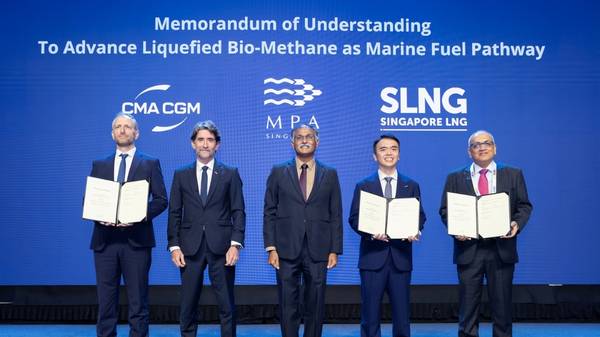
MPA, CMA CGM and SLNG sign MoU to explore liquefied biomethane as a marine fuel in Singapore
Three-way agreement will examine certification, supply and bunkering of LBM using Singapore's existing LNG infrastructure. |
|
|
|
||
|
ROC wins order for PSVs featuring replaceable containerised battery system
Nantong Rainbow Offshore secures 1+1 contract for 4,000 DWT platform supply vessels. |
|
|
|
||
|
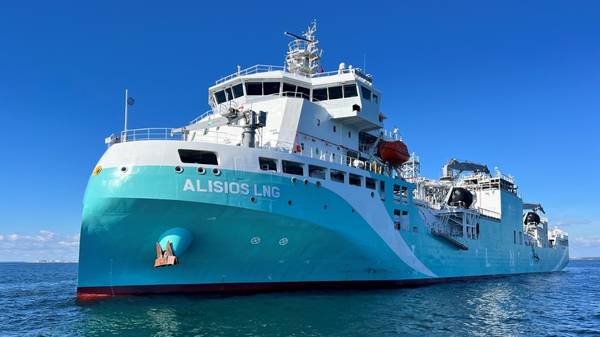
Axpo completes first LNG bunkering in Valencia, with over half bio-LNG
Ship-to-ship transfer to a container vessel makes Valencia the company's fourth Spanish port for LNG bunkering. |
|
|
|
||
|
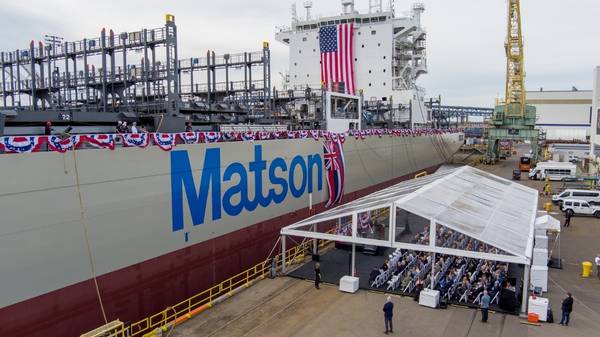
Matson christens Makua, first of three LNG-ready Aloha Class container ships
Dual-fuel vessel, due for delivery in early 2027, is the first of three ships worth around $1bn. |
|
|
|
||
|
CMB.Tech seeks Singapore-based ammonia operations manager for Asia Pacific
New hire will oversee ammonia chartering and bunkering and liaise with Far East partners. |
|
|
|
||
|
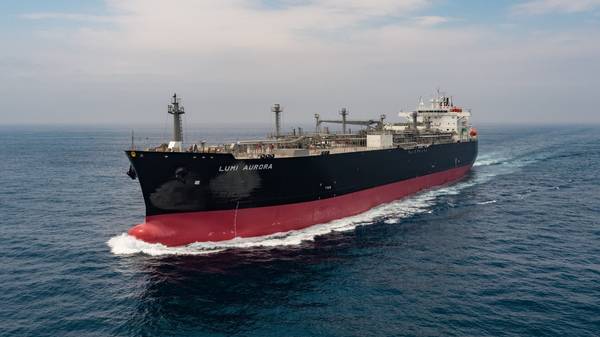
IINO Lines deploys first Ice Class IB VLGC on long-term charter to Borouge International
LPG-fuelled Lumi Aurora will carry North American gas to Borouge International's Porvoo plant in Finland. |
|
|
|
||
| Bureau Veritas grants approval in principle for five Hudong-Zhonghua gas carrier designs [News & Insights] |
| Dalian Shipbuilding's wind-assisted LNG carrier design receives Bureau Veritas approval [News & Insights] |
| Bureau Veritas and CMHI sign agreements to advance green and smart shipping solutions [News & Insights] |
| Bureau Veritas and C-Torq Marine Services sign MoU for hydrogen energy system development [News & Insights] |
| Wind-assisted propulsion 'no longer just a concept', ICS panel says [News & Insights] |
| ICS to host webinar on wind-assisted propulsion for shipping [News & Insights] |
| Lloyd's Register grants design appraisal for wind-powered LNG carrier concept [News & Insights] |
| Wind propulsion offers 'no fundamental barriers' for LNG carriers, study finds [News & Insights] |
| Bureau Veritas grants AiP to Jiangnan Shipyard's electric-propelled ammonia carrier concept [News & Insights] |
