Tue 16 Oct 2018, 08:32 GMT

Oil and fuel oil hedging market update


By the Oil Desk at Freight Investor Services.


Image credit: Freight Investor Services (FIS)
Commentary

Brent crude for December delivery had fallen 6 cents, or 0.07 percent, to $80.72 per barrel by 06:54 GMT, and U.S. West Texas Intermediate crude for November delivery was down 14 cents at $71.64 a barrel. There isn't really anything particularly new or groundbreaking to report this morning. Trade down, Trade up, Profit take, repeat. U.S. crude stockpiles were forecast to have risen last week for the fourth straight week, by about 1.1 million barrels, according to a Reuters poll ahead of reports from the API and the U.S. Department of Energy's EIA. This could make the API's data all important for tomorrow morning's trading. If there is an agreement with analysts of a draw, we will probably see a slide in crude prices. This will also be exacerbated by the fact that fund managers cut their combined net long position in the six most important petroleum futures and options contracts by 36 million barrels in the week to Oct. 9 after trimming it by 19 million barrels the week before. This is all balanced by Iran sanctions that are coming into force on the 4th November; however, in such a finely balanced market, I am reminded of comments made by the Saudi Energy Minister a few weeks ago that $75-80 was a comfortable price range. Comfortably profitable for you I'm sure, and therefore with a bit more of a production increase agreed between OPEC members, I'm sure they will be pretty happy with those levels in the end. A classic bit of over-broking: looks a good price, demand up, supply down, I think it's a great price, I think you should just accept it. Errrrr, ok, not really much I can do about it. The Saudis are throwing their oil weight around now to exert political power; the question for the future is: will it go their way or backfire spectacularly? Good day.

Fuel Oil Market (Oct 15)

The front crack opened at -9.15, strengthening to -8.75, before weakening to -9.00. The Cal 19 was valued at -14.00

Asia's 380 cSt high sulphur fuel oil time spread slipped to its narrowest in two weeks on Monday, reflecting easing concerns about tight fuel oil supplies over the near term.

The Oct/Nov time spread for 380 cSt fuel oil narrowed its backwardation to $6.25 a tonne, down from $6.50 a tonne on Friday and its narrowest since Oct. 1.

Singapore marine fuel sales in September climbed 4 percent from a month earlier to a four-month high of 4.112 million tonnes.

Concerns of contaminated marine fuel had prompted some shippers to seek bunkers in other ports in August, dragging marine fuel sales to 3.963 million tonnes, down 9 percent from a year earlier and 2 percent lower than the month before.

Economic data/events (Times are UK)

* 2:15pm: U.S. Industrial Production, Sept.

* 3pm: U.S. NAHB Housing Mkt Index, Oct.

* 3pm: U.S. JOLTS Job Openings, Aug.

* 9:30pm: API issues weekly U.S. oil inventory report

* Bloomberg-compiled Refinery Snapshot for U.S. and Canada; gives offline capacity projections for crude units and FCCs

* CERA Week India Energy Forum in New Delhi, final day

* Argus Global Crude conference, Geneva, 1st day of 3

Singapore 380 cSt

Nov18 - 478.00 / 480.00

Dec18 - 471.75 / 473.75

Jan19 - 465.50 / 467.50

Feb19 - 459.50 / 461.50

Mar19 - 454.25 / 456.25

Apr19 - 449.50 / 451.50

Q1-19 - 459.75 / 461.75

Q2-19 - 444.50 / 446.50

Q3-19 - 424.75 / 427.25

Q4-19 - 389.75 / 392.25

CAL19 - 433.25 / 436.25

CAL20 - 363.75 / 369.75

Singapore 180 cSt

Nov18 - 486.00 / 488.00

Dec18 - 480.75 / 482.75

Jan19 - 475.75 / 477.75

Feb19 - 469.50 / 471.50

Mar19 - 464.50 / 466.50

Apr19 - 460.00 / 462.00

Q1-19 - 470.00 / 472.00

Q2-19 - 455.50 / 457.50

Q3-19 - 438.75 / 441.25

Q4-19 - 411.00 / 413.50

CAL19 - 447.25 / 450.25

CAL20 - 380.75 / 386.75

Rotterdam 3.5%

Nov18 - 447.50 / 449.50

Dec18 - 441.75 / 443.75

Jan19 - 437.75 / 439.75

Feb19 - 434.00 / 436.00

Mar19 - 430.25 / 432.25

Apr19 - 425.75 / 427.75

Q1-19 - 434.00 / 436.00

Q2-19 - 422.25 / 424.25

Q3-19 - 400.50 / 403.00

Q4-19 - 362.50 / 365.00

CAL19 - 408.25 / 411.25

CAL20 - 343.25 / 349.25


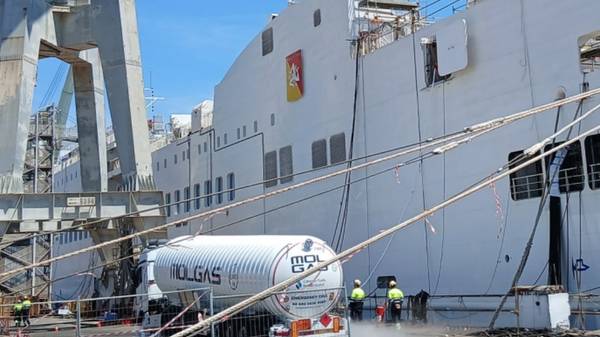
Truck-to-ship (TTS) LNG bunkering at Port of Palermo. Molgas completes first LNG bunkering operation at Palermo  

Spanish energy firm carries out maiden LNG delivery at Sicilian port.

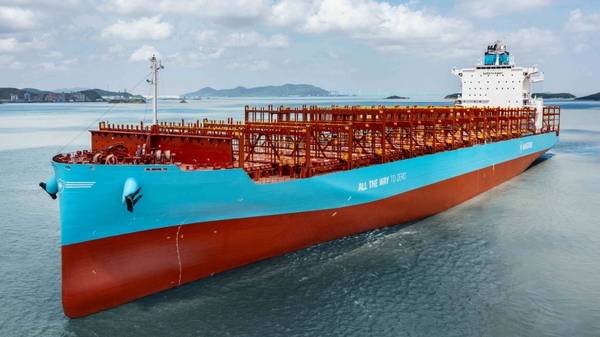
Maersk 5,900-teu vessel. Tsuneishi China delivers third methanol dual-fuel boxship in series  

Zhoushan shipbuilder hands over another 5,900-teu Maersk container vessel.

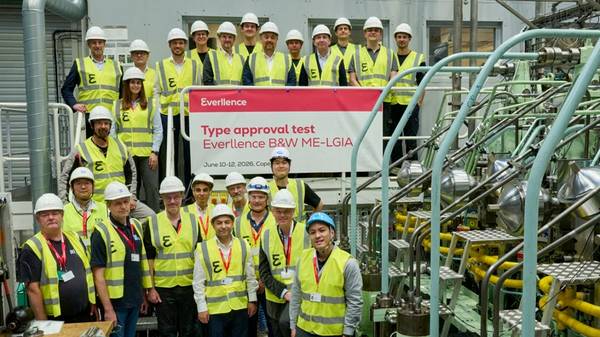
Type approval test (TAT) for ME-LGIA ammonia engine. Everllence completes type approval test for ammonia engine ahead of sea trials  

Eight classification societies oversee testing of ME-LGIA ammonia engine at Copenhagen research centre.

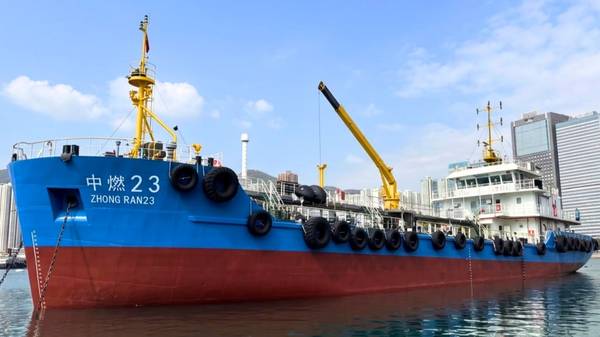
Zhong Ran 23 vessel. CPN bunker barge becomes first vessel listed under Hong Kong’s new quality bunkering scheme  

Zhong Ran 23 achieves listing under the Marine Department’s voluntary mass flow metering initiative.

Peder Moller, Bunker Holding. Bunker Holding posts $73m pre-tax profit amid geopolitical headwinds and board overhaul  

Marine fuels exceeds its own expectations despite 4% revenue decline.

Oilmar Board of Directors graphic. Oilmar formalises governance structure with establishment of board of directors  

Dubai-based marine fuels trader Oilmar appoints three-member board.

Henrik Andersen, Vestas Wind Systems A/S. Vestas Wind Systems CEO appointed vice chair of Bunker Holding  

Henrik Andersen joins the board of the marine fuels group with more than two decades of international business experience.

Tina Revsbech, Maersk Tankers. Maersk Tankers CEO Tina Revsbech joins Bunker Holding board  

Danish USTC Group appoints shipping veteran to subsidiary’s board of directors.

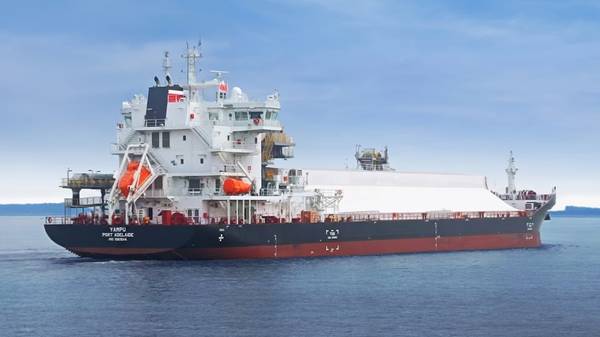
Yampu vessel. CSL delivers world’s first battery-powered self-unloading bulk carrier  

MV Yampu will transport limestone for Adbri in Australia, with full electric operation targeted by 2031.

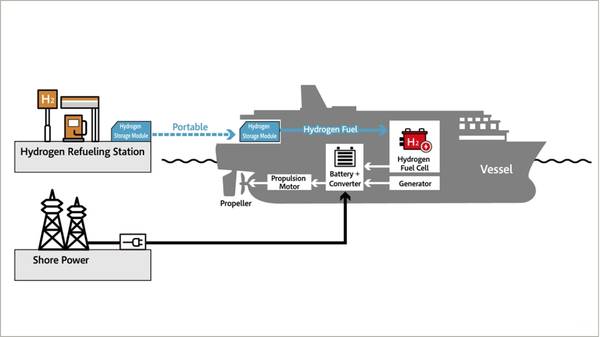
Illustration of hydrogen fuel cell system. NYK, Yanmar and Eneos to install hydrogen fuel cell system on new Tokyo dining cruise vessel  

Three Japanese companies are collaborating to bring hydrogen propulsion to a dining cruise ship due to enter service in 2027.