Tue 25 Sep 2018, 01:05 GMT

DHT secures $50m scrubber financing


Financing structured through increase of DHT's existing $300m credit facility.


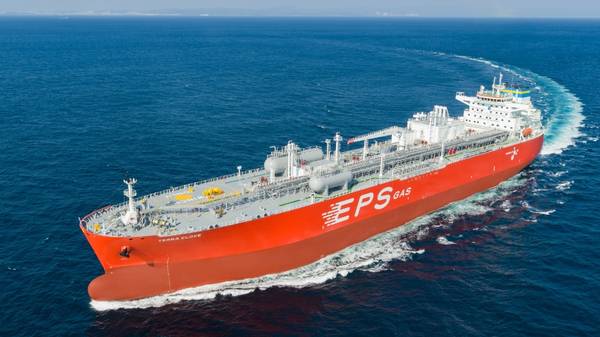
Image credit: DHT Holdings
Tanker vessel owner DHT Holdings has announced that it has secured $50m financing for its previously announced scrubber retrofit project, subject to final documentation.

The financing is structured through an increase of the existing $300m secured credit facility entered into in the second quarter of 2017.

The extended facility will bear the same interest rate equal to Libor +2.40 percent. It is available immediately and will have quarterly repayments of $2.5m, commencing in the second quarter of 2020.

DHT said all seven banks in the existing facility - Nordea, ABN Amro, Danish Ship Finance, DNB, ING, SEB and Swedbank - participated in the increased financing.

Co-CEOs Svein Moxnes Harfjeld and Trygve P. Munthe remarked: "We are very pleased with the solid support from our banking universe in financing this attractive investment for DHT. We have obtained competitive terms with a structure tailored to the execution of the project."

Last month, DHT said that it expected to spend $55m on retrofitting scrubbers on 12 of its VLCCs built between 2004 and 2012.

These 12 Alfa Laval systems - all set to be installed in 2019 - will be in addition to the two being installed on the newbuilds DHT Bronco and DHT Mustang, which are slated for delivery later this quarter from Hyundai Heavy Industries.

As a result, DHT is set to have a total of 14 VLCCs equipped with scrubbers when the IMO's global sulphur cap is implemented on January 1, 2020.

Cost breakdown

Discussing the $55m due to be spent on the 12 scrubbers, co-CEO Svein Moxnes Harfjeld explained in August that it would roughly break down into 40 percent of the cost allocated towards the scrubber systems, 40 percent going to the shipyard and the remaining 20 percent for engineering and ancillary expenses.

This means around $44m of the expenses is to be equally divided between the scrubbers and the shipyard, with approximately $11 spent on engineering and ancillary expenses.

Time out of action

Of the 12 ships due to be retrofitted next year with scrubbers, three already have natural dry dock days next year, whilst the other nine vessels look set to be out of action for around 30 days so that the work can be carried out.

Further scrubber installations not discounted

On the possibility of fitting other ships in the fleet with scrubbers in the future, Harfjeld last month did not discount the option, explaining that DHT has primarily been focusing on converting its older vessels - or so-called "low-hanging fruit" - first.

"We looked at predominantly the older end of our fleet first as they are the ships that consume more fuel, and that's where the benefit also is the greatest," he remarked.

"We have not excluded ourselves from doing further projects. But for now, we're committed to retrofit 12," he continued.

All of DHT's ships are less than 16 years old. The oldest vessel, DHT Sophie, was built in 2003.


American Bureau of Shipping (ABS) logo. ABS introduces nuclear-ready notation for marine and offshore assets  

The classification society has released what it describes as an industry-first notation to support future nuclear conversion of vessels and offshore assets.

AiP handover ceremony for NEXTGEN Energy Hub (NGEH) design. ABS grants approval in principle for Seatrium’s NEXTGEN Energy Hub design  

The hub concept integrates ammonia bunkering, power generation and electric vessel charging in a single unit.

Jumbo Maritime crew aboard vessel. Jumbo orders two methanol-ready L-Class heavy lift vessels from Dajin Heavy Industry  

Dutch heavy lift specialist Jumbo signs newbuilding contract for two 25,000-dwt vessels.

China flag. Zhoushan completes first bonded bunker operation at Majishan port area  

The operation marks full fuel supply coverage across all general cargo terminals in Zhoushan's port system.

US dollar banknotes. Port of Long Beach launches $1m methanol bunkering challenge for oceangoing vessels  

A $1m prize aims to kick-start commercial methanol bunkering at one of North America's busiest ports.

Core Power, Athlos Energy, Deon Policy Institute and ABS logos. Greece floating nuclear study finds no fundamental barriers to implementation  

A PESTLE assessment of floating nuclear power plants in Greece identifies framework gaps, not feasibility barriers.

Northern Pathliner alongside Bergen LNG vessel. Molgas completes LNG cool-down and bunkering for Northern Pathliner at Northern Lights terminal in Norway  

Operation carried out at Øygarden facility, with K Line and Integr8 Fuels in the supply chain.

Rendering of a G2 Ocean OHGC vessel. G2 Ocean expands fleet with six future-fuel ready gantry crane vessels  

Open hatch specialist adds vessels and jet sail technology as part of a broad fleet renewal programme.

CMA CGM Adventure vessel at Port of Mombasa. LNG-powered CMA CGM Adventure makes first call at the Port of Mombasa  

Kenya Ports Authority receives its first large LNG-fuelled container vessel.

Liam Blackmore, Lloyd's Register. Maritime trio shapes IMO safety guidelines for ammonia as marine fuel  

Real-world operational experience feeds directly into new IMO ammonia fuel safety framework.