Tue 12 Jan 2016, 11:13 GMT

New data gathering system for ECA compliance


Control unit collates data from scrubbers and continuous emissions monitoring systems.


Parker Kittiwake Procal, part of the Parker Hannifin Corporation and a leading supplier of continuous emissions monitoring systems (CEMS) for marine, power and offshore applications, has launched the new Procal 1200M data gathering system and control unit, specifically designed for maritime use by marine engineers.

In addition to collecting and processing data from Parker Kittiwake Procal's marine emissions analysers, the Procal 1200M is capable of sending and receiving data from devices which monitor exhaust gas scrubbing systems. This enables the collation and accurate reporting of data from various parameters, including SO2, CO2, NOx, PH, sea water temperature, turbidity, polyaromatichydrocarbon equivalents, and wash water flow rate.

The analysers communicate via a serial data link to the Procal 1200M, which can be located up to 1200m from the exhaust mounted CEMS, and data from up to sixteen channels per exhaust gas scrubbing system can be presented on an individual front panel.

Sealed to IP65 standards and specifically designed to be located in harsh marine environments, the Procal 1200M control unit is said to be able to generate detailed and accurate reports, aiding operators in meeting the stringent reporting requirements of today's environmental regulations. With three levels of password protection, the unit is also compliant with the security requirements of MARPOL Annex VI.

Spot sampling is becoming increasingly common in the Baltic and North Sea ECAs, and from January 1, 2016 the European Union requires member states to carry out sulphur tests on the marine fuel being used onboard many of the ships calling at their ports. Where mariners are unable to rapidly and effectively demonstrate compliance, even compliant vessels could incur delays.

Chris Daw, business development manager, Parker Kittiwake Procal, commented: "As environmental legislation continues to evolve in parallel with ecological awareness, the policing of compliance is becoming gradually more uniform and effective. Indeed, many Port State Controls, especially those in Europe and the US, are cracking down hard. With the potential for fines and delays, accurately demonstrating compliance is becoming a bottom line issue."

He continued: "An easy-to-use hub for all scrubber and CEMS related data, the Procal 1200M unit not only provides the crew with essential information, it also aids operators in collating detailed and accurate data for regulators to prove compliance."


Christos Doulaveris, Flex Commodities. Flex Commodities appoints Christos Doulaveris as general manager for Greece  

Bunker trader strengthens its Greek operations with a new leadership appointment.

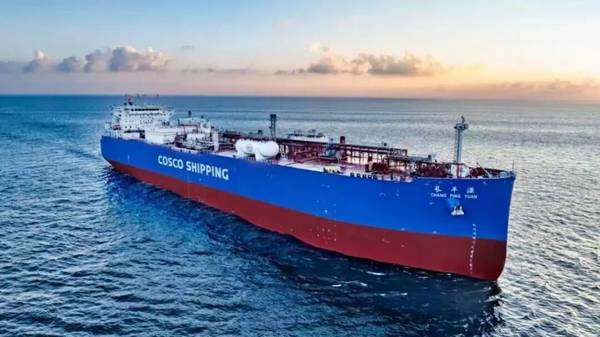
Chang Ping Yuan vessel. China delivers first domestically built VLGC under Chinese flag  

Cosco Shipping’s new 88,000-cbm gas carrier features an LPG dual-fuel main engine.

IMO, GreenVoyage2050 and Republic of Türkiye MoTI logos. Electric and hybrid ferries could cut Sea of Marmara emissions by 63%, IMO study finds  

A GreenVoyage2050 study finds that electrification could slash emissions, avoid €492 million in damage costs and support jobs.

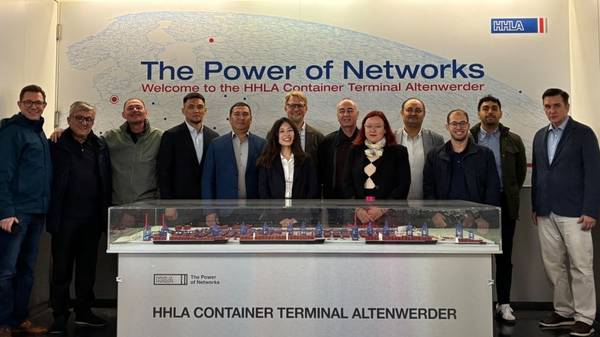
Study visit to Hamburg, Germany, on sustainable port development. Batumi Sea Port officials study decarbonisation practices in Hamburg  

Georgian port representatives visited Hamburg to study emissions accounting, hydrogen technology and automation ahead of their 2026 recertification audit.

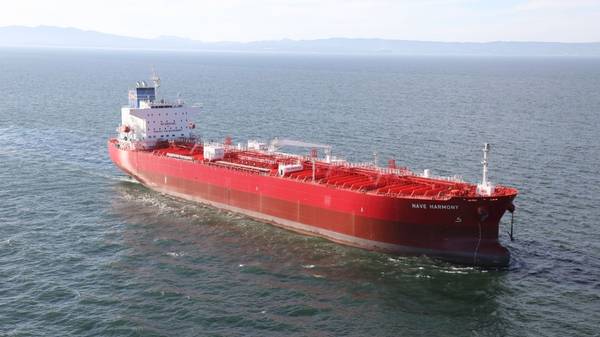
Nave Harmony vessel. Navios Partners takes delivery of methanol-ready MR2 tanker Nave Harmony  

Shipowner adds 49,998-DWT newbuild product tanker equipped with methanol-ready technology.

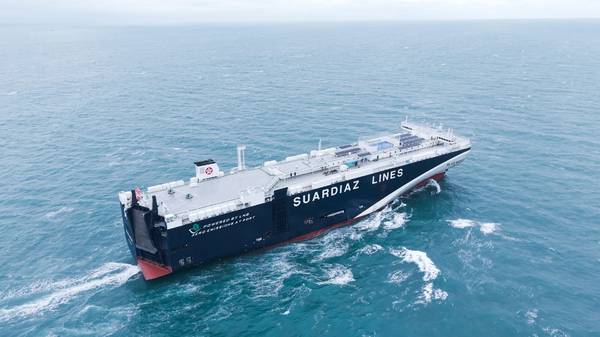
RS Atlantico vessel. Eastern Pacific Shipping delivers LNG dual-fuel PCTC to Suardiaz  

RS Atlantico is the first mid-sized 5,500-CEU car carrier built through the EPS–Suardiaz partnership.

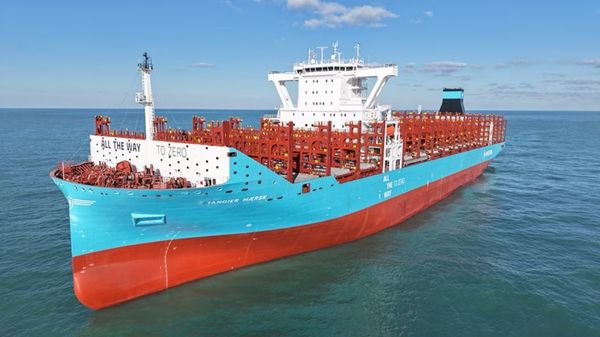
Tangier Maersk vessel. Maersk completes first US ethanol bunkering of a deep-sea container ship  

Shipper tests US-produced corn ethanol as a marine fuel aboard the Tangier Maersk.

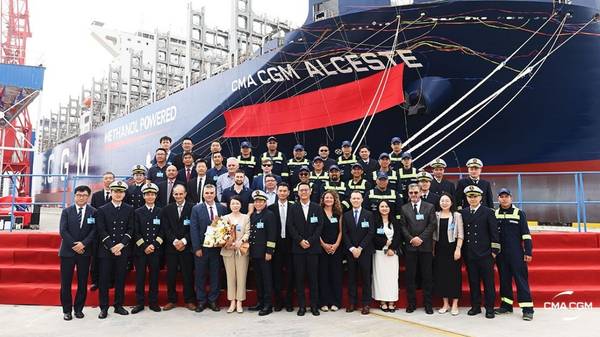
CMA CGM Alceste naming ceremony. CMA CGM names methanol-powered vessel after Molière’s Alceste  

Ship features a MAN B&W 8G85ME two-stroke engine configured to run on conventional marine fuel and methanol.

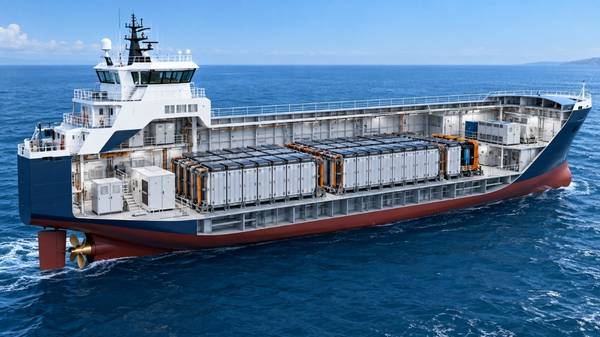
Cutaway illustration of a battery-electric ship. Why batteries still cannot power ships across oceans  

Battery-electric ships dominate short-sea routes, but energy-density and infrastructure constraints keep deep-sea propulsion out of reach.

VPS logo. VPS to run marine fuel management course in Singapore  

Two-day programme in November covers fuel handling, testing and decarbonisation rules, including a laboratory tour.