Tue 11 Jun 2013, 15:01 GMT

20,000th slide fuel valve retrofitted


Slide fuel valve is said to reduce fuel oil consumption and eliminate dripping from the fuel valve nozzle.


First introduced at the turn of the millennium, MAN PrimeServ - MAN Diesel & Turbo’s service division – recently retrofitted its 20,000th slide fuel valve [pictured].

Commenting on the landmark milestone, Christian Ludwig, Head of Retrofit & Upgrade, MAN Diesel & Turbo, said: "Slide fuel valves have proved to be very popular within the marine, two-stroke market. Really, it's a case of having introduced the right technology at the right time and the slide fuel valve's strong market performance is testimony to the fuel savings and increased environmental profile it brings to working vessels. It is important to note that slide fuel valves improve the low-load operating capability of engines."

Slide Fuel Valves

Slide fuel valves come as standard on all new MAN B&W engines, but can also be retrofitted on MC engines. The slide fuel valve eliminates the so-called 'sac volume', which reduces fuel oil consumption and also eliminates dripping from the fuel valve nozzle.

Compared to conventional valves, the slide fuel valve has NOx-reduction potential. The reduced sac volume leads, by nature, to an improved combustion process, resulting in fewer deposits throughout the gas ways and a reduction in overall emissions, such as HC, NOx and particulate matter. Furthermore, visible smoke conditions are said to be greatly reduced as a result of the improved combustion.

Conversely, engines fitted with slide fuel valves have, due to improved low-load performance with regard to soot formation, a significant advantage in an era where 'slow steaming' (sailing at part load) has become the industry norm. This reduces/eliminates the need to run at high revolutions in order to clean exhaust channels.

Retrofitting and benefits

The procedure for replacing standard valves with slide fuel valves is said to be straightforward and can be carried out by ship personnel after instruction or MAN PrimeServ as required.

The benefits of fitting the new valve type are described as follows:

- Improved low-load performance.
- Better combustion process.
- Reduced fouling of gas ways and exhaust-gas boiler.
- Reduced fouling of piston top land.
- No drips – no sac volume.
- Less visible smoke formation.
- Lower HC, NOx and particulate matter emission levels.

Launching ceremony of Amor. LNG dual-fuel crude oil tankers launched for Maran and Capital Ship  

Two 155,500-DWT vessels launched by New Times Shipbuilding in China.

AiP award ceremony for hybrid electric LNG carrier design. LR, HHI and KSOE sign an AiP to advance hybrid electric LNG carrier design  

Partners to focus on system architecture, redundancy and battery integration for a 185,000-cbm vessel.

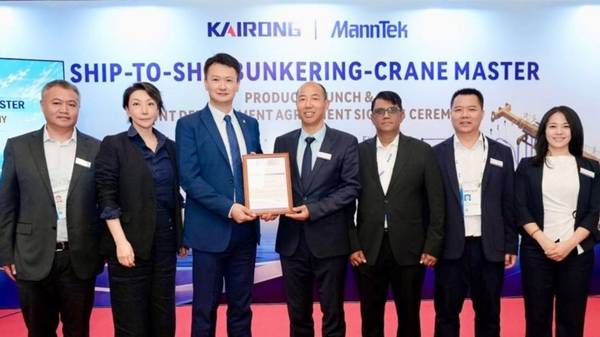
Bureau Veritas awards AiP to Kairong and MannTek. Bureau Veritas awards AiP to Kairong and MannTek for LNG bunkering crane system  

Integrated crane and bunkering system unveiled at Gastech 2026 in Bangkok.

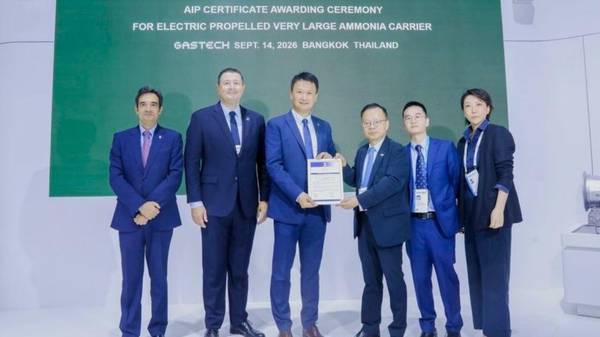
AiP award ceremony for VLAC design. Bureau Veritas grants AiP to Jiangnan Shipyard's electric-propelled ammonia carrier concept  

VLAC design combines ammonia-fuelled power, fuel cells, battery storage and wind propulsion.

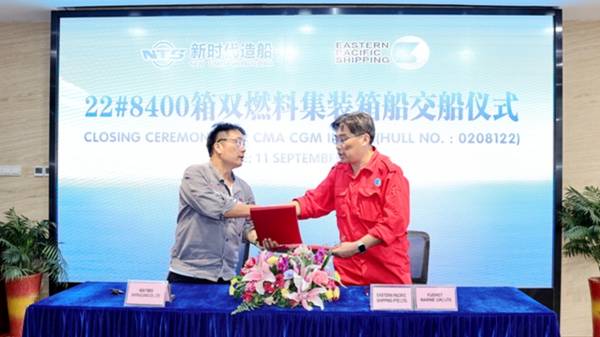
Closing ceremony of vessel with builder's hull no. 0208122. LNG dual-fuel container ship delivered to Eastern Pacific Shipping  

8,400-TEU vessel handed over in ceremony held at yard in Jingjiang.

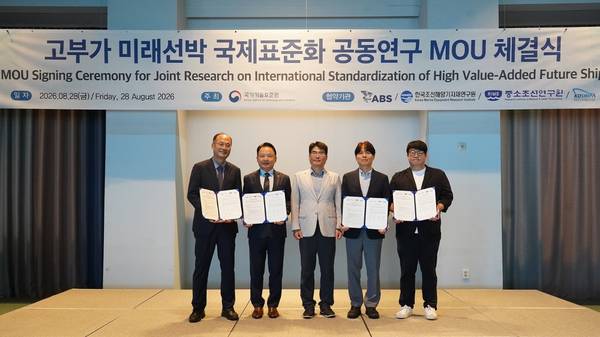
ABS signs MoU with Korean organisations. ABS signs MOU with Korean organisations to develop standards for hydrogen ships and smart shipyards  

Five-year framework will target ISO standards for hydrogen vessels, smart shipyards and advanced manufacturing.

Viking Astrea vessel. Fincantieri launches Viking Astrea with liquid-hydrogen propulsion at Ancona shipyard  

54,300-gt cruise ship is designed for zero-emission operation using fuel cells.

Spirit of Toulouse vessel. Norsepower installs first rotor sail aboard methanol-powered ro-ro vessel built for Airbus charter  

The Spirit of Toulouse will carry six rotor sails alongside dual-fuel methanol engines on a transatlantic route.

Mercedes Pinto truck-to-ship (TTS) bunkering at S.C. de Tenerife. Baleària Canarias completes first truck-to-ship LNG bunkering for fast ferry at Tenerife  

Mercedes Pinto received around 600 MWh of LNG via two tanker trucks simultaneously.

O Bunkering logo. O Bunkering claims 15-minute marine lubricant delivery at Duqm  

Omani supplier says local stock enables rapid turnaround for vessel operators.