Tue 8 Sep 2009, 13:58 GMT

Solar ship completes seven months of voyages


Two-year experiment into how solar power can be used to power a vessel continues.


The solar power-assisted vessel Auriga Leader (gross tonnage: 60,213 tons), which was jointly developed by NYK and Nippon Oil Corporation, has completed seven months of voyages in its scheduled two-year experiment into how solar power can be used to assist with powering a vessel.

The Auriga Leader set out on its maiden voyage on December 19, 2008, and completed its fourth voyage on July 13, 2009, a total of 207 days. By the end of the fourth voyage, the solar-panel system had been operated for a total of 2,600 hours and had generated 32,300 kilowatt-hours of electricity, equivalent to seven months of electricity use by 17 households in Japan.

The amount generated surprisingly turned out to be about 1.4 times more than that generated on land in Tokyo. Further research is needed to determine the exact reason, but the stronger sunlight caused by the high sun altitude and more daylight are thought to have played a part. Moreover, the wind the vessel encountered cooled the system, thus improving generating efficiency.

As initially anticipated, solar power was able to provide 0.05 percent of the ship’s propulsion power and 1 percent of the electricity used on the vessel, such as for pumps and lights. This change will reduce fuel per year by an estimated 13 tons (14 kiloliters) and the CO2 resultantly produced by approximately 40 tons.

Another purpose of the project is to verify the endurance of solar panels in the harsh conditions of actual navigation. Through the four voyages, the vessel encountered rough conditions—such as three straight hours of rain and lightning, 20 straight hours of strong wind (about 20 meters/second), and 48 straight hours of waves 3–4 meters high—but the system continued to operate well.

"NYK and Nippon Oil Corporation plan to continue this experiment so that the use of clean solar power can be practically applied to powering seagoing vessels and thus help to reduce the carbon footprint of this efficient form of transport," NYK said in a statement.


Global Ethanol Association (GEA) and Vale logo side by side. Vale joins Global Ethanol Association as founding member  

Brazilian mining company becomes founding member of association focused on ethanol use in maritime sector.

KPI OceanConnect Logo. KPI OceanConnect seeks marine fuel trading intern in Singapore  

Bunker supplier advertises role offering exposure to commercial and operational aspects of marine fuel business.

Frank Dahan, CSL Group. CSL Group's Frank Dahan appointed chair of IBIA's Americas regional board  

Dahan brings 29 years of marine transportation and energy experience to the role.

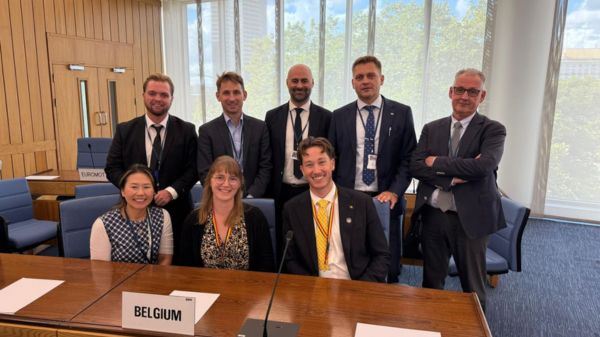
IMO Member States, Belgium delegation. Lloyd's Register, EXMAR, and Belgium’s Federal Public Service develop interim guidelines for ammonia cargo as fuel  

Guidelines expected to receive formal IMO approval in May 2026, enabling ammonia use on gas carriers.

Knut Ørbeck-Nilssen, DNV. DNV to lead Nordic roadmap Phase 2 for zero-carbon shipping transition  

Programme will identify green corridors and tackle cost barriers through new financing approaches.

Monjasa logo. Monjasa seeks trader for Dubai operations  

Marine fuel supplier recruiting for trading role covering sales, purchasing, and logistics in UAE.

IBIA Board Elections 2026 – Call for Nominations announcement. IBIA calls for board election nominations ahead of Friday deadline  

Association seeks candidates for 2026 board positions with submissions closing 12 December.

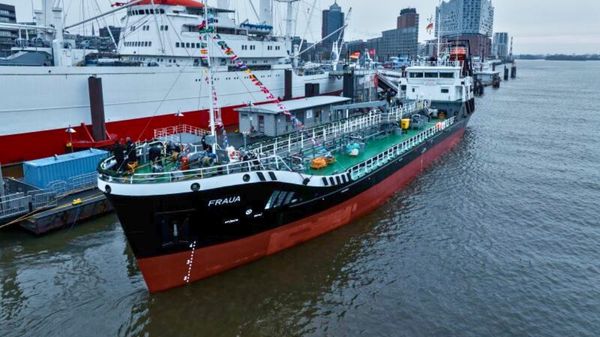
Fraua vessel. BMT Bunker adds tanker MT Fraua to fleet  

BMT Bunker und Mineralöltransport has expanded its fleet with a new vessel.

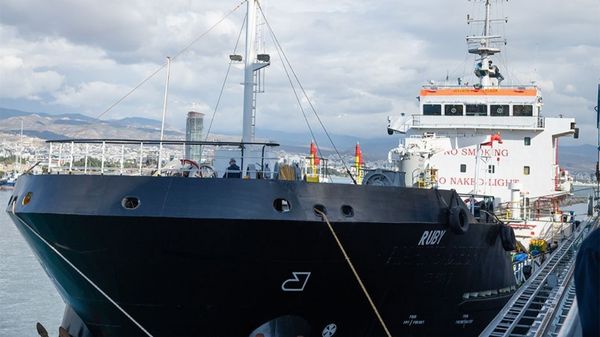
Ruby bunkering vessel. Island Oil expands Cyprus bunkering fleet with vessel Ruby  

Island Oil adds second bunkering vessel to strengthen marine fuel supply operations in Cyprus.

Wärtsilä and Aalto University partnership signing. Wärtsilä and Aalto University extend R&D partnership to accelerate marine decarbonisation  

Five-year agreement expands international collaboration on alternative fuels and clean energy technologies.