
 |
The Global Ethanol Association (GEA) has launched as an independent non-profit organisation based in Switzerland, with marine fuel decarbonisation as its first flagship initiative.
The GEA aims to unite stakeholders across the ethanol sector to unite resources and expertise, foster collaboration, and amplify a powerful industry voice, according to an announcement on September 4.
"The Global Ethanol Association represents a transformative step for ethanol as a strategic enabler of sustainable fuel solution across industries," said Sylvain Zurcher, co-founder and president of GEA. "Our mission is to connect innovation with action, delivering tangible solutions that link industry ambition with real-world impact."
GEA's Marine Fuel Sector Initiative is described as an industry-led effort to establish ethanol as part of the sustainable marine fuel mix. The organisation's objective is to mobilise stakeholders, including ethanol suppliers, shipping companies, and marine technology firms, to drive innovation and develop standards.
The initiative aims to provide market demand for ethanol in marine applications whilst also enabling reliable and scalable supply to support the transition to cleaner shipping operations.
"By leveraging the capabilities of new multi-fuel marine engines, ethanol can be integrated into the the low-emission marine fuel mix," said Morten Jacobsen, GEA co-founder and secretary general. "This future-proof approach offers shipowners and operators the flexibility to adapt to regional fuel availability, pricing, and sustainability goals. This is a game-changing step towards fuel supply security and emissions resilience across global trade routes."
Founding member
WinGD Ltd, a marine engine technology company, has joined as a founding member of the association.
"In our experience, collaboration is the key to accelerating the energy transition in shipping, so joining the Global Ethanol Association as a founding member was a clear decision" said Dominik Schneiter, CEO of WinGD. "Our advanced multi-fuel engine technology enables shipowners to adopt ethanol as part of the sustainable fuel mix. By working with GEA, we are helping the shipping industry meet its decarbonization targets with solutions that combine flexibility, reliability, and sustainability."
The association is inviting other companies and stakeholders to join as members, with more information available at globalethanol.org.
|
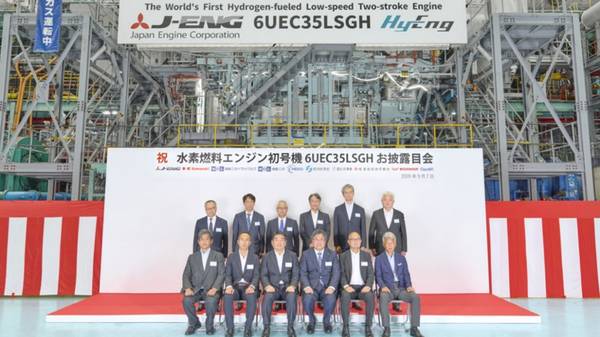
Japan Engine completes land-based testing of landmark hydrogen-fuelled engine for large vessels
Hydrogen co-firing rate of at least 95% achieved during factory testing. |
|
|
|
||
|
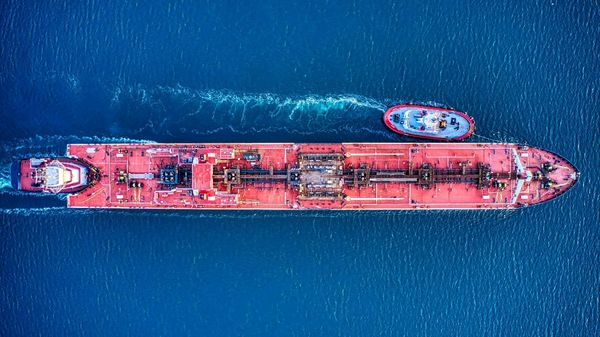
Ethanol edges into shipping’s fuel mix as methanol crossover eases adoption barriers
Rising interest from cargo owners, shared technology with methanol and Brazilian production growth push ethanol beyond regional niche status. |
|
|
|
||
|
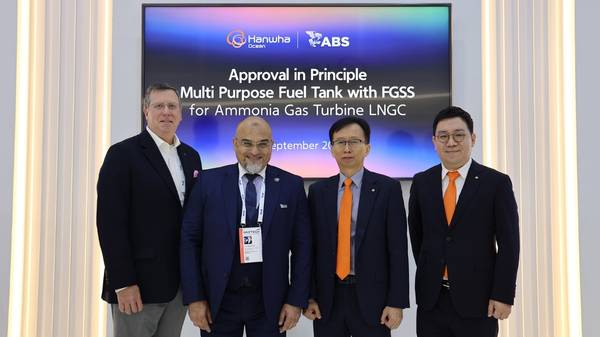
ABS grants Hanwha Ocean approval for dual-fuel tank enabling LNG-to-ammonia switch
In-principle approval awarded for fuel tank and supply system enabling LNG carriers to convert to ammonia without replacement. |
|
|
|
||
|
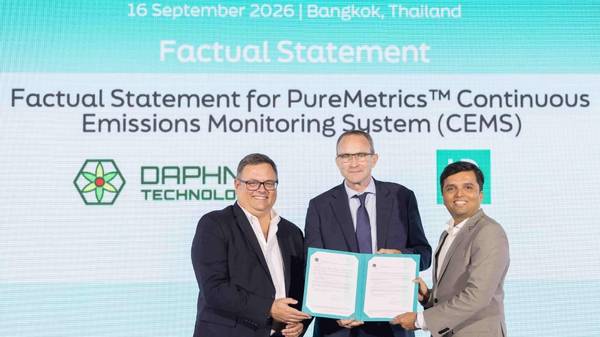
Lloyd's Register confirms suitability of Daphne Technology's emissions monitoring system
Factual Statement validates the PureMetrics design for monitoring greenhouse gas emissions from marine engines. |
|
|
|
||

|
IMO issues shipboard biofuel blend checklist developed by IBIA
Checklist for FAME-based biofuels formally incorporated into IMO document, supporting crews handling biofuel blends for the first time. |
|
|
|
||
|
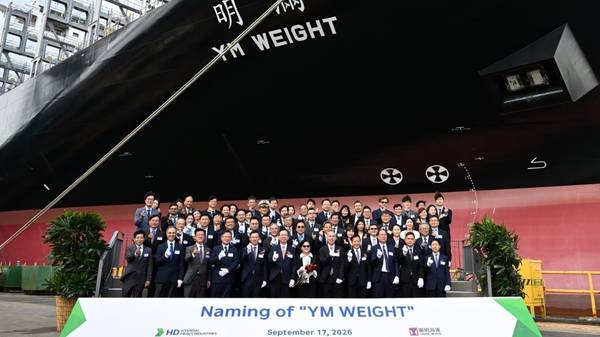
Yang Ming names fourth LNG dual-fuel container vessel YM Weight
Newbuild features high-pressure dual-fuel main engines capable of running on either LNG or low-sulphur fuel oil. |
|
|
|
||
|
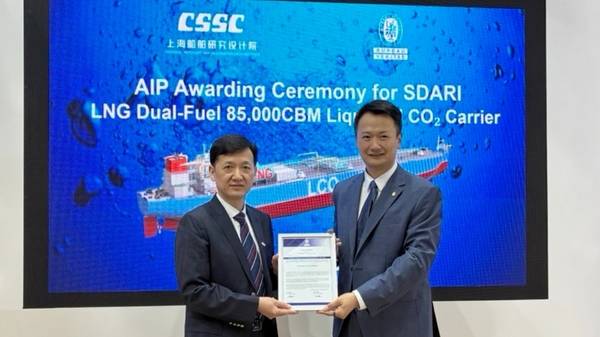
Bureau Veritas grants AiP to SDARI’s LNG dual-fuel liquefied CO₂ carrier design
Classification society approves 85,000-cbm vessel concept designed to support the growing carbon capture and storage sector. |
|
|
|
||

|
JuWonOil looking to strengthen with two Houston hires
Texas-based firm is recruiting a marine lubricants sales executive and a marine fuels and distillates trader. |
|
|
|
||
|
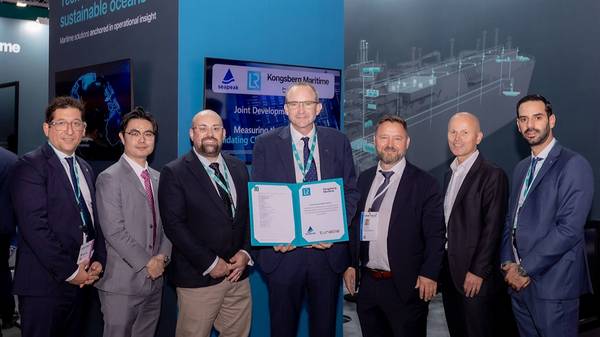
Four firms partner to trial continuous emissions monitoring on LNG carrier
LR, Seapeak, Kongsberg Maritime and Tunable will test onboard CO₂ monitoring against engine data and default emissions factors. |
|
|
|
||
|
Bunker Holding reshuffles commercial leadership across brand portfolio
Appointments announced across KPI OceanConnect, Glander International Bunkering and its digital sales operations. |
|
|
|
||
| Global spike in cat fines contamination hits marine fuel supplies across major ports [News & Insights] |
| Rystad Energy study finds LNG marine fuel emissions 25% lower than EU default [News & Insights] |
| GTT Energy launches new LNG fuel tank design for container ships [News & Insights] |
| LNG dual-fuel crude oil tankers launched for Maran and Capital Ship [News & Insights] |
| Fincantieri launches Viking Astrea with liquid-hydrogen propulsion at Ancona shipyard [News & Insights] |
| World's first operational ammonia bunker vessel enters service [News & Insights] |
| Trelleborg and Simwave launch LNG transfer equipment training programme at Gastech 2026 [News & Insights] |
