Wed 27 Aug 2008, 08:07 GMT

DFDS records 28% drop in profit


High oil prices and difficult market conditions impact on H1 performance.


Danish shipping firm DFDS A/S has posted a 28 percent drop in profit in its half year financial report for 2008.

In a company announcement, DFDS said operating profit before depreciation (EBITDA) for the first six months of the year had decreased to DKK 434 million (US$85.2 million), a fall of 28 percent.

Pre-tax profit for the same period was reduced by 62 percent to DKK 68 million (US$13.4 million).

The Copenhagen-based firm said difficult market conditions and high oil prices had impacted performance during the first half of 2008.

Despite a 4 percent increase in revenue to DKK 4.2 billion (US$0.8 billion), bunker prices and haulage costs also rose during the same period due to the increase in crude prices.

The company said its improvement plan for Passenger Shipping had also resulted in restructuring costs amounting to DKK 28 million (US$5.5 milion) in the second quarter.

In the freight market, DFDS said volumes had declined on east to west traffic in the Baltic Sea, but had remained stable in the North Sea.

Earlier this month, the company announced a change to its profit forecast for 2008 due to a rise in bunker costs, increasingly difficult market conditions and restructuring costs. Operating profit before depreciations (EBITDA) is now expected to be 15-20 percent lower than in 2007. An increase of 0-2 percent had been previously predicted.

DFDS said approximately one third of the profit adjustment was due to a rise in bunker costs, which the company predicted would increase by a total of approximately DKK 400 million (US$79.7 million) compared to 2007.

Commenting on current market conditions, the DFDS said "The impact is greatest for traffic from east to west in the Baltic region and the Irish market. Haulage costs have also increased due to higher fuel prices, which can only be passed on to a limited extent due to market conditions. About half of the profit adjustment can be attributed to the change in market conditions."


Global Ethanol Association (GEA) and Vale logo side by side. Vale joins Global Ethanol Association as founding member  

Brazilian mining company becomes founding member of association focused on ethanol use in maritime sector.

KPI OceanConnect Logo. KPI OceanConnect seeks marine fuel trading intern in Singapore  

Bunker supplier advertises role offering exposure to commercial and operational aspects of marine fuel business.

Frank Dahan, CSL Group. CSL Group's Frank Dahan appointed chair of IBIA's Americas regional board  

Dahan brings 29 years of marine transportation and energy experience to the role.

IMO Member States, Belgium delegation. Lloyd's Register, EXMAR, and Belgium’s Federal Public Service develop interim guidelines for ammonia cargo as fuel  

Guidelines expected to receive formal IMO approval in May 2026, enabling ammonia use on gas carriers.

Knut Ørbeck-Nilssen, DNV. DNV to lead Nordic roadmap Phase 2 for zero-carbon shipping transition  

Programme will identify green corridors and tackle cost barriers through new financing approaches.

Monjasa logo. Monjasa seeks trader for Dubai operations  

Marine fuel supplier recruiting for trading role covering sales, purchasing, and logistics in UAE.

IBIA Board Elections 2026 – Call for Nominations announcement. IBIA calls for board election nominations ahead of Friday deadline  

Association seeks candidates for 2026 board positions with submissions closing 12 December.

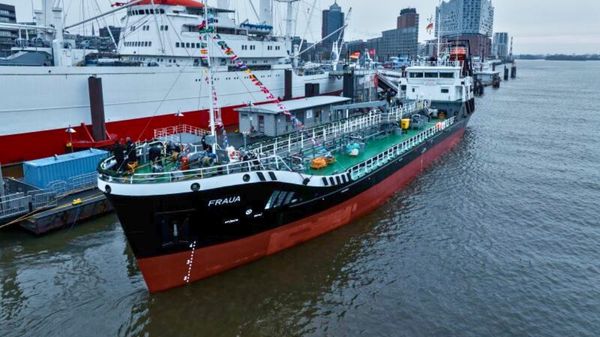
Fraua vessel. BMT Bunker adds tanker MT Fraua to fleet  

BMT Bunker und Mineralöltransport has expanded its fleet with a new vessel.

Ruby bunkering vessel. Island Oil expands Cyprus bunkering fleet with vessel Ruby  

Island Oil adds second bunkering vessel to strengthen marine fuel supply operations in Cyprus.

Wärtsilä and Aalto University partnership signing. Wärtsilä and Aalto University extend R&D partnership to accelerate marine decarbonisation  

Five-year agreement expands international collaboration on alternative fuels and clean energy technologies.


 Recommended