Fri 23 Jan 2015, 10:52 GMT

Keel laying ceremony for Crowley's first LNG-powered ships


Ships are scheduled for delivery in 2017.


The keel for the first of two liquefied natural gas (LNG)-powered, combination container roll-on/roll-off (ConRo) ships for Crowley Maritime Corp.'s liner services group was laid earlier this week during a ceremony at ship builder VT Halter Marine, Inc.'s facility in Pascagoula, Mississippi.

The keel laying ceremony marked the next step in the construction of Crowley's first Commitment Class ship, which is to exclusively serve the U.S.-Puerto Rico trade lane.

"A long-standing tradition, the keel laying marks the ceremonial beginning of the ship's construction," said Crowley's Todd Busch, senior vice president and general manager, technical services. "The keel forms the backbone of a ship and is the first part of the ship to be constructed. We at Crowley are very excited to begin the construction process for these technically advanced ships."

VT Halter Marine and Crowley entered into a contract for the pair of ships in November 2013 and construction began with the first steel plate cutting in Pascagoula on October 22, 2014. The shipbuilder began to assemble the keel once enough steel pieces had been cut. With the first section set into place, the ship will now begin to take shape as it is built around the keel.

"This keel laying is a major milestone event in the construction schedule for the Crowley Commitment-Class program," said Bill Skinner, chief executive officer, VT Halter Marine. "We are pleased that construction is under way for this very significant vessel. We are most grateful to our valued customer, Crowley, for their continued confidence in VT Halter Marine."

The Commitment Class ships have been designed to maximize the carriage of 53-foot, 102-inch-wide containers, which offer the most cubic cargo capacity in the trade.

The ships will be 219.5 meters long, 32.3 meters wide, have a deep draft of 10 meters, and an approximate deadweight capacity of 26,500 metric tonnes. Cargo capacity will be approximately 2,400 TEUs (20-foot-equivalent-units), with additional space for nearly 400 vehicles in an enclosed roll-on/roll-off garage.

The vessels are to be named El Coquí and Taíno, and are scheduled for delivery during the second and fourth quarter of 2017 respectively.

The main propulsion and auxiliary engines are to be fuelled by LNG. "Powered by LNG, the Crowley ships will set a new standard for environmentally responsible shipping. LNG is a stable gas that is neither toxic nor corrosive and is lighter than air. It is the cleanest fossil fuel available, netting a 100-percent reduction in sulphur oxide (SOx) and particulate matter (PM), and a 92-percent reduction in nitrogen oxide (NOx). LNG also has the ability to significantly reduce carbon dioxide (CO2), a contributor to greenhouse gas emissions, as compared with conventional fossil fuels," Crowley said.

"Designing, building and operating LNG-powered vessels is very much in line with Crowley's overall EcoStewardship positioning and growth strategy. The company formed an LNG services group in 2014 to bring together the company's extensive resources to provide LNG vessel design and construction management; transportation; product sales and distribution, and full-scale, project management solutions," Crowley added.

The ship design is provided by Wärtsilä Ship Design in conjunction with Crowley subsidiary Jensen Maritime - a naval architecture and marine engineering firm.


Global Ethanol Association (GEA) and Vale logo side by side. Vale joins Global Ethanol Association as founding member  

Brazilian mining company becomes founding member of association focused on ethanol use in maritime sector.

KPI OceanConnect Logo. KPI OceanConnect seeks marine fuel trading intern in Singapore  

Bunker supplier advertises role offering exposure to commercial and operational aspects of marine fuel business.

Frank Dahan, CSL Group. CSL Group's Frank Dahan appointed chair of IBIA's Americas regional board  

Dahan brings 29 years of marine transportation and energy experience to the role.

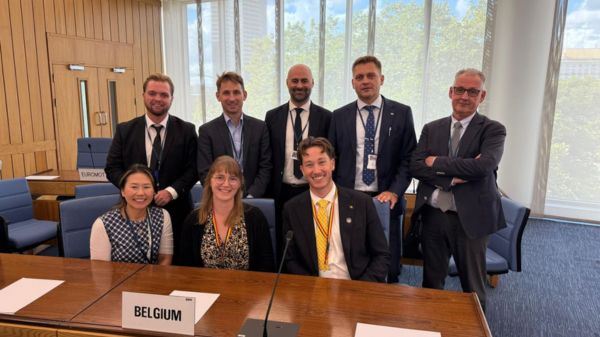
IMO Member States, Belgium delegation. Lloyd's Register, EXMAR, and Belgium’s Federal Public Service develop interim guidelines for ammonia cargo as fuel  

Guidelines expected to receive formal IMO approval in May 2026, enabling ammonia use on gas carriers.

Knut Ørbeck-Nilssen, DNV. DNV to lead Nordic roadmap Phase 2 for zero-carbon shipping transition  

Programme will identify green corridors and tackle cost barriers through new financing approaches.

Monjasa logo. Monjasa seeks trader for Dubai operations  

Marine fuel supplier recruiting for trading role covering sales, purchasing, and logistics in UAE.

IBIA Board Elections 2026 – Call for Nominations announcement. IBIA calls for board election nominations ahead of Friday deadline  

Association seeks candidates for 2026 board positions with submissions closing 12 December.

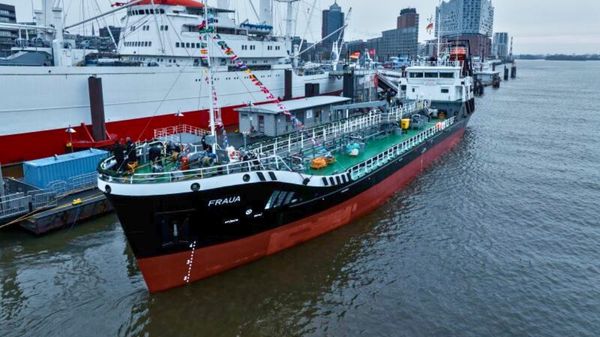
Fraua vessel. BMT Bunker adds tanker MT Fraua to fleet  

BMT Bunker und Mineralöltransport has expanded its fleet with a new vessel.

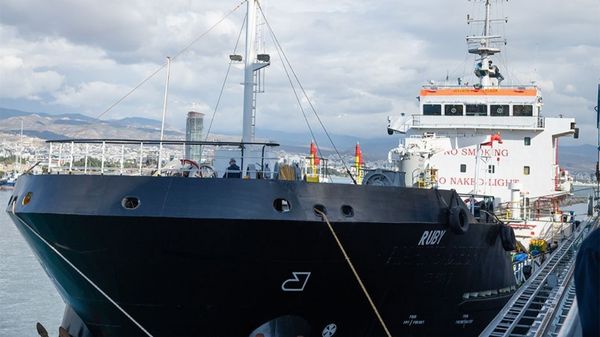
Ruby bunkering vessel. Island Oil expands Cyprus bunkering fleet with vessel Ruby  

Island Oil adds second bunkering vessel to strengthen marine fuel supply operations in Cyprus.

Wärtsilä and Aalto University partnership signing. Wärtsilä and Aalto University extend R&D partnership to accelerate marine decarbonisation  

Five-year agreement expands international collaboration on alternative fuels and clean energy technologies.