Mon 25 Aug 2014, 11:31 GMT

Study compares natural gas and conventional marine fuel emissions


111-page report was prepared by the University of Delaware and The Rochester Institute of Technology.


The US Department of Transportation's Maritime Administration (MARAD) recently released a study that evaluates total fuel cycle emissions for natural gas versus conventional marine fuels.

Entitled: 'Natural Gas for Waterborne Freight Transport: A Life Cycle Emissions Assessment with Case Studies', the study was conducted as a part of MARAD's Maritime Environmental and Technology Assistance Program, which focuses efforts on emerging marine transportation and environmental issues.

The study was prepared for MARAD by the University of Delaware and The Rochester Institute of Technology.

Commenting on the results of the study, MARAD said in a statement: "Results of the study showed that the use of natural gas as a propulsion fuel can reduce air quality pollutants and reduce major greenhouse gas emissions when compared to conventional fuels. The information provided by this study is important as marine transportation stakeholders evaluate the use of natural gas as aviable alternative propulsion fuel for reducing air polluting emissions."

In the concluding section of the study entitled: 'Overall Results and Discussion', the report says: "When comparing emissions produced using natural gas or traditional diesel fuel, results were mixed as to which would produce the fewest emissions. The total energy needed to make the trip is higher in the natural gas scenarios, as is the amount of CH4, N2O, and NOx produced. In the all-diesel scenarios (both diesel main and auxiliary engines) more CO2, PM10, and SOx are produced. Additionally, when taking into account the global warming potential of CH4, N2O, and CO2, LNG fuel is found in coastal scenarios (both West Coast and East Coast) to produce less overall GHG emissions (as measured in CO2 equivalent units) than diesel fuel scenarios using either low-sulfur distillate (depending upon pathway) or high-sulfur residual fuel. Diesel in inland river scenarios results in less overall GHG emissions (as measured in CO2 equivalent units). Diesel in the West Coast scenario results in more overall GHG emissions (as measured in CO2 equivalent units) under either low-sulfur distillate (depending on pathway) or high-sulfur residual fuels (across all natural gas pathways). Diesel in the East Coast scenario also results in more overall GHG emissions (as measured in CO2 equivalent units) under either low-sulfur distillate (depending on pathway) or high-sulfur residual fuels (across all natural gas pathways). While this analysis does not include an assessment of impacts resulting from each of those pollutants, one can consider the fact that the IMO deemed NOx and SOx both important enough pollutants to regulate.

"This is an important consideration. Natural gas is considered by many to be a win-win-win marine fuel: i) economically attractive; ii) low-emitting for key air quality pollutants; and iii) lower GHGs (primarily lower CO2). However, natural gas may achieve some goals better than others. Other studies have found that switching to natural gas does not improve GHG emissions, especially considering methane leakage impacts on global warming potential (Brynolf, Magnusson, Fridell, & Andersson, 2013; Lowell et al., 2013; Meyer et al., 2011). This study did find a small but positive GHG benefit along with economic and local/regional air quality benefits.

"These results support conclusions made by some previous studies. Bengtsson, Andersson, and Fridell (2011) concluded that natural gas did reduce the amount of GHGs emitted. Their results are consistent with lower emissions factors and leakage rates that have since been updated (Burnham et al., 2013). A later work (S. K. Bengtsson, Fridell, & Andersson, 2014), also found that LNG has a slightly better GHG potential than diesel fuel."

The full 111-page study can be viewed by clicking on the following link below.

Natural Gas for Waterborne Freight Transport: A Life Cycle Emissions Assessment with Case Studies


Global Ethanol Association (GEA) and Vale logo side by side. Vale joins Global Ethanol Association as founding member  

Brazilian mining company becomes founding member of association focused on ethanol use in maritime sector.

KPI OceanConnect Logo. KPI OceanConnect seeks marine fuel trading intern in Singapore  

Bunker supplier advertises role offering exposure to commercial and operational aspects of marine fuel business.

Frank Dahan, CSL Group. CSL Group's Frank Dahan appointed chair of IBIA's Americas regional board  

Dahan brings 29 years of marine transportation and energy experience to the role.

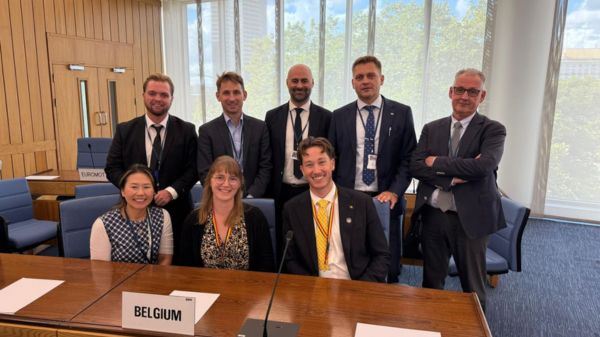
IMO Member States, Belgium delegation. Lloyd's Register, EXMAR, and Belgium’s Federal Public Service develop interim guidelines for ammonia cargo as fuel  

Guidelines expected to receive formal IMO approval in May 2026, enabling ammonia use on gas carriers.

Knut Ørbeck-Nilssen, DNV. DNV to lead Nordic roadmap Phase 2 for zero-carbon shipping transition  

Programme will identify green corridors and tackle cost barriers through new financing approaches.

Monjasa logo. Monjasa seeks trader for Dubai operations  

Marine fuel supplier recruiting for trading role covering sales, purchasing, and logistics in UAE.

IBIA Board Elections 2026 – Call for Nominations announcement. IBIA calls for board election nominations ahead of Friday deadline  

Association seeks candidates for 2026 board positions with submissions closing 12 December.

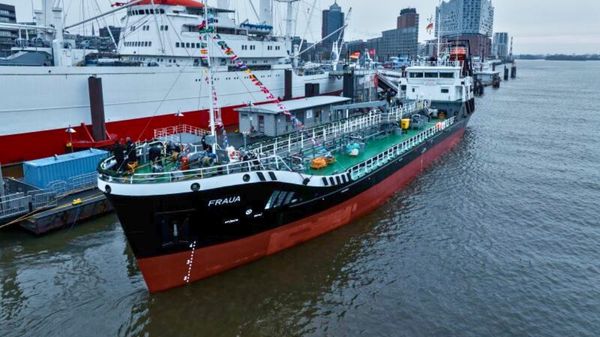
Fraua vessel. BMT Bunker adds tanker MT Fraua to fleet  

BMT Bunker und Mineralöltransport has expanded its fleet with a new vessel.

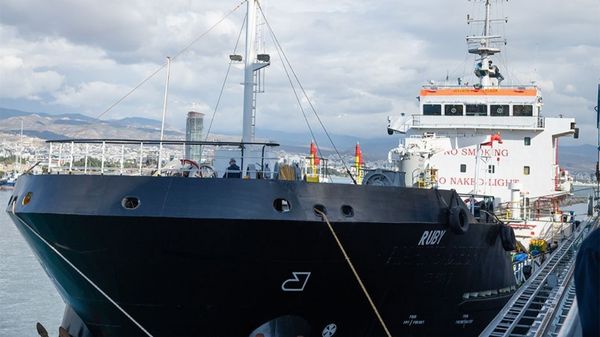
Ruby bunkering vessel. Island Oil expands Cyprus bunkering fleet with vessel Ruby  

Island Oil adds second bunkering vessel to strengthen marine fuel supply operations in Cyprus.

Wärtsilä and Aalto University partnership signing. Wärtsilä and Aalto University extend R&D partnership to accelerate marine decarbonisation  

Five-year agreement expands international collaboration on alternative fuels and clean energy technologies.


 Recommended