Wed 11 Apr 2012, 06:56 GMT

OW Bunker appoints new trading manager


Experienced professional is the new manager of OW Bunker Malta's trading division.


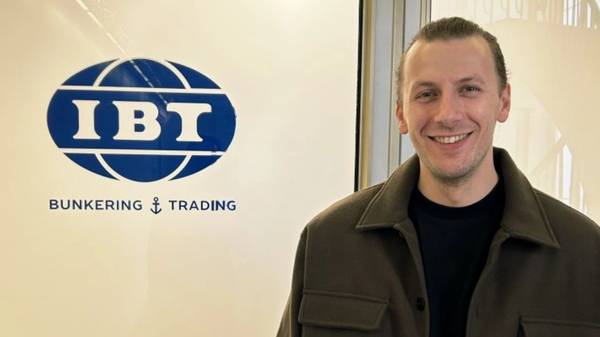
OW Bunker, one of the world's leading suppliers and traders of marine fuel, has today announced the appointment of Stathis Grafakos as the new manager of OW Bunker Malta's trading division.

Prior to joining OW Bunker, Stathis Grafakos spent 10 years in a variety of roles with ExxonMobil, including laboratory services, supply chain & logistics and sales. A Greek national, Grafakos has a particular expertise in the manufacturing and development of marine lubricants, along with extensive experience of technical and commercial operations within the marine sector. He also holds Masters Degrees in both Chemical Engineering and Management Sciences & Computer Applications.

Grafakos will be working closely alongside Panayotis Bachtis, Branch Manager of OW Bunker Malta Ltd.

Commenting on the news, Søren Christian Meyer, Global Sales Director, OW Bunker said: "We're delighted that Stathis has taken up this new role with OW Bunker Malta. Stathis' outstanding technical and commercial knowledge, coupled with his understanding of the Greek and Mediterranean markets, will significantly strengthen our marine fuel trading operations. With 20 years experience in Greece, we look forward to continuing to deliver the best products at competitive prices, wherever and whenever our customers need them."

Headquartered in Piraeus, OW Bunker has been operating in Greece since 1982 and provides marine fuel products and services for all Mediterranean ports, as well as in Egypt, the Black Sea, Red Sea and the Persian Gulf.

Stathis Grafakos' contact details are as follows:

Email: stgr@owbunker.com

Phone: +30 210 452 9467

Mobile: +30 694 329 9600

Yahoo: stgr_owbunker


Oriental Aquamarine vessel. HMM deploys Korea's first MR tanker with wing sail technology  

Oriental Aquamarine equipped with wind-assisted propulsion system expected to cut fuel consumption by up to 20%.

BC Ferries vessel render. ABB to supply hybrid-electric propulsion for BC Ferries' four new vessels  

Technology will enable ferries to run on biofuel or renewable diesel with battery storage.

Alternative marine fuels port graphic. LNG-fuelled boxships sustain alternative fuel orderbook share despite market slowdown  

Alternative fuels maintained 38% of gross tonnage orders in 2025, driven by container segment.

Conceptual diagram of the MOL–ITOCHU strategic alliance. MOL and ITOCHU sign MoU for cross-industry environmental attribute certificate partnership  

Japanese shipping and trading firms to promote EACs for reducing Scope 3 emissions in transport.

CPN as China's No. 1 marine biofuel supplier in 2025 graphic. Chimbusco Pan Nation delivers 170,000 tonnes of marine biofuel in China in 2025  

Supplier says volumes quadrupled year on year, with a 6,300-tonne B24 operation completed during the period.

V.Group and Njord logo side by side. V.Group acquires Njord to expand decarbonisation services for shipowners  

Maritime services provider buys Maersk Tankers-founded green technology business to offer integrated fuel-efficiency solutions.

Container vessel manoeuvring in port. Has Zhoushan just become the world's third-largest bunker port?  

With 2025 sales of 8.03m tonnes for the Chinese port, Q4 data for Antwerp-Bruges will decide which location takes third place.

Monjasa Oil & Shipping Trainee (MOST) trainees. Monjasa opens applications for global trainee programme  

Marine fuel supplier seeks candidates for MOST scheme spanning offices from Singapore to New York.

Singapore's first fully electric harbour tug. Singapore's first fully electric tug completes commissioning ahead of April deployment  

PaxOcean and ABB’s 50-tonne bollard-pull vessel represents an early step in harbour craft electrification.

Fuel for thought: Hydrogen report cover. Lloyd's Register report examines hydrogen's potential and challenges for decarbonisation  

Classification society highlights fuel's promise alongside safety, infrastructure, and cost barriers limiting maritime adoption.


 Recommended