Thu 27 Jan 2011, 06:33 GMT

Gothenburg launches new onshore power facility


One third of vessels calling at Gothenburg will be able to turn off their diesel engines at the quayside.


A further step has been taken towards cleaner shipping in Gothenburg with Stena Line's launch of a new onshore power supply facility for the company's ferries operating between Sweden and Germany. In total, one in three vessels that call at the port of Gothenburg will now be able to turn off their diesel engines at the quayside and use green, onshore power supply (OPS).

In ports without onshore power supply, also known as cold ironing, vessels use their auxiliary engines when at berth to generate electricity on board. Allowing the diesel engines on one single vessel to remain running during a ten-hour stopover can generate up to 20 tonnes of carbon dioxide emissions. Turning off the engines and using onshore power supply instead would therefore result in significant environmental gains. Carbon dioxide emissions would fall significantly and sulphur dioxide and nitric oxide emissions would disappear completely. Furthermore, onshore power supply would result in a quieter port environment and an improved working environment.

"Gothenburg is a living port city and shipping is part of the city's soul. It is a matter of ensuring that the highly important ferry traffic is as optimal as possible in environmental terms, especially close to the city centre. Connecting the vessels to onshore power supply is a forceful measure to reduce emissions and noise," said Magnus Kårestedt, chief executive of the Port of Gothenburg.

The new onshore power supply facility, which was developed by ABB, is the result of a joint investment initiative by Stena Line and the Port of Gothenburg. With the commissioning of the new facility all Stena Line's five passenger and freight ferries will be connected to onshore power supply when at berth. In total, a third of all vessels that call at Gothenburg will be able to use this technology.

New technology that can be spread to other ports

The new facility transforms 50 hertz, the standard frequency for alternating current in Europe, to 60 hertz, which is the system frequency used on the majority of vessels.

In a statement the port of Gothenburg said that a key part of the process of making an increased number of ports in the world more eco-friendly was the launch of an international standard for connections with the new facility at Gothenburg acting as a role model.

Preliminary study aimed at connecting more vessels

The port of Gothenburg was one of the first ports in the world to offer onshore power supply and, as a result, has attracted a great deal of attention internationally. Today the port is involved in several global collaborative networks aimed at spreading this technology to other ports around the world.

At present it is passenger and freight carriers operating scheduled traffic within Europe that use this technology. A preliminary study is now being conducted to examine the possibility of offering the same eco-smart opportunity to the container vessels and cruise ships that call at Gothenburg.


Global Ethanol Association (GEA) and Vale logo side by side. Vale joins Global Ethanol Association as founding member  

Brazilian mining company becomes founding member of association focused on ethanol use in maritime sector.

KPI OceanConnect Logo. KPI OceanConnect seeks marine fuel trading intern in Singapore  

Bunker supplier advertises role offering exposure to commercial and operational aspects of marine fuel business.

Frank Dahan, CSL Group. CSL Group's Frank Dahan appointed chair of IBIA's Americas regional board  

Dahan brings 29 years of marine transportation and energy experience to the role.

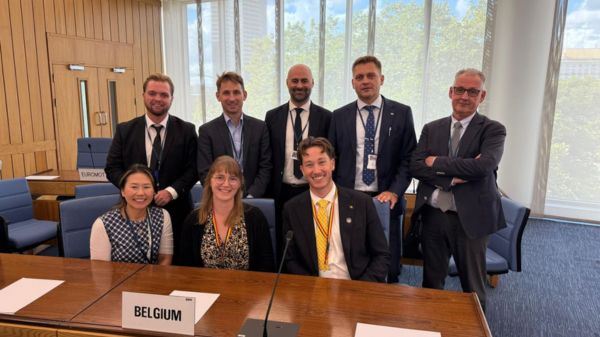
IMO Member States, Belgium delegation. Lloyd's Register, EXMAR, and Belgium’s Federal Public Service develop interim guidelines for ammonia cargo as fuel  

Guidelines expected to receive formal IMO approval in May 2026, enabling ammonia use on gas carriers.

Knut Ørbeck-Nilssen, DNV. DNV to lead Nordic roadmap Phase 2 for zero-carbon shipping transition  

Programme will identify green corridors and tackle cost barriers through new financing approaches.

Monjasa logo. Monjasa seeks trader for Dubai operations  

Marine fuel supplier recruiting for trading role covering sales, purchasing, and logistics in UAE.

IBIA Board Elections 2026 – Call for Nominations announcement. IBIA calls for board election nominations ahead of Friday deadline  

Association seeks candidates for 2026 board positions with submissions closing 12 December.

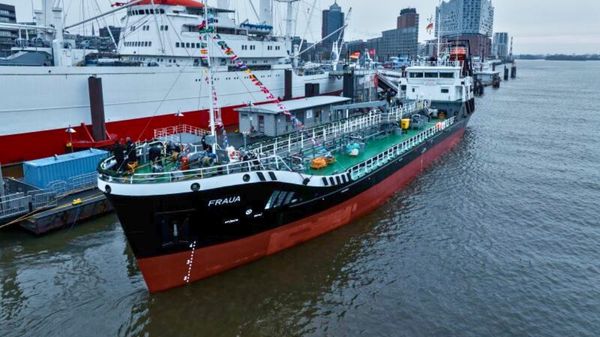
Fraua vessel. BMT Bunker adds tanker MT Fraua to fleet  

BMT Bunker und Mineralöltransport has expanded its fleet with a new vessel.

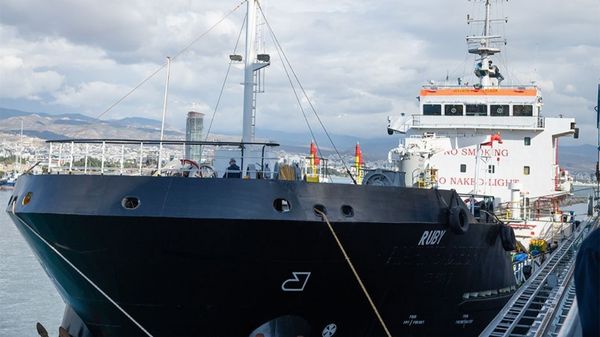
Ruby bunkering vessel. Island Oil expands Cyprus bunkering fleet with vessel Ruby  

Island Oil adds second bunkering vessel to strengthen marine fuel supply operations in Cyprus.

Wärtsilä and Aalto University partnership signing. Wärtsilä and Aalto University extend R&D partnership to accelerate marine decarbonisation  

Five-year agreement expands international collaboration on alternative fuels and clean energy technologies.


 Recommended