Fri 12 Mar 2010, 10:45 GMT

Vopak profit up by 20 percent in 2009


Terminal operator says results are due to capacity growth, developments of new terminals and improvements in operational efficiency.


Tank storage operator Vopak has announced that net profit -excluding exceptional items- rose by 20 percent to EUR 242.7 million, up from EUR 202.1 million the previous year. The Dutch group said that net profit rose as a result of the higher group operating profit, partly offset by higher financing costs in the period.

Group operating profit excluding exceptional items rose by 20% to EUR 385.3 million, compared to EUR 320.4 million in 2008. This improvement was said to be the result of the continued strategic focus of all divisions on growth in storage capacity at existing terminals, the development of new terminals, the additional demand of customers and improvements in operational efficiency.

Group operating profit, before depreciation and amortization (EBITDA) including the net result of joint ventures and associates and excluding exceptional items, rose by 20 percent to EUR 513.4 million (2008: EUR 429.3 million).

Commenting on the Group's results, John Paul Broeders, Chairman of the Executive Board of Royal Vopak, said: ‘In the economic turbulence of 2009 we experienced a healthy demand for tank storage services. We achieved encouraging results and continue to realize our growth ambitions. A significant part of our tank storage network facilitates the transportation of refined oil products, which is characterized by robust demand for tank storage services and to a large extent independent from the more speculative trading environment. The demand for storage of chemical products is however more volatile. Especially in Europe, where demand for chemicals storage decreased, we have focused on storing alternative products such as biofuels and oil products at some of our chemicals terminals.

"The structural geographical imbalance between the production and consumption of oil and chemical products, the increasing variety of specifications, the demand for environmentally friendlier fuels and the liberalization of previously closed economies continue to lead to increasing demand for tank storage. This encourages us to look for further expansion opportunities to facilitate the worldwide and regional logistic flows of oil and chemical products. Therefore we have extended our financial capabilities and flexibility through new financing programs."

"Based on our growth strategy Vopak is well positioned to realize a Group operating profit before depreciation and amortization (EBITDA) between EUR 625-700 million in 2012," Broeders predicted.

Storage capacity developments

Vopak’s expansion program led to growth in worldwide storage capacity by 1.2 million cubic meters (cbm), to reach a total of 28.3 million cbm as per year-end 2009. During 2009, new storage capacity was commissioned in, among others, Singapore, the Bahamas, Rotterdam Botlek (the Netherlands), Tallinn (Estonia), Antwerp (Belgium), Teesside (UK) and Vlaardingen (the Netherlands). Furthermore, a terminal of 345,600 cbm of storage capacity in Basle (Switzerland) has been divested. This river-based inland terminal had a limited strategic fit with Vopak’s global network strategy.

A total of 3.0 million cbm of storage capacity under construction will be added in the years 2010, 2011 and 2012. Major projects include expansion at existing terminals like Maasvlakte Oil Terminal (MOT) in Rotterdam (the Netherlands) of 360,000 cbm, Zhangjiagang (China) 177,000 cbm, Barcelona (Spain) 155,000 cbm and Europoort (the Netherlands) 160,000 cbm. New terminals are under construction in Amsterdam Westpoort (the Netherlands) 1,190,000 cbm, Gate (LNG, Rotterdam, the Netherlands) 540,000 cbm and Jakarta (Indonesia) 250,000 cbm.

In 2009 Vopak’s estimated market share in global independent tank storage decreased from 12.0% in 2008 to 11.6%. A large part of the capacity growth is in China, where the oil market is not easily accessible for non-Chinese independent tank storage companies. Vopak’s focus is on growing in selected strategic locations.

Future outlook

Projects under construction will add 3.0 million cbm of storage capacity in the years 2010, 2011 and 2012. The total investment for Vopak and partners in these projects involves capital expenditure of some EUR 1.6 billion, of which Vopak’s total remaining cash spend will be some EUR 0.4 billion.

For 2010 Vopak expects Group operating profit before depreciation and amortization (EBITDA) to grow between 5-10 percent. Although the expected EBITDA growth will contribute positively to the EPS development in 2010, the completed long-term financing activitities in 2009 will weigh on the earnings per ordinary share (EPS) development due to the increase in outstanding shares and higher financing costs.

Based on its growth strategy Vopak says it is well positioned to realize a Group operating profit before depreciation and amortization (EBITDA) between EUR 625-700 million in 2012.


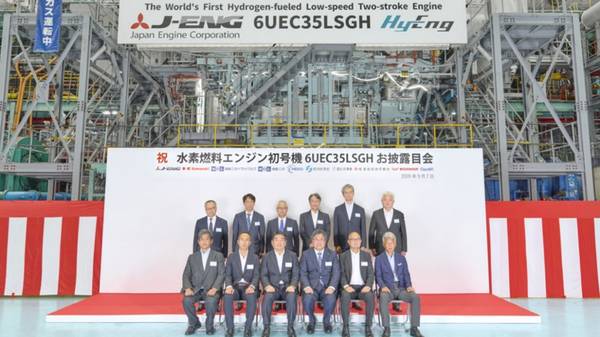
J-ENG 6UEC35LSGH hydrogen-fuelled engine unveiling. Japan Engine completes land-based testing of landmark hydrogen-fuelled engine for large vessels  

Hydrogen co-firing rate of at least 95% achieved during factory testing.

Aerial view of tanker vessel at sea. Ethanol edges into shipping’s fuel mix as methanol crossover eases adoption barriers  

Rising interest from cargo owners, shared technology with methanol and Brazilian production growth push ethanol beyond regional niche status.

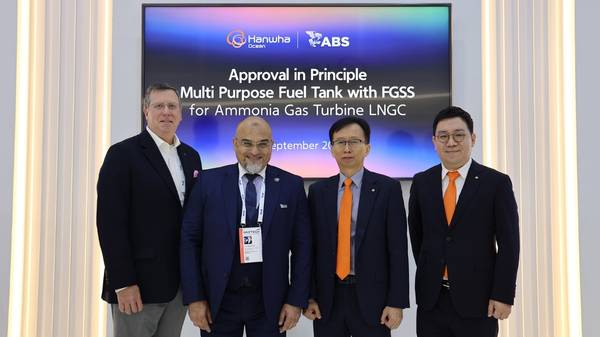
AiP award ceremony for multi-purpose fuel tank and FGSS design. ABS grants Hanwha Ocean approval for dual-fuel tank enabling LNG-to-ammonia switch  

In-principle approval awarded for fuel tank and supply system enabling LNG carriers to convert to ammonia without replacement.

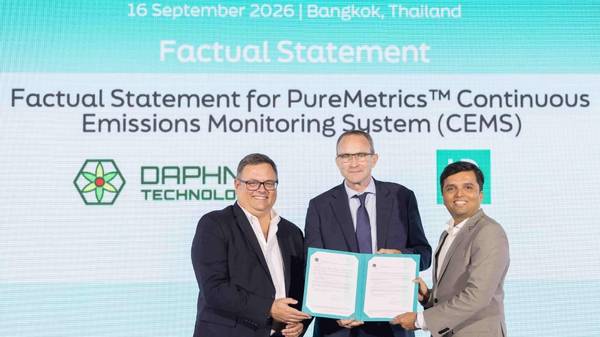
Lloyd's Register issues Factual Statement (FS) for PureMetrics CEMS. Lloyd's Register confirms suitability of Daphne Technology's emissions monitoring system  

Factual Statement validates the PureMetrics design for monitoring greenhouse gas emissions from marine engines.

IMO building with national flags. IMO issues shipboard biofuel blend checklist developed by IBIA  

Checklist for FAME-based biofuels formally incorporated into IMO document, supporting crews handling biofuel blends for the first time.

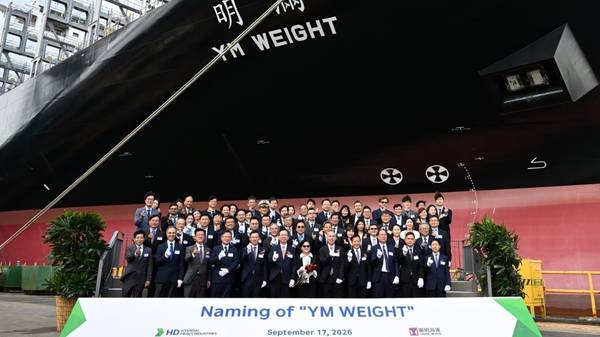
YM Weight naming ceremony. Yang Ming names fourth LNG dual-fuel container vessel YM Weight  

Newbuild features high-pressure dual-fuel main engines capable of running on either LNG or low-sulphur fuel oil.

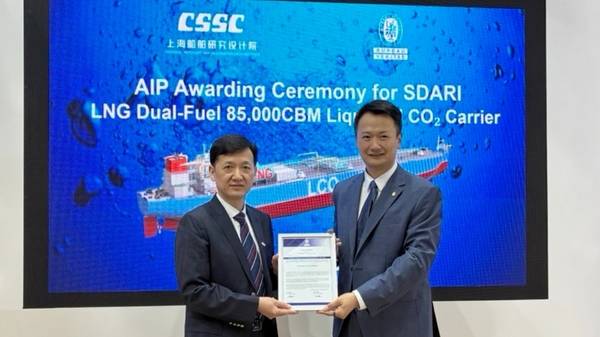
Bureau Veritas grants AiP to SDARI. Bureau Veritas grants AiP to SDARI’s LNG dual-fuel liquefied CO₂ carrier design  

Classification society approves 85,000-cbm vessel concept designed to support the growing carbon capture and storage sector.

Houston skyline at night. JuWonOil looking to strengthen with two Houston hires  

Texas-based firm is recruiting a marine lubricants sales executive and a marine fuels and distillates trader.

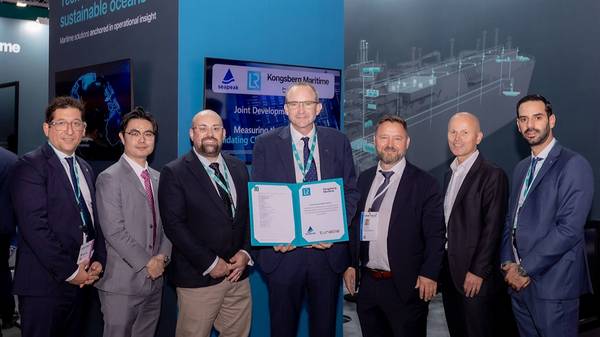
Lloyd's Register (LR), Seapeak, Kongsberg Maritime and Tunable JDP launch. Four firms partner to trial continuous emissions monitoring on LNG carrier  

LR, Seapeak, Kongsberg Maritime and Tunable will test onboard CO₂ monitoring against engine data and default emissions factors.

Bunker Holding logo. Bunker Holding reshuffles commercial leadership across brand portfolio  

Appointments announced across KPI OceanConnect, Glander International Bunkering and its digital sales operations.