Fri 13 Nov 2009, 12:21 GMT

OW: 'Physical hedging is key to managing risk'


General Manager says hedging will play a key part of risk management strategies in 2010 and beyond.


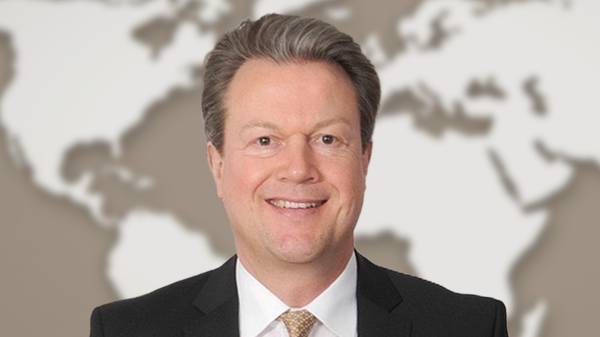
The adoption of physical hedging as an instrument for managing risk will play a key part of risk management strategies in 2010 and beyond, according to Morten Dehn, General Manager, OW Bunker Risk Management.

Speaking at the Platts’ Managing Oil and Energy Risk conference in London, Dehn said: “The physical hedging of bunker fuel purchases enables customers to buy products on a forward basis, and is a definitive and easily auditable hedging instrument that provides cost stability.

"Following the economic downturn, we are now operating in a new era of responsibility, where companies have to exercise an appropriate level of conservatism. They must caution themselves against unnecessary risk taking, even if the appetite for risk returns as the markets begin to recover. Physical hedging provides this stability as part of a comprehensive risk management strategy that incorporates a mix of tools and instruments.”

Physical hedging allows customers to fix and lock in the price of bunker fuel in a specific port where they know they will be purchasing products, whilst still being able to lift in any port in the world, and maintain the use of the contract.

Morten Dehn stressed that the key to an effective risk management strategy is ensuring that it is embedded into the infrastructure of an organisation, it’s corporate and financial processes, and the day-to-day operations of the business.

“There has to be a planned and formulaic approach to risk management and the implementation of an holistic strategy that becomes a way of corporate life. There must be a clear understanding of a company’s risk exposure, its appetite for risk as well as its motives for managing risk. And most importantly, any risk management strategy must incorporate a variety of tools, instruments and analytical processes that provide balance and stability against the increasing elements of risk that organisations now face, from basis and time risk, to volume, and especially counterparty risk.”

"As bunker fuel becomes an increasingly higher valued requirement for ship operation, OW Bunker sees the interaction between the customer and the risk management solutions provider becoming more critical, where the relationship moves from being perceived as a supplier, to one of partnership," OW Bunker said.

Dehn added: “The nature of the relationship must be consultancy-based, founded on a complete dedication to maximising operational and financial performance. This can only be achieved if there is a total understanding of the customer’s business and their corporate strategy in conjunction with an in depth knowledge of the market, its complexities as well as its continually changing dynamics.”


VPS logo. Fuel quality management for vessels in extended idle: Arabian Gulf, Gulf of Oman and adjacent anchorages | Rahul Choudhuri, VPS  

Managing fuel quality deterioration following the closure of the Strait of Hormuz.

Person signing a document. Agastya Green Fuels signs 250,000 t/yr e-methanol offtake deal with Sri Lanka’s SAR Group  

Indian producer and Sri Lankan maritime firm agree long-term green methanol supply partnership.

Bunker Holding logo. Bunker Holding seeks risk specialist for Copenhagen internal pricing desk  

Danish bunker group is expanding its internal pricing team to meet growing demand for fixed-price solutions.

Global biofuels demand chart. Biofuel demand could surge 70% by 2030 as food price fears mount  

T&E warns governments risk trading an oil crisis for a food crisis as biofuel targets strain vegetable oil and fertiliser markets.

Shore power illustration. Shore power shifts from voluntary measure to compliance requirement, DNV white paper finds  

Shore power is moving from an optional emissions tool to a regulatory obligation for shipowners in key trades.

Giosuè Vezzuto and Ahmed Eldemerdash. Baker Hughes’ NovaLT 16 gas turbine receives RINA type approval for marine propulsion on hydrogen and natural gas  

Certification covers operation on natural gas and blends up to 100% hydrogen for marine use.

AiP award ceremony for nuclear reactor integration in cargo vessel design. ABS grants approval in principle for nuclear reactor integration in cargo vessel design  

ABS, HD KSOE, Capital Maritime Group and MIT have received approval in principle for a nuclear-powered cargo vessel propulsion system.

Green e-fuel export corridor consortium partners logos. Green e-fuel export corridor between Brazil and Belgium advances to feasibility stage  

A consortium has been formed to develop a green e-fuel corridor linking Porto do Açu to Antwerp-Bruges.

Naming ceremony of Ocean Express and Ocean Navigator vessels. Sallaum Lines takes delivery of two LNG-fuelled PCTCs in simultaneous handover ceremony  

RoRo carrier receives MV Ocean Express and MV Ocean Navigator from Chinese shipyard.

Person signing a document. Agastya Group signs MoU with Andhra Pradesh government for 1 MTPA green methanol hub at Mulapeta Port  

India-based Agastya Group plans a $6.5bn green methanol export facility on the country's east coast.