Tue 8 Sep 2009, 09:45 GMT

Seven VLCCs storing fuel oil off Malaysia


Shortage of landed tanks leads to a rise in floating supertanker storage.


The number of VLCC's carrying fuel oil for storage in Malaysian waters is currently estimated to be seven, according to market sources.

Demand for supertankers in the area has increased in recent months as a shortage of onshore tanks spurs a move to floating storage and excess shipping capacity keeps rates low.

A slew of companies have recently ventured into the residual fuels market to capitalise on potentially firm trade margins.

With all existing landed tanks occupied by long-term leases, fuel oil firms have opted for floating storage leases - usually lasting three months to a year - which also offer trading firms more flexibility. The cost of leasing a VLCC on a time-charter basis has also fallen by approximately 50 percent to around $30,000-$35,000 a day.

Vessels currently carrying residual fuel off the southern Malaysian port of Tanjung Pelepas are the Titan Chios, chartered by Lukoil, the Titan Neptune, chartered by Strong Petrochemical and the Nafang Sanhao, owned by Southernpec.

Guangzhou-based Southernpec paid around $15 million for its 284,000-tonne supertanker in June and was reported to have begun supplying marine fuel in Singapore last month.

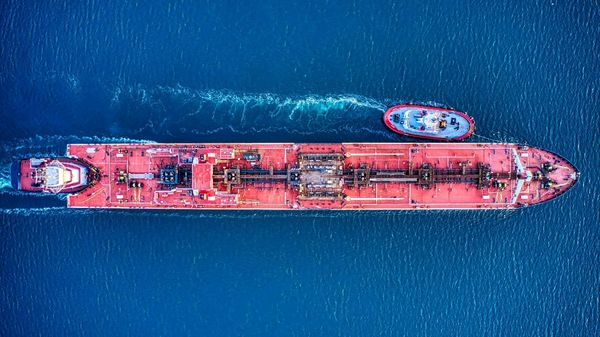
Also storing fuel oil in the area is the VLCC Front Lady [pictured], which has been leased by Glencore.

Meanwhile, vessels carrying fuel oil off Pasir Gudang, along the eastern coast of Johor are the Front Highness leased by Mercuria and the Brilliant Jewel, leased by Vitol.

Glencore's second vessel in the area for storing residual fuel is the Titan Mercury.

Earlier this year, Glencore had also leased the Taurus, Titan Scorpios and Titan Neptune in southern Malaysian waters, sharing the latter with Mercuria. Meanwhile, Lukoil and SK Energy had both chartered the 240,000-tonne Titan Chios.

Please find a list of the vessels below with their respective capacities (,000 T):

Titan Chios, 240,000 - Lukoil (leased)
Titan Neptune, 265,000 - Strong Petrochemical (leased)
Nafang Sanhao, 285,000 - Southernpec (owned)
Front Lady, 285,000 - Glencore (leased)
Front Highness, 285,000 - Mercuria (leased)
Brilliant Jewel, 250,000 - Vitol (leased)
Titan Mercury, 275,000 - Glencore (leased)

Meanwhile, Chinese bunker supplier Brightoil Petroleum is reportedly on the lookout for onshore storage tanks as it gets ready to begin supplying marine fuel in Singapore before the end of the year.

Hong Kong-listed Brightoil received approval in May from the Maritime and Port Authority of Singapore (MPA) to begin operating as an accredited supplier bunker fuel at the world's leading bunker port, subject to the company meeting specific conditions, which included the use of double-hulled bunker tankers.

Brightoil Executive Director William Chia, is reported to have said in July that the company plans to start its operations in Singapore during the third or fourth quarter.

India's Essar Oil could also be about to set up a fuel oil trading desk in Singapore in order to help market the sale of products from its Vadinar refinery.

Mid-level manager Vivek Singh was reported last month to have been relocated to Singapore to assess the possibility of setting up a trading desk. The company is understood to be particularly interested in exploring the idea of selling fuel oil and gasoline in the city-state.

Sales of marine fuel at the world's leading bunker port rose to 3,072,000 tonnes last month from 2,960,700 tonnes in June, an increase of 3.8 percent.

The figure was also 41,700 tonnes, or 1.4 percent higher than in July 2008, when the monthly total reached 3,030,900 tonnes.


Map showing existing and planned Emission Control Areas (ECAs). Alliance calls for urgent black carbon action as new Arctic emission control areas take effect  

Canadian Arctic and Norwegian Sea ECAs now in force, with compliance deadline set for March 2027.

Artistic impression of battery-electric ferry for operation on Perth’s Swan River. Lloyd’s Register to class Western Australia’s first electric ferry fleet  

Echo Marine Group partners with Lloyd’s Register on five battery-electric ferries for Perth’s Swan River.

Thomas Kazakos, secretary general of The International Chamber of Shipping (ICS). ICS condemns Middle East shipping attacks as 20,000 seafarers remain trapped  

Industry body calls for urgent state action to resupply vessels and enable crew changes.

Molslinjen ferry illustration. Molslinjen order propels Australia to top of battery vessel production rankings  

Danish ferry operator’s three-catamaran order at Incat Tasmania shifts global manufacturing landscape, analysis shows.

Petrobras logo. Petrobras doubles invoiced price of MGO and LSMGO  

Export tax by Brazil's federal government forces Petrobras to double distillate invoice values.

Bunkering of Viking Line's Viking Glory by a Gasum vessel in Turku, Finland. Gasum renews FuelEU Maritime pooling partnerships with Viking Line and Wallenius SOL  

Nordic energy company extends compliance pooling arrangements with two shipping companies operating bio-LNG vessels.

Naming ceremony for CMA CGM Carmen on 18 March 2026. CMA CGM names methanol-powered container ship CMA CGM Carmen  

French shipping line christens 15,000-teu vessel as part of its alternative fuel fleet expansion.

Graphic promoting Singapore Shipping Association marine green fuels training course. Singapore Shipping Association launches marine green fuels training course  

One-day programme covers supply chains, emissions accounting and infrastructure for biofuels, methanol, ammonia and hydrogen.

The Hua Hong 68 at the terminal of Sinochem Xingzhong Oil Staging, Zhoushan. China launches first domestic biofuel blending pilot at Zhoushan port  

Sinochem Xingzhong begins processing 2,000 tonnes of biodiesel with high-sulphur fuel oil.

'AeroLNG' ship with WindWings installation. Bureau Veritas approves BAR Technologies’ WindWings power calculation method for tanker installations  

Classification society validates computational approach for quantifying wind-assisted propulsion under IMO frameworks.


 Recommended