
 |
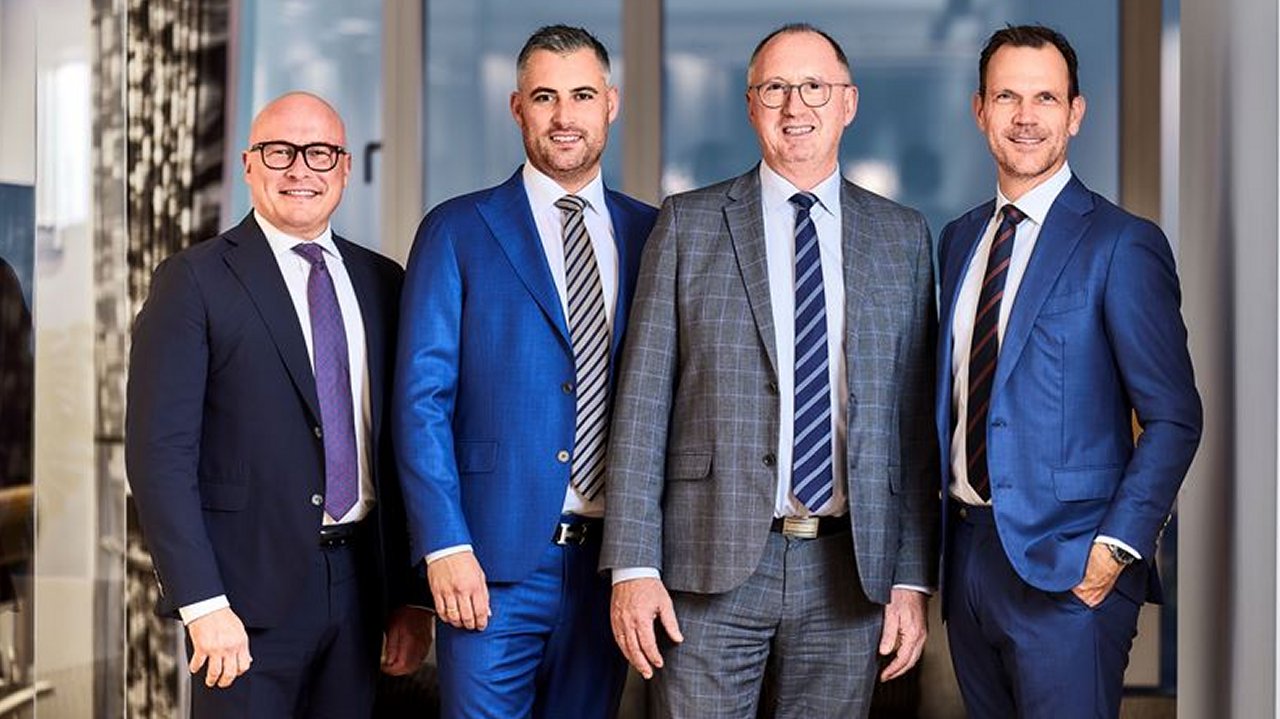
Bunker Holding has announced that it is restructuring its executive management team to position itself for future growth amid evolving market dynamics.
This reorganization includes separating sales and operations divisions in order to enhance specialization in areas such as sales, sourcing, risk management and physical supply.
By separating these functions, the company aims to strengthen customer relations and improve adaptability to market conditions.
CEO Keld R. Demant acknowledged the departure of CCO Christoffer Berg Lassen, praising his contributions over 20 years, and, in particular, the mark he made on the Group's commercial operations.
The commercial department will now consist of Bunker Holding Sales, led by Anders Grønborg, focusing on customer interactions, and Bunker Holding Operations, overseen by Peder Møller, concentrating on sourcing, physical supply, risk management and new fuels.
"We are confident that the increased focus on growing and building closer ties to Bunker Holding's customer base and streamlining our operations will better position us to create value across the entire value chain," commented Klaus Nyborg, Chairman of the Board of Directors of Bunker Holding.
The new structure is due to take effect on December 1, with the executive management team expanding from three to four members and comprising CEO Keld R. Demant, CFO Michael Krabbe, CCO Anders Grønborg and COO Peder Møller.
|
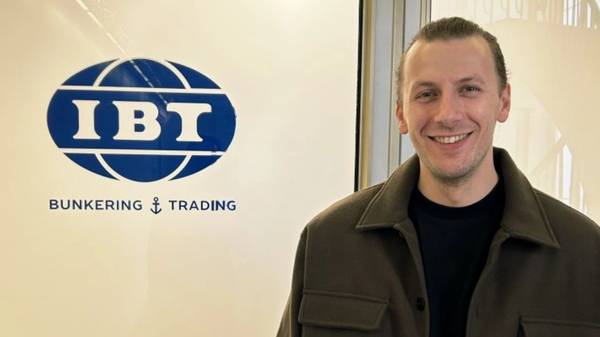
IBT Bunkering & Trading appoints Sales Support Specialist
Björn Hauschild joins from shipyard broker CombiTrade. |
|
|
|
||
|
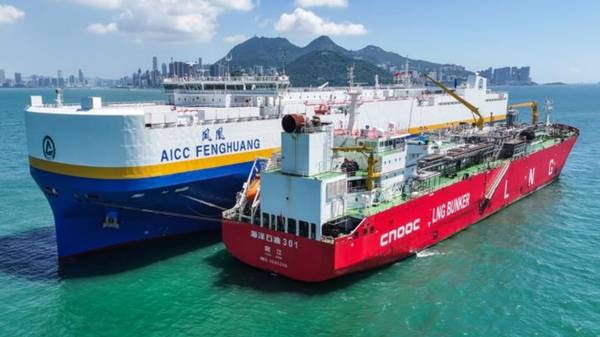
CLPe and CNOOC complete Hong Kong's first LNG bunkering of a pure car and truck carrier
Ship-to-ship operation delivered around 2,600 cbm of LNG to dual-fuel vessel AICC Fenghuang. |
|
|
|
||
|
Mercuria seeks senior sales and account manager for bunker delivery platform
Role can be based either remotely or at one of its offices in London, Geneva, Athens or Las Palmas. |
|
|
|
||
|
Molgas Energy Group appoints Riaan van Kralingen as head of clean fuels
Van Kralingen will oversee the company's liquefied biomethane and EU allowance portfolios, succeeding Caspar Gooren. |
|
|
|
||
|
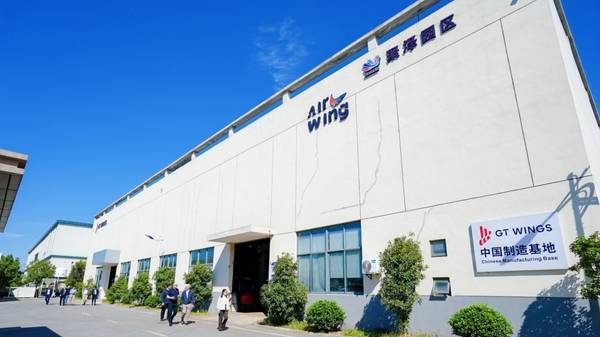
GT Wings launches compact AirWing S Jet Sail for smaller vessels
Wind propulsion developer adds lightweight unit to AirWing range as first customer-ordered AirWing20 units near completion. |
|
|
|
||
|
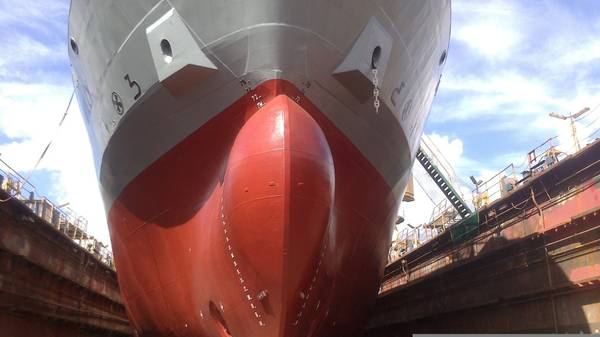
LR publishes retrofit guidance covering alternative fuels and energy-saving devices in one framework
New Guidance Notes address LNG, methanol, ammonia, hydrogen, wind-assisted propulsion and air lubrication retrofits for existing ships. |
|
|
|
||
|
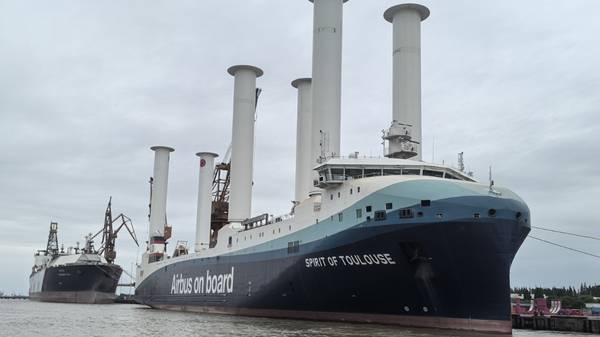
LD Armateurs' Spirit of Toulouse fitted with six Norsepower rotor sails
Six 35m rotor sails installed on the first of three methanol-capable ro-ro ships chartered by Airbus. |
|
|
|
||
|
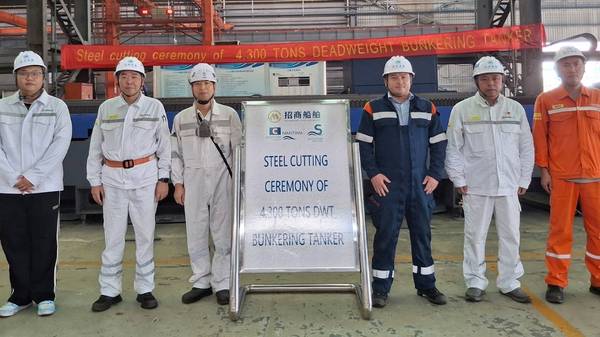
Maritima holds steel-cutting ceremony for Cap Morgiou, first of two Petroineos bunker vessels
Construction starts on bunker vessel able to carry conventional and low-carbon marine fuels, with delivery expected in early 2028. |
|
|
|
||

|
Singapore launches series of measures at SIBCON 2026
MPA announces LNG storage licences, digital bunkering grants and electric harbour craft incentives at 24th conference. |
|
|
|
||
|
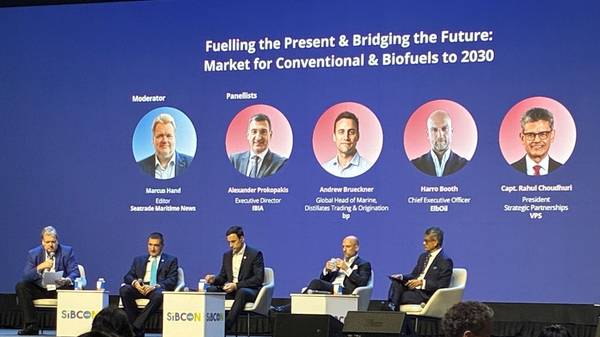
VPS outlines marine fuel standards and quality data at SIBCON 2026
VPS's Rahul Choudhuri addresses Singapore's evolving fuel standards and the quality of conventional fuels and biofuels. |
|
|
|
||
| Bunker Holding launches carbon insetting capability [News & Insights] |
| Bunker Holding and NeoGreen Hydrogen sign MoU for green ammonia and synthetic fuels [News & Insights] |
| Dan-Bunkering posts profit rise in 2023-24 [News & Insights] |
| EBT down 45.8% for Glander International Bunkering [News & Insights] |
| Bunker Holding reshuffles commercial leadership across brand portfolio [News & Insights] |
| Bunker Holding appoints Global Risk Management's Jacob Nørgaard as CFO [News & Insights] |
| Bunker One seeks oil derivatives trader for Houston desk [News & Insights] |
| Bunker Holding posts $73m pre-tax profit amid geopolitical headwinds and board overhaul [News & Insights] |
| Vestas Wind Systems CEO appointed vice chair of Bunker Holding [News & Insights] |
